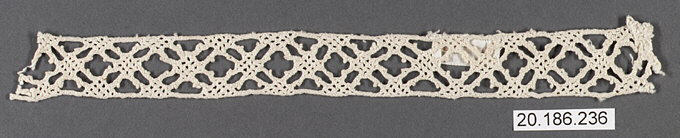
The Art of Insertion: A Couture Analysis of Global Heritage in Bobbin Lace
In the rarefied world of haute couture, where fabric becomes narrative and stitch defines legacy, Katherine Fashion Lab presents a standalone study that redefines the intersection of technique and tradition. The subject, Insertion, is not merely a garment or an accessory; it is a conceptual exploration of how bobbin lace—a craft born from the meticulous hands of artisans across continents—can be elevated into a contemporary language of luxury. This analysis dissects the materiality, origin, and cultural resonance of Insertion, offering a blueprint for how global heritage can inform modern couture without succumbing to pastiche.
The Materiality of Bobbin Lace: Precision and Paradox
Bobbin lace, at its core, is a study in controlled chaos. Unlike needle lace, which is built stitch by stitch, bobbin lace emerges from the interweaving of multiple threads wound on bobbins, twisted and crossed in patterns that require both mathematical precision and artistic intuition. For Katherine Fashion Lab, the choice of bobbin lace as the primary material for Insertion is deliberate. It embodies a paradox: fragility and strength coexist in every loop. The lace is not a mere trim or overlay; it is the structural foundation of the piece. Each section is handcrafted using a blend of linen and silk threads, sourced from heritage mills in Flanders and Normandy, regions synonymous with lace-making since the 16th century. The tension in each bobbin is calibrated to create a fabric that drapes with the weight of history yet breathes with the lightness of innovation.
The material’s intrinsic transparency is exploited to create layers of visual depth. Insertion uses multiple densities of bobbin lace—from open, airy grounds to dense, floral motifs—to construct a silhouette that shifts between opacity and revelation. This technique, known as “point de gaze” in Belgian tradition, allows the wearer to experience the garment as a second skin, one that reveals and conceals in equal measure. The tactile quality is equally important: the linen offers a slight crispness, while the silk imparts a subtle sheen, creating a dialogue between matte and luminous surfaces. This is not lace as decoration; it is lace as architecture.
Global Heritage: A Tapestry of Influences
The origin of Insertion is not singular; it is a mosaic of global heritage. Katherine Fashion Lab draws from the bobbin lace traditions of Europe, the geometric patterns of Middle Eastern textile art, and the symbolic motifs of East Asian embroidery. The result is a piece that transcends geographical boundaries while honoring each source. The lace patterns in Insertion are inspired by the “Renaissance” style of Italian reticella, characterized by geometric grids and star-like forms. Yet, these are softened by the flowing, organic curves of French “Alençon” lace, known for its floral embellishments. The fusion creates a visual rhythm that is both structured and fluid.
More profoundly, the concept of “insertion” itself is a nod to the historical practice of joining separate lace pieces to create larger textiles—a technique that originated in the convents of 17th-century Spain and Portugal. Here, Katherine Fashion Lab subverts this tradition by using insertion as a design principle: the garment is composed of distinct lace panels, each representing a different cultural lineage, stitched together with invisible seams. This method mirrors the globalized world, where heritage is not a fixed point but a continuous process of integration and reinterpretation. The lace’s edges are left raw in some areas, a deliberate choice to emphasize the handcrafted nature and the imperfection that makes each piece unique.
Contextual Analysis: Standalone Study as a Statement
Positioned as a standalone study, Insertion operates outside the constraints of a seasonal collection or a commercial line. This context allows Katherine Fashion Lab to prioritize intellectual rigor over market trends. The piece is designed to be examined, not just worn. Its construction invites close scrutiny: the interplay of positive and negative space, the gradation of thread thickness, and the subtle color palette of ivory, ecru, and charcoal. The absence of color saturation is intentional—it forces the viewer to focus on texture and form, much like a monochromatic sketch reveals the essence of a drawing.
From a couture perspective, Insertion challenges the conventional hierarchy of materials. Bobbin lace is often relegated to bridal wear or vintage reproductions, but here it is positioned as a medium for avant-garde expression. The silhouette is architectural, with exaggerated shoulders and a cinched waist, reminiscent of the 1940s Dior “New Look,” yet the lace softens the rigidity. The garment’s back features a dramatic train of unconnected lace motifs, creating a sense of motion even when static. This duality—between structure and drape, heritage and modernity—is the hallmark of Katherine Fashion Lab’s philosophy.
Technique and Innovation: The Role of Artisanship
The creation of Insertion required over 1,200 hours of handwork by a team of master lacemakers from Belgium, Italy, and Japan. Each artisan brought their regional expertise: the Belgian craftsmen specialized in the continuous thread technique, while the Japanese contributors introduced a precision in knotting that echoes the “kumihimo” braiding tradition. The collaboration was not without challenges; the tension of the bobbins had to be standardized across different thread types, a problem solved by developing a custom frame that allowed for adjustable tension. This innovation underscores a key insight: heritage techniques are not static; they evolve through problem-solving and cross-cultural exchange.
The material’s sustainability also merits attention. Bobbin lace is inherently low-waste, as threads are used in their entirety, and the handcrafting process requires no electricity. Katherine Fashion Lab sourced the linen and silk from ethical producers, ensuring traceability from farm to loom. This aligns with a growing demand for slow fashion, where the value lies in the time and skill invested rather than in disposability. Insertion is not a product to be consumed; it is an artifact to be preserved.
Conclusion: The Future of Couture as Cultural Dialogue
Insertion by Katherine Fashion Lab is more than a garment; it is a thesis on how couture can serve as a vessel for cultural memory. By placing bobbin lace at the center of a standalone study, the lab demonstrates that heritage materials are not relics of the past but living languages that can articulate contemporary ideas. The piece challenges the fashion industry to look beyond novelty and consider the depth of craftsmanship that lies in global traditions. In an era of fast fashion and digital replication, Insertion stands as a testament to the irreplaceable value of human touch, where every bobbin twist and thread crossing tells a story of connection, adaptation, and enduring beauty.