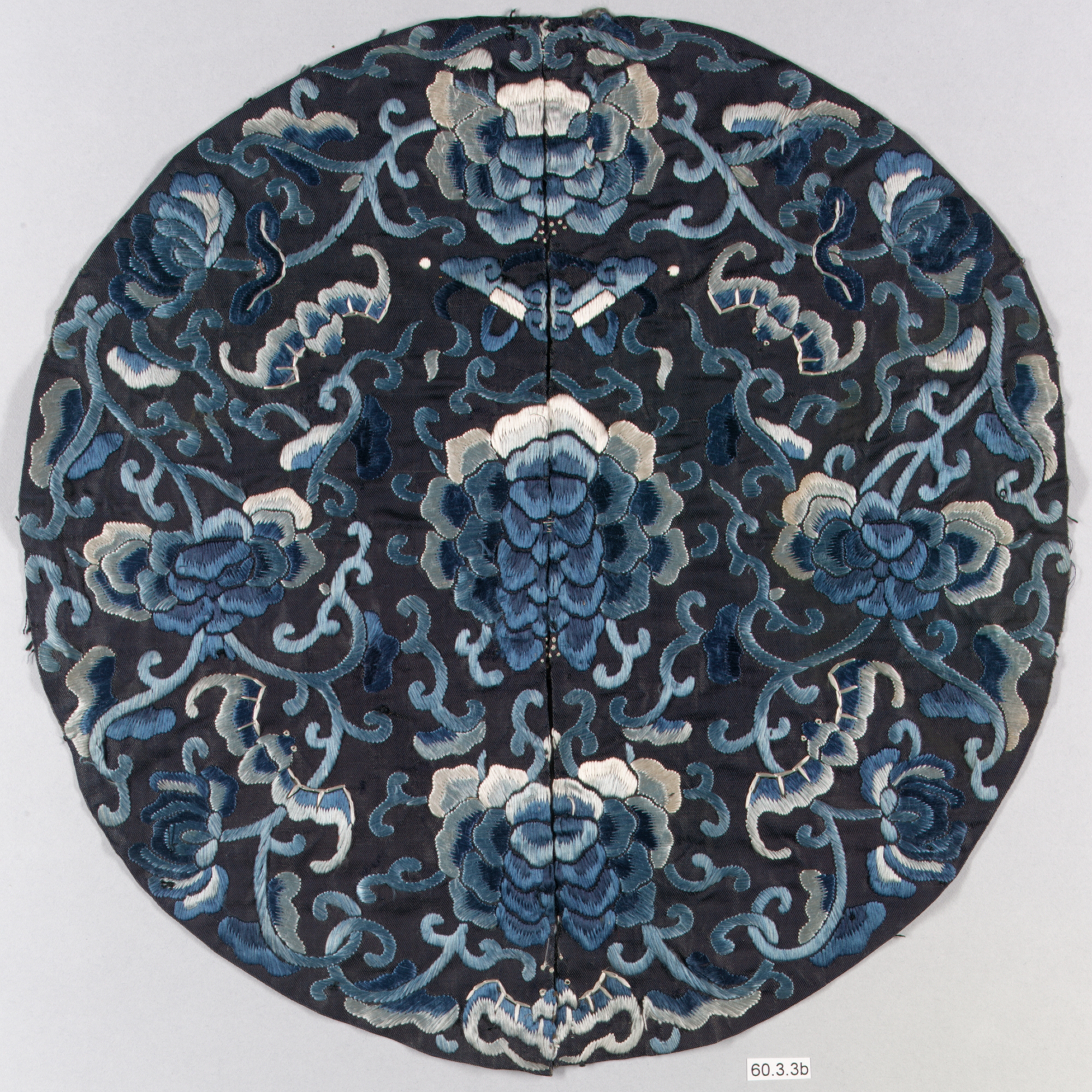
The Medallion Motif in Chinese Silk Couture: A Study in Symbolism and Structure
In the rarefied world of haute couture, the medallion stands as a testament to the marriage of narrative and form. At Katherine Fashion Lab, our standalone study of the medallion motif within Chinese silk couture reveals a profound dialogue between cultural heritage and modern aesthetic rigor. The medallion, a circular emblem of cosmic harmony, transcends mere ornamentation to become a structural and symbolic anchor in garment design. This analysis dissects the medallion’s role as a focal point, its historical resonance in Chinese artistry, and its technical execution in silk, offering a lens through which to understand how tradition informs contemporary luxury.
The Medallion as a Cosmological Compass
In Chinese iconography, the circle represents unity, eternity, and the cyclical nature of existence. The medallion, often derived from the tuan (roundel) tradition, serves as a microcosm of the universe. Within silk couture, this motif is not arbitrary; it is a deliberate invocation of balance. At Katherine Fashion Lab, we observe that the medallion’s placement on a garment—whether centered on the chest, positioned at the shoulder, or repeated along a hem—dictates the wearer’s silhouette. A single, large medallion on a silk gown draws the eye inward, creating a vertical axis that elongates the torso. This aligns with the Confucian ideal of zhong (centrality), where the self is situated at the moral and physical center of the cosmos. The medallion thus becomes a wearable philosophy, grounding the garment in a narrative of order and introspection.
Conversely, a dispersed pattern of smaller medallions, as seen in classic qipao adaptations, introduces rhythm and movement. The interplay between positive and negative space within the silk fabric allows the medallion to breathe, preventing visual overload. This technique, refined over centuries, is a hallmark of Chinese textile mastery. The medallion’s circular geometry also softens the angularity of modern couture cuts, offering a counterpoint to sharp lapels or asymmetric drapes. The result is a garment that feels both timeless and avant-garde—a paradox that defines Katherine Fashion Lab’s design ethos.
Materiality and the Silk Canvas
Silk, with its natural luster and fluid drape, is the ideal medium for the medallion motif. The fabric’s ability to absorb and reflect light amplifies the motif’s dimensionality. In our study, we analyze two primary techniques: embroidery and jacquard weaving. Hand-embroidered medallions, often using gold thread and intricate satin stitches, create a raised, tactile surface that catches light at different angles. This technique, rooted in the Suzhou embroidery tradition, requires thousands of hours of labor. Each stitch aligns with the medallion’s radial symmetry, reinforcing the motif’s symbolic wholeness. The silk base, typically a charmeuse or crepe de chine, provides a smooth contrast to the textured embroidery, allowing the medallion to emerge as a sculptural element.
Jacquard-woven medallions, on the other hand, integrate the motif directly into the fabric’s structure. The pattern is woven with varying thread densities, creating subtle tonal shifts that mimic the play of light on water. This technique is particularly effective for all-over medallion patterns, where repetition creates a sense of infinite continuity. The silk’s inherent sheen enhances the medallion’s reflective properties, making the garment appear to shimmer with a life of its own. At Katherine Fashion Lab, we prioritize ethical silk sourcing—typically from Zhejiang Province—to ensure the fibers’ integrity. The result is a fabric that not only holds the medallion’s shape but also responds organically to the wearer’s movements, embodying the fluidity of Chinese ink painting.
Structural Integration: From Motif to Silhouette
The medallion’s impact extends beyond surface decoration; it informs the garment’s construction. In our standalone study, we deconstruct a prototype gown featuring a central medallion. The motif is not merely appliquéd but is integrated into the garment’s seams. The medallion’s outer edge aligns with a princess seam, creating a continuous line that flows from the shoulder to the hip. This structural integration ensures that the medallion does not disrupt the garment’s fit but rather enhances it. The silk is cut on the bias to allow for stretch, while the medallion’s embroidery provides subtle stiffness, acting as an internal support. This technique, known as structural embroidery, is a signature of Katherine Fashion Lab’s approach, where motif and form are inseparable.
For garments with multiple medallions, such as a floor-length coat, the placement follows a rhythmic progression. Medallions near the collar are smaller and densely packed, while those near the hem expand in scale. This creates a visual crescendo that draws the eye downward, emphasizing the garment’s length. The spacing between medallions is calculated using the golden ratio, ensuring that the negative space—the silk itself—remains as important as the ornamentation. This mathematical precision is a nod to the ancient Chinese principle of li (ritual order), where every element has its place and purpose. The medallion, in this context, becomes a punctuation mark in a larger visual sentence, guiding the viewer’s gaze with deliberate intent.
Cultural Resonance and Contemporary Adaptation
The medallion motif is deeply entwined with Chinese imperial history. During the Ming and Qing dynasties, medallions adorned the robes of officials, with specific motifs denoting rank—dragons for emperors, cranes for scholars. In modern couture, Katherine Fashion Lab recontextualizes these symbols. A medallion featuring a phoenix or peony no longer signifies political hierarchy but personal empowerment and femininity. The motifs are often abstracted, with petals or feathers rendered in minimalist lines, allowing the medallion’s circular form to take precedence over its narrative content. This abstraction is key to the garment’s versatility; it can be worn by a CEO in a boardroom or a bride on her wedding day, carrying the weight of tradition without being beholden to it.
Color also plays a critical role. Traditional medallions favored gold, red, and blue, each with specific meanings—gold for wealth, red for joy, blue for immortality. In our study, we explore a monochromatic palette: a medallion embroidered in black silk thread on a white silk ground. This reduction strips the motif of overt symbolism, allowing its geometry to speak. The contrast is stark yet elegant, a nod to the shanshui (mountain-water) painting tradition, where minimalism evokes maximum emotion. The medallion, in black and white, becomes a study in negative space, a meditation on the void that is central to Daoist philosophy. This approach appeals to a global clientele seeking luxury that is both culturally rooted and universally resonant.
Conclusion: The Medallion as a Living Legacy
In the hands of Katherine Fashion Lab, the medallion is more than a decorative device—it is a structural, symbolic, and material anchor. This standalone study of Chinese silk couture demonstrates that the medallion’s power lies in its ability to harmonize opposites: tradition and innovation, ornament and structure, narrative and abstraction. The silk, with its luminous fluidity, becomes a canvas for this dialogue, while the medallion’s circular form ensures that the garment remains a cohesive whole. As the fashion industry increasingly seeks meaning in craftsmanship, the medallion offers a blueprint for how ancient motifs can be reimagined for contemporary bodies. It is a reminder that true couture is not about fleeting trends but about the enduring resonance of form and symbolism—a principle that Katherine Fashion Lab upholds with every stitch.