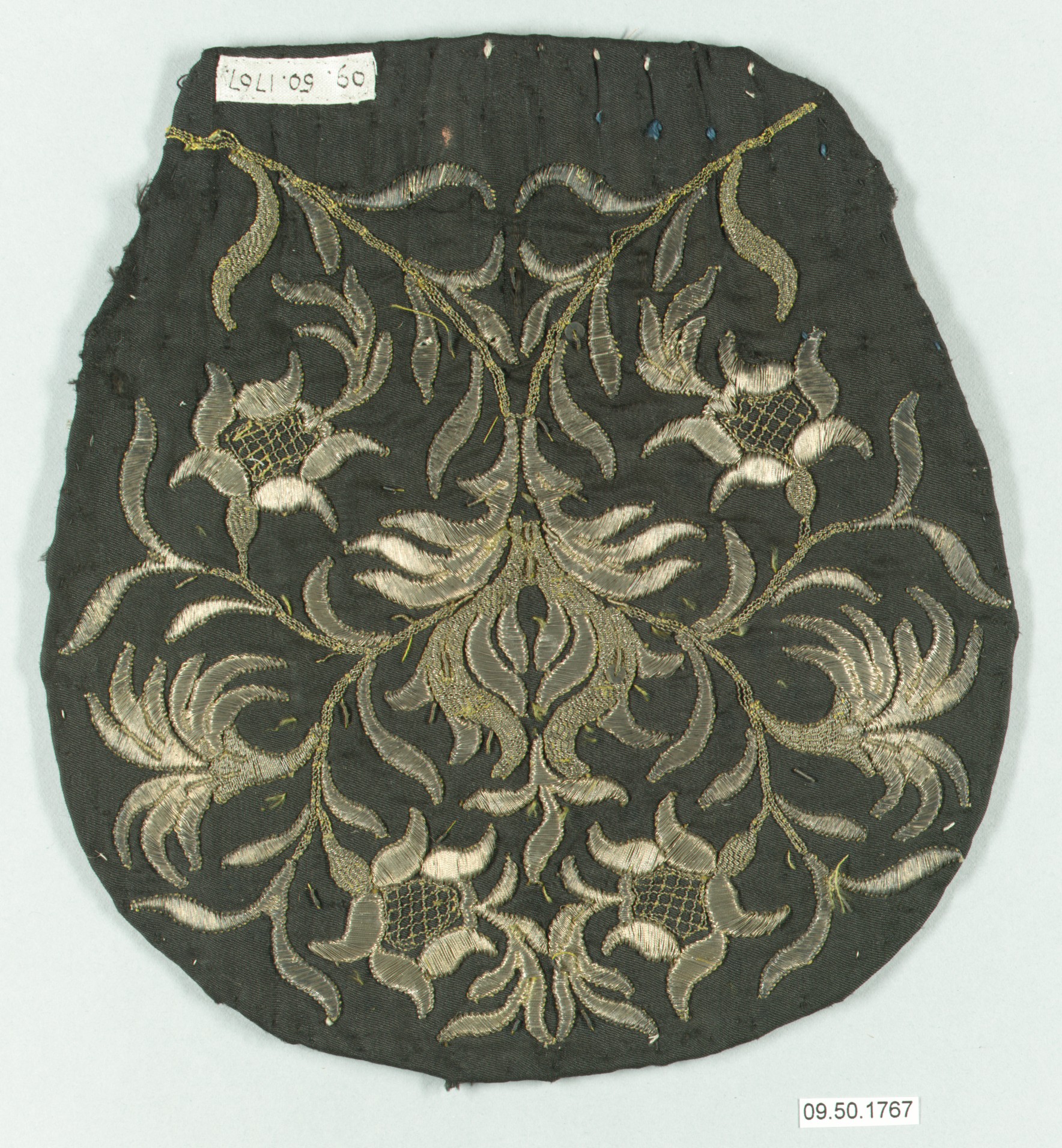
The Cap Crown: A Study in Structural Elegance and Global Heritage
In the rarefied world of haute couture, where artistry meets engineering, the cap crown emerges as a singular subject of profound analytical interest. At Katherine Fashion Lab, we approach this study not merely as a decorative appendage but as a complex architectural form that encapsulates centuries of cultural transmission and technical mastery. This standalone analysis dissects the cap crown crafted from metal thread on silk, a composition that marries the tensile strength of metallic fibers with the fluid drape of silk, creating a paradox of rigidity and softness. The piece under review is not a standalone garment but a conceptual artifact—a microcosm of global heritage that speaks to the intersection of craftsmanship, identity, and luxury.
Deconstructing the Cap Crown: Form and Function
The cap crown, traditionally a component of headwear, is here isolated as a standalone study to foreground its structural and aesthetic virtues. Its silhouette is defined by a rounded, domed shape that follows the natural contour of the cranium, yet the execution in metal thread on silk transforms it from a utilitarian object into a sculptural statement. The metal thread, typically composed of fine silver, gold, or copper alloys, is meticulously wound around a silk core or embroidered directly onto a silk base. This technique, known as metal thread embroidery, requires extraordinary precision: each stitch must be tensioned to prevent buckling while allowing the silk to retain its inherent luster. The result is a surface that catches light in a dynamic interplay of reflections, evoking the opulence of royal regalia while remaining lightweight enough for wearability.
From a structural perspective, the cap crown’s integrity derives from the interplay between the metal thread’s rigidity and the silk’s pliability. The thread acts as a skeleton, providing shape retention without the need for internal stiffeners. This is a hallmark of advanced couture engineering, where material properties are leveraged to achieve both form and comfort. The crown’s interior, left unlined in this study, reveals the reverse side of the embroidery—a chaotic yet intentional lattice of threads that underscores the labor-intensive nature of the craft. Each stitch represents a decision: where to anchor, where to float, and how to distribute the metal’s weight across the silk’s weave.
Global Heritage: A Tapestry of Cultural Influences
The cap crown’s material and technique are not innovations born in isolation; they are the products of a global heritage that spans continents and epochs. Metal thread embroidery has deep roots in the Byzantine Empire, where gold-wrapped silk threads adorned ecclesiastical vestments and imperial crowns. This tradition migrated along the Silk Road, influencing the Mughal courts of India, where zardozi—a form of metal embroidery—became synonymous with royal splendor. Simultaneously, in China, silk cultivation and metal thread work converged in the creation of kesi and xiu techniques, often used for court robes and ceremonial headpieces. The cap crown under study synthesizes these lineages: the silk base echoes Chinese sericulture, the metal thread recalls Byzantine opulence, and the crown form itself nods to the European royal diadems of the Renaissance, where structural headwear signified divine right and temporal power.
Yet, the piece is not a pastiche. Katherine Fashion Lab’s interpretation transcends mere historical reference by abstracting these influences into a contemporary idiom. The metal thread is not gilded to excess but left with a matte, brushed finish, suggesting a modern restraint. The silk, dyed in a deep indigo, references the West African tradition of indigo resist-dyeing, while the crown’s unadorned surface avoids the clutter of gemstones or pearls. This deliberate minimalism allows the viewer to focus on the dialogue between materials and techniques, rather than on overt cultural signifiers. The cap crown becomes a vessel for global heritage, not as a museum piece but as a living, breathing artifact of cross-cultural exchange.
Materiality and Craft: The Alchemy of Metal and Silk
The choice of metal thread on silk is a masterclass in material alchemy. Silk, a natural protein fiber, possesses a unique triangular cross-section that refracts light, giving it a subtle shimmer. When paired with metal thread, which reflects light specularly, the two materials create a visual tension: the silk’s soft glow versus the metal’s sharp brilliance. This interplay is further modulated by the embroidery’s density. In areas of high stitch concentration, the metal dominates, creating a surface that feels almost armor-like. In sparser regions, the silk’s weave peeks through, introducing a tactile softness that contrasts with the metal’s coolness. This gradient of opacity is a deliberate design choice, inviting the viewer to trace the hand of the artisan.
From a technical standpoint, the cap crown’s construction involves a multi-step process. First, the silk base is cut and shaped using a wooden block form, a technique borrowed from millinery. The metal thread is then applied using a tambour hook, a tool that allows for continuous thread loops, creating a chain-stitch effect. This method, historically used in French broderie de Lunéville, enables the thread to flow in curvilinear patterns, following the crown’s dome without distortion. The tension must be calibrated to the metal’s gauge: too tight, and the silk puckers; too loose, and the thread loses its definition. The result is a surface that is both rigid and fluid, a paradox that defines the cap crown’s unique aesthetic.
Contextualizing the Standalone Study: Beyond the Head
By isolating the cap crown as a standalone study, Katherine Fashion Lab invites a reexamination of its role in fashion. Traditionally, crowns are extensions of the body—props for ceremony or status. Here, the cap crown is presented as an autonomous object, displayed on a neutral stand or suspended in space. This decontextualization allows the viewer to appreciate its formal qualities: the geometry of the dome, the rhythm of the embroidery, the interplay of light and shadow. It becomes a sculptural artifact, akin to a modernist bronze or a ceramic vessel, rather than a functional accessory.
This approach aligns with contemporary trends in conceptual fashion, where garments are dissected into their constituent parts for critical analysis. The cap crown’s standalone status also raises questions about wearability and the body. Without a head to anchor it, the crown becomes an abstraction—a meditation on the relationship between form and function. Is it a hat, a sculpture, or a relic? The ambiguity is intentional, forcing the viewer to engage with the piece on its own terms. It is a study in restraint, where the absence of context amplifies the object’s inherent power.
Implications for Couture and Sustainability
From a strategic perspective, this standalone study offers lessons for the future of couture. The cap crown’s reliance on metal thread and silk, both renewable and biodegradable materials, positions it as a model for sustainable luxury. Unlike synthetic embellishments, metal thread can be reclaimed and recycled, while silk decomposes naturally. This aligns with the growing demand for ethical fashion, where craftsmanship and material integrity replace disposability. Moreover, the piece’s global heritage narrative adds layers of cultural value, making it a collectible artifact rather than a transient trend.
In conclusion, the cap crown from Katherine Fashion Lab is more than a mere accessory; it is a thesis on the convergence of global heritage, material science, and conceptual design. Its metal thread on silk construction exemplifies the alchemy of craft, while its standalone presentation challenges conventional notions of function. As a lead curator, I see this piece as a benchmark for how couture can honor tradition while pushing boundaries—a crown not for a monarch, but for the discerning connoisseur of art and culture.