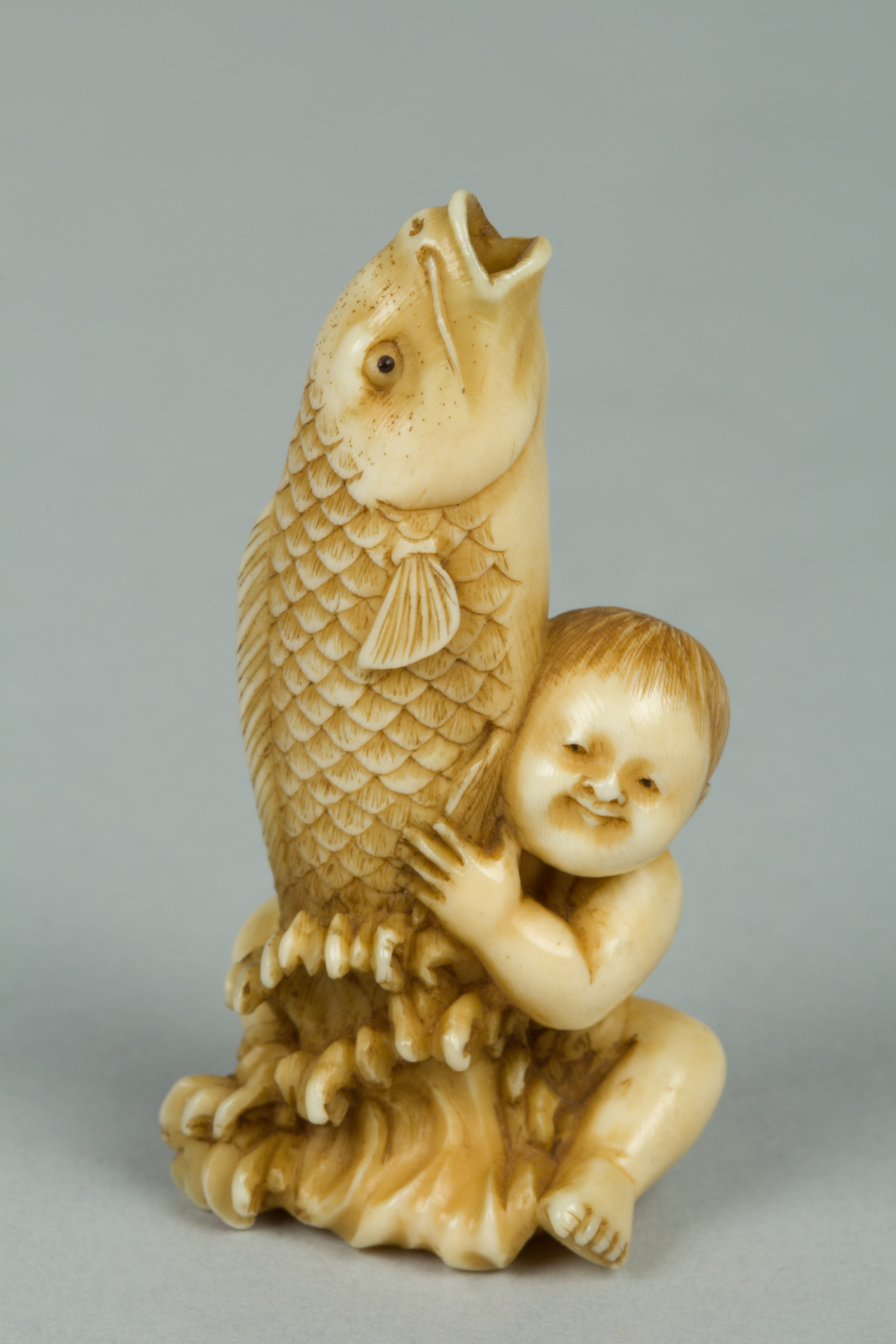
Heritage Analysis: Netsuke of Child with a Carp
Object Description and Provenance
The Netsuke of Child with a Carp, carved from ivory in Japan, represents a masterful fusion of miniature sculpture and functional adornment. Netsuke, meaning “root to fasten,” served as toggle fasteners for inrō (seal cases) and pouches on traditional Japanese kimono, which lacked pockets. This piece, likely dating from the Edo period (1603–1868), is a testament to the artisan’s ability to compress complex symbolism into a palm-sized form. The child, depicted in a dynamic pose alongside a robust carp, exemplifies the ukiyo-e influence on netsuke carving, where everyday life and mythological motifs converged. As a strategic standalone research subject, this netsuke offers a lens into how material culture encodes social values, spiritual beliefs, and aesthetic hierarchies.
Symbolic Power: The Carp as a Virtue Emblem
In Japanese cultural symbolism, the carp (koi) is a dominant figure of perseverance, ambition, and transformation. Derived from Chinese folklore, the image of a carp swimming upstream to transform into a dragon at the Dragon Gate represents triumph over adversity—a metaphor for scholarly or martial success. The child (kodomo) amplifies this meaning, signifying the hope for future achievement, filial piety, and the continuation of family lineage. Together, the child and carp form a visual allegory for gambaru (persistent effort) and shusse (success in life). This symbolic pairing was especially potent in Edo-period Japan, where rigid social hierarchies made such aspirational imagery a form of personal talisman for merchants and samurai alike. For modern luxury strategy, this duality—the pairing of innocence with tenacity—offers a nuanced narrative of resilience that resonates with contemporary consumers seeking authenticity and purpose in their acquisitions.
Historical Adornment: Function Meets Status
Netsuke were not merely decorative; they were status markers within the highly stratified Tokugawa society. The choice of material—ivory, here—indicated wealth and access to imported goods, as ivory was a rare and costly medium sourced from Southeast Asia or Africa. The carving’s complexity, with the child’s flowing robes and the carp’s scales intricately rendered, further signaled the owner’s discernment and social standing. Netsuke were worn by men of the chōnin (merchant) and samurai classes, often displayed during formal occasions or within private collections. The Child with a Carp motif would have been particularly favored by families with young sons, serving as a wearable charm for the child’s future success. In the context of historical adornment, this netsuke illustrates how Japanese material culture integrated talismanic function with social performance—a principle that remains vital in high-end luxury today, where objects must serve both aesthetic and symbolic roles.
Spiritual Meaning: Protection and Transformation
Beyond social symbolism, the netsuke carried profound spiritual resonance. In Shintō and Buddhist traditions, the carp is associated with water deities and purification, while the child embodies innocence and divine blessing. The act of wearing such an object against the body was believed to confer protection against malevolent spirits (mononoke) and ensure a harmonious life path. The ivory medium itself held spiritual weight: in East Asian cosmology, ivory was thought to possess yang energy—bright, assertive, and protective. The netsuke’s small scale allowed it to function as a portable shrine, a constant companion in the wearer’s daily life. This intimacy of scale is a critical insight for luxury product design: objects that are physically close to the body—jewelry, pendants, pocket items—carry amplified emotional and spiritual significance. For a 2026 high-end strategy, this suggests that miniaturized luxury with layered meaning can command premium positioning, as consumers increasingly seek objects that offer both beauty and metaphysical comfort in an uncertain world.
Strategic Framework for 2026 High-End Luxury
Translating the heritage of this netsuke into a contemporary luxury strategy requires a multidimensional approach that respects its cultural roots while appealing to modern sensibilities. The following strategic pillars are proposed:
1. Narrative of Transformation and Resilience. The carp’s ascent to dragonhood is a universal metaphor for personal growth. A 2026 luxury campaign could position a reinterpreted netsuke—perhaps in sustainable materials like ethically sourced tagua nut or recycled precious metals—as a symbol of reinvention. This aligns with the growing consumer demand for brands that champion endurance and self-actualization. Limited-edition pieces, each accompanied by a provenance card detailing the carp’s mythology, would elevate the object from mere accessory to collectible artifact.
2. Material and Craft as Heritage. The original ivory netsuke’s rarity underscores the value of artisanal scarcity. A 2026 strategy should partner with master carvers in Japan or elsewhere, using materials that honor tradition without ecological harm—such as reclaimed wood, lacquer, or bio-resin. The hand-carved element must be highlighted, as the imperfections of human craftsmanship are increasingly prized in an era of mass production. Each piece should be numbered and documented, with a focus on the hours of labor and the artisan’s lineage, thereby creating a heritage narrative that justifies a high price point.
3. Spiritual and Emotional Positioning. The netsuke’s role as a talisman offers a blueprint for emotional luxury. A 2026 collection could be marketed as “Wearable Amulets for the Modern Age,” with each design tied to a specific virtue—courage, wisdom, prosperity. This taps into the wellness and mindfulness trends that are reshaping luxury consumption. The child-and-carp motif, for instance, could be reframed as a gift for new parents or as a personal milestone marker, combining sentimentality with aspirational branding.
4. Digital Integration and Exclusivity. In the digital-first luxury market of 2026, the netsuke’s intimate scale lends itself to augmented reality (AR) experiences. A customer could scan the netsuke with a smartphone to view an animation of the carp swimming upstream, or to hear a narration of its history. This bridges the gap between physical heritage and digital engagement, appealing to Gen Z and Alpha consumers who value experiential storytelling. Additionally, a blockchain-based provenance record would authenticate the piece, ensuring its status as a verifiable collectible.
Conclusion: The Netsuke as a Blueprint for Timeless Luxury
The Netsuke of Child with a Carp is far more than a historical curiosity; it is a masterclass in how objects can condense cultural memory, spiritual belief, and social aspiration into a single, portable form. For Katherine Fashion Lab, this heritage analysis reveals that the most enduring luxury strategies are those that honor symbolic depth, material integrity, and personal meaning. By translating the carp’s journey of perseverance into a modern narrative of resilience, and by preserving the intimacy of the netsuke form, a 2026 collection can achieve what the finest Edo-period netsuke achieved: to be not merely worn, but cherished as a companion on life’s path. This is the essence of strategic heritage—not replication, but reinterpretation with reverence.