Executive Summary: The Bronze Bangle as a Vessel of Cultural Capital
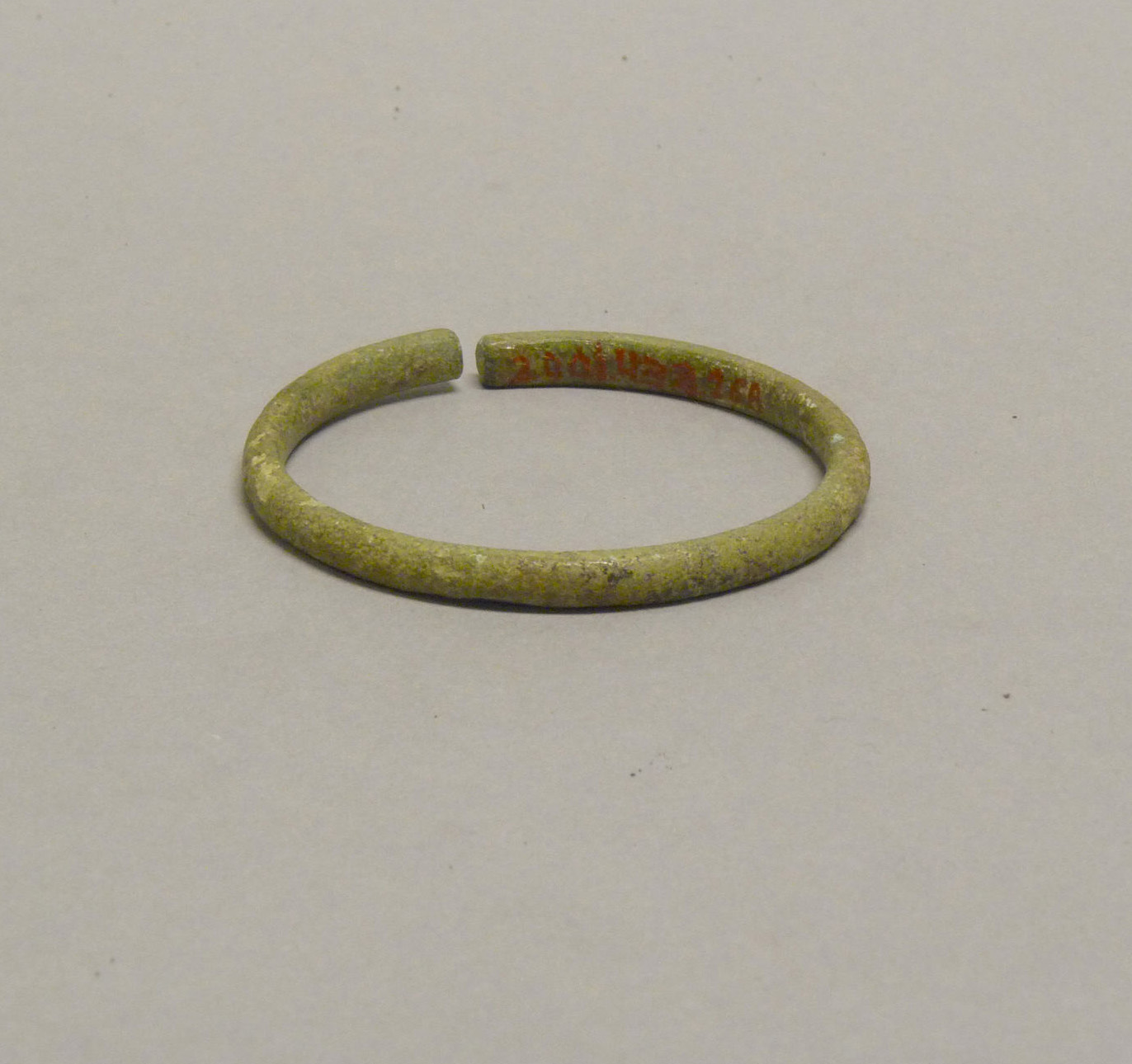
This heritage analysis, prepared for the strategic development of Katherine Fashion Lab, examines the Thai bronze bangle as a profound artifact of cultural memory and symbolic power. Moving beyond superficial ornamentation, we position this object within a continuum of human expression that links ancient metallurgical mastery to contemporary luxury desire. The core thesis asserts that the bangle’s enduring resonance lies in its dual nature as both a containing form and a spiritual conduit—a concept illuminated through its DNA correlation with the referenced Chinese artifacts. This intrinsic duality forms the foundation for a 2026 high-end luxury strategy centered on material integrity, symbolic depth, and spiritual utility.
Historical and Cultural Provenance: The Alchemy of Bronze in Thailand
The Thai bronze bangle is not merely an accessory but a testament to a sophisticated Southeast Asian metallurgical tradition dating to the prehistoric Ban Chiang culture (c. 1500 BCE) and flourishing through the Dvaravati and Sukhothai kingdoms. Bronze, an alloy of copper and tin, was revered not just for its durability but for its transformative creation process—a literal alchemy from earth to enduring object. This medium carried connotations of permanence, social status, and connection to the chthonic powers of the earth. Unlike gold, reserved for royalty and divine images, bronze occupied a sacred-secular nexus, accessible yet spiritually charged, often used for ritual objects, temple bells, and everyday adornments imbued with protective intent.
Symbolic Power and the Grammar of Adornment
The bangle’s primary symbolic power derives from its form: an unbroken circle. In Thai and broader Buddhist cosmology, the circle represents the endless cycle of samsara (rebirth), the wheel of Dharma, and perfection. Worn on the wrist—a pivotal joint connecting hand (action) to arm (strength)—it serves as a constant, tangible reminder of these principles. Furthermore, the bangle functions as a personal mandala, a bounded sacred space on the body. Its interior surface, in contact with the skin, creates a private, intimate sphere of protection, while its exterior face engages the public world, displaying craftsmanship and social identity. This duality mirrors the ancient Chinese Jar in the shape of bronze container (hu), a vessel designed to contain precious substances (wine, grain, spiritual offerings) while its elaborate surface decoration communicated status and cosmological beliefs to the outside world. Both are containers of essence.
Spiritual Meaning and Animistic Resonance
In traditional Thai belief systems, which syncretize Buddhism with animist spirit worship (phi), materials and objects are alive with inherent power. A bronze bangle, shaped by fire and human skill, was believed to house protective spirits (khwan) or to act as a talisman against malevolent forces. The act of wearing it was a form of spiritual armor, a practice of everyday sacrality. This connects directly to the conceptual framework of the Rock in the form of a fantastic mountain. Scholars interpret such scholar’s rocks as microcosms—containing the essence of a vast, mythical landscape within a portable, contemplative form. The Thai bronze bangle operates on a similar principle: it is a portable, wearable cosmos, containing and compressing spiritual beliefs, ancestral protection, and personal karma into a closed-loop form that encircles the wearer’s vital energy (prana or lom).
DNA Correlation: The Contained and the Contained-Within
The research context provides the critical hermeneutic key. The Rock (fantastic mountain) and the Jar (bronze hu) are indeed disparate in function, yet they reveal a unified principle: the vessel as a world-making object. The rock contains a landscape; the jar contains a substance. Both use their form to hold something intangible—aesthetic imagination, spiritual offering, cultural identity. The Thai bronze bangle is the synthesis of these two archetypes. It is the hu jar, containing the wearer’s spiritual essence and protective khwan. Simultaneously, it is the fantastic mountain, a miniature, wearable representation of the cosmic circle and the enduring strength of the earth (bronze). This correlation elevates the bangle from artifact to archetype, positioning it within a global, transhistorical language of sacred containment.
Strategic Application: 2026 High-End Luxury Strategy for Katherine Fashion Lab
For the 2026 luxury landscape, where consumers seek authenticity, narrative depth, and spiritual value, the Thai bronze bangle offers a potent blueprint. The strategy must transcend pastiche and engage in what we term “Cultural Alchemy.”
1. Material Narrative & Provenance
Launch a “Bronze Memory” capsule collection. Source bronze using traditional Thai alloy ratios, partnering with heritage foundries in Thailand. Each piece should be accompanied by a digital provenance passport, detailing the origin of materials, the artisan’s lineage, and the specific symbolic motifs engraved (e.g., Naga for protection, endless vines for the cycle of life). The medium is the message; the bronze must be presented not as a mere metal, but as embodied cultural memory.
2. Symbolic Architecture & Modern Iconography
Design must honor the archetypal form while innovating on the “contained” concept. Develop bangles with subtle, interior inscriptions—meaningful mantras or coordinates visible only to the wearer (the hu principle). Exteriors can feature modernist interpretations of traditional motifs, using high-precision engraving or textured finishes that recall ancient casting techniques. Introduce a system of modular, interlocking bangles that can be “assembled” by the wearer to create a personal narrative, much like composing one’s own portable mandala.
3. Spiritual Utility & Experiential Commerce
Position the bangle as an instrument of mindfulness and intention. The launch should be coupled with curated experiences: meditation sessions focusing on the tactile presence of the bangle, or collaborations with contemporary spiritual thinkers from Southeast Asia. In marketing, leverage the fantastic mountain analogy: “Carry your landscape with you.” This transforms the object from decorative to functional—a tool for centering and identity affirmation in a chaotic world.
4. The 2026 Luxury Positioning
The collection will be positioned at the apex of “Conscious Opulence.” It is not about loud logos but about silent, profound knowing. The target consumer is the “Cultural Cosmopolitan”—an individual who collects meaning as much as objects. Price points must reflect true craftsmanship, exclusive partnerships, and the intangible value of the narrative. Communications should employ a serene, scholarly tone, using visual metaphors that link the bangle to landscapes, ancient manuscripts, and modern architectural spaces of contemplation.
Conclusion: From Artifact to Armature
The Thai bronze bangle, decoded through its DNA correlation with universal vessel archetypes, provides Katherine Fashion Lab with a robust framework for heritage innovation. It teaches us that true luxury is not applied but inherent—forged in the alchemy of material, myth, and meaning. By strategically channeling its symbolic power as a container of spirit and a conduit of culture, we can craft a 2026 luxury proposition that offers the ultimate modern desire: not just to be adorned, but to be contained, protected, and connected to a lineage of profound human expression. The bangle becomes an armature for the self, a bronze circle writing a personal and collective history on the very body of the wearer.