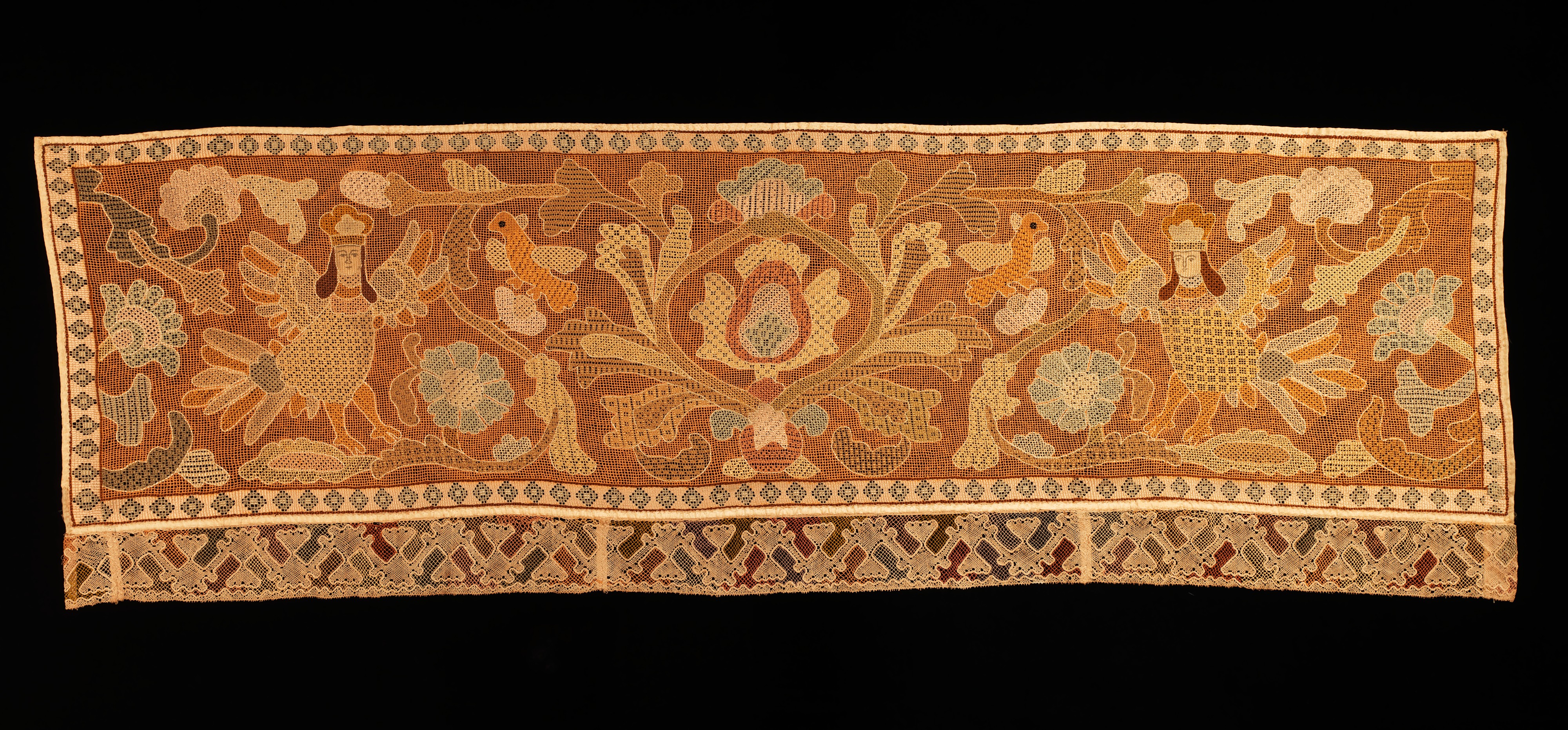
The Art of the Edge: A Couture Analysis of the Bed Curtain Border
In the lexicon of haute couture, the boundary between the functional and the ornamental is often a line drawn in thread. At Katherine Fashion Lab, we have long championed the notion that the most profound design statements emerge from the re-contextualization of the mundane. Our latest standalone study, “The Art of the Edge,” dissects a singular artifact: the bed curtain border. Far from a mere domestic trimming, this border—sourced from a global heritage of textile craftsmanship—represents a masterclass in material dialogue, structural integrity, and narrative depth. In this analysis, we explore how linen and silk converge along this border, transforming a utilitarian object into a standalone couture study.
Material Alchemy: Linen and Silk in Dialogue
The Structural Poetics of Linen
Linen, derived from the flax plant, is a material of ancient lineage, revered for its tensile strength and breathability. In the context of a bed curtain border, linen serves as the foundational anchor. Its natural, slightly irregular weave introduces a tactile honesty—a grounding element that speaks to the garment’s origin in domestic privacy. The fiber’s inherent stiffness, when left unbleached, creates a subtle architectural quality. This is not a fabric that drapes with liquid ease; rather, it holds its form, offering a crisp, linear silhouette that defines the border’s perimeter. The slight slubs and variations in the linen’s surface catch light in a way that mimics the texture of unpolished wood or raw earth, evoking a sense of permanence and heritage. In couture terms, linen provides the backbone—the structural integrity that allows the border to function as a frame, both literally and metaphorically.
The Luminescent Grace of Silk
In stark contrast, silk—specifically, a fine mulberry or wild tussah variety—introduces a counterpoint of fluidity and radiance. Where linen is matte and grounded, silk is lustrous and ethereal. In this border study, silk is woven into the border’s inner edge or applied as an overlaid trim, creating a dynamic tension between the two fibers. The silk’s high refractive index catches ambient light, producing a subtle iridescence that shifts from pearl to champagne depending on the angle. This luminescence is not ornamental for its own sake; it serves a narrative function, symbolizing the transitional threshold between the private, intimate space of the bed and the outer world. The silk’s softness also introduces a tactile sensuality—a whisper against the skin that the linen’s crispness does not offer. Together, these materials engage in a dialogue of opposites: strength versus softness, opacity versus translucence, permanence versus ephemerality.
Global Heritage: The Border as a Cultural Cartography
Threads of Influence: From Ottoman to Edo
The border’s design is not a singular invention but a palimpsest of global textile traditions. The geometric motifs that punctuate the linen base—repeating diamond lattices and stepped zigzags—borrow from the Anatolian kilim tradition, where such patterns symbolize protection and fertility. These are rendered not in heavy wool but in fine silk thread, creating a delicate brocade effect that respects the original symbolism while elevating it into couture. Meanwhile, the border’s edge treatment—a narrow, hand-rolled hem finished with a silk thread—echoes the Japanese “kumihimo” braiding technique, where cords are meticulously interlaced to denote status and craftsmanship. This global synthesis is deliberate: the border becomes a cartography of human ingenuity, each stitch a testament to cross-cultural exchange. The design does not merely appropriate; it reveres, acknowledging the lineage of artisans from the Silk Road to the ateliers of Kyoto.
Narrative Weaving: The Border as Storyteller
Beyond pattern, the border’s construction tells a story of resourcefulness. Historically, bed curtains were often family heirlooms, their borders reworked and repurposed across generations. In this study, we honor that tradition by incorporating a visible mending detail—a small, silk-darning stitch that repairs a frayed edge of the linen. This is not a flaw but a deliberate design element, a nod to the Japanese philosophy of “kintsugi,” where breakage and repair become integral to the object’s beauty. The border thus becomes a chronicle of use, of time passing, of hands that have touched it. In a couture context, this elevates the object beyond mere decoration; it becomes a portable heritage, a wearable archive of global memory.
Structural Anatomy: Deconstructing the Border’s Form
The Composition of a Threshold
A bed curtain border is, by definition, a liminal element—it defines the edge of a drape, the point where the curtain meets the air. In this study, the border is constructed as a compound structure: a primary band of linen, 12 centimeters in width, with a secondary silk overlay of 4 centimeters along its inner edge. This dual-layer approach creates a visual and tactile hierarchy. The linen band is left unlined, its raw edges finished with a silk bias binding, which prevents fraying while adding a subtle contrast in color—perhaps a deep indigo against a natural flax. The silk overlay is attached with a series of hand-stitched, invisible seams, allowing the silk to float slightly above the linen, creating a shadow line that adds depth. This architectonic layering transforms the border from a flat trim into a three-dimensional element, one that interacts with light and movement.
Functional Elegance: The Role of Weight and Drape
In couture, the weight of a material is not an afterthought; it is a design parameter. The linen base provides a substantial weight that prevents the curtain from billowing excessively, ensuring that the border remains a stable visual anchor. The silk overlay, being lighter, introduces a controlled flutter—a gentle undulation that softens the border’s rigidity. This contrast in drape is critical: the border must be heavy enough to hold its shape when the curtain is drawn, yet light enough to allow the fabric to fall in graceful folds. The balance is achieved through careful calibration of the linen’s thread count (a dense 200-thread count for stability) and the silk’s weight (a 12-momme crepe de chine for fluidity). The result is a border that performs—it frames the curtain without dominating it, guiding the eye along its length while yielding to the fabric’s natural movement.
Conclusion: The Border as a Couture Manifesto
In this standalone study, the bed curtain border emerges not as a mere decorative afterthought but as a couture manifesto in miniature. Through the deliberate pairing of linen and silk, we have explored the tension between structure and sensuality. Through the lens of global heritage, we have woven a narrative of cultural reverence and repair. And through the rigor of structural analysis, we have demonstrated how a simple edge can become a complex, performative element. At Katherine Fashion Lab, we believe that the most profound design innovations often lie at the margins—in the borders, the hems, the thresholds we too often overlook. This border is a testament to that belief: an edge that is, in fact, a center of gravity, a point where history, material, and art converge into a single, exquisite line.