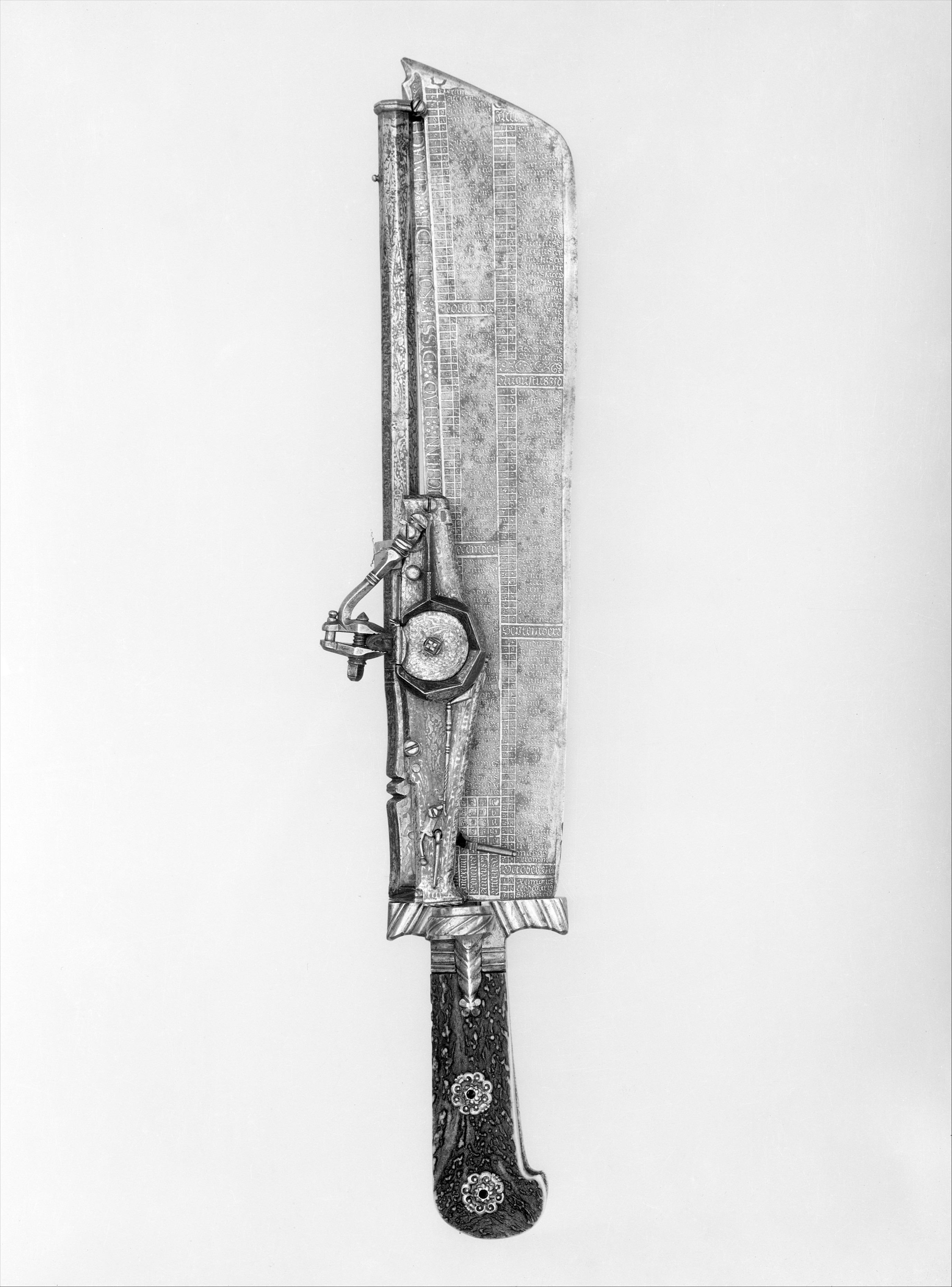
Heritage Analysis: The Hunting Knife Combined with Wheellock Pistol
Introduction: A Confluence of Form and Function in Munich Craftsmanship
As Lead Heritage Curator for Katherine Fashion Lab, I present this strategic standalone research on a singular artifact from 16th-century Munich: a hunting knife integrated with a wheellock pistol. This object, forged from steel, gold, staghorn, and bronze, embodies a critical juncture in European material culture—where survival, status, and spirituality converge. For a luxury brand like Katherine Fashion Lab, targeting the 2026 high-end market, this artifact offers profound lessons in symbolic power, historical adornment, and spiritual meaning. The following analysis deconstructs these layers, translating them into actionable strategies for contemporary luxury positioning.
Symbolic Power: The Duality of the Hunter-Protector
Nobility and the Hunt as Sovereign Ritual
In 16th-century German aristocracy, the hunt was not mere recreation but a ritual of sovereignty. The combination of a hunting knife and wheellock pistol in a single object signifies the bearer’s dominion over nature and, by extension, over human adversaries. The knife—a tool of close, visceral engagement—symbolizes primal authority, while the pistol, a technological marvel of its time, represents calculated, distant power. Together, they form a binary emblem of control: the hunter as both predator and strategist. For Katherine Fashion Lab, this duality offers a powerful narrative for 2026 luxury: the modern client seeks objects that reconcile tradition with innovation, instinct with intellect. A luxury brand can harness this by designing pieces that juxtapose raw materials (e.g., staghorn, bronze) with precision engineering (e.g., gold inlays, steel mechanisms), creating a visual dialogue between heritage and futurism.
The Wheellock as a Status-Defining Mechanism
The wheellock mechanism, a precursor to the flintlock, was a marker of elite technological patronage. Its intricate springs and gears required master gunsmiths, often working under royal commissions. Owning such a piece signaled not only wealth but access to cutting-edge craft—a concept directly transferable to 2026 luxury strategy. High-end consumers increasingly value “invisible complexity”: objects that appear simple but require extraordinary skill to produce. Katherine Fashion Lab can adopt this by emphasizing artisanal techniques—such as hand-engraved gold or custom bronze patinas—that are legible only to the discerning eye, reinforcing exclusivity and connoisseurship.
Historical Adornment: The Art of Functional Opulence
Materials as a Language of Prestige
The selection of materials in this artifact—steel for strength, gold for permanence, staghorn for natural nobility, and bronze for durability—creates a hierarchy of value that is both aesthetic and symbolic. Staghorn, sourced from red deer, was not merely decorative; it evoked the hunt’s trophy and the animal’s vitality, imbuing the object with a totemic quality. Gold, often used in the pistol’s pan cover or knife’s bolster, signified the owner’s near-divine status, as gold was associated with the sun and eternal power. Bronze, less precious but more resilient, anchored the piece in practicality, reminding the user that luxury must serve purpose. For 2026 luxury strategy, Katherine Fashion Lab should consider a material philosophy that prioritizes “narrative provenance.” For example, using ethically sourced staghorn from managed estates, or recycled gold with a documented lineage, can appeal to the eco-conscious elite while maintaining historical resonance.
Adornment as a Spatial Statement
This combination weapon was designed to be worn at the belt, often in a custom-fitted scabbard. Its visibility in courtly or hunting contexts made it a form of wearable identity—a precursor to the modern luxury accessory. The integration of knife and pistol into a single silhouette required ergonomic ingenuity, ensuring the bearer could access both tools swiftly. This principle of “adorned utility” is highly relevant for 2026. Luxury brands can explore hybrid accessories—such as a handbag that transforms into a protective case or a necklace that conceals a functional tool—that echo this historical fusion of beauty and purpose. The key is to ensure that the adornment does not sacrifice function; rather, it elevates it.
Spiritual Meaning: The Talisman of the Hunt
Animism and the Hunt’s Sacred Cycle
In Germanic folklore, the hunt was a sacred transaction between humans and the forest spirits. The knife and pistol were not just tools but vessels for spiritual protection. Staghorn, in particular, was believed to ward off evil and channel the deer’s cunning and speed. Gold was thought to attract divine favor, while bronze, often associated with earth deities, grounded the object in the material world. For the 16th-century hunter, carrying this combined weapon was akin to carrying a portable shrine—a talisman that ensured success and safety. This spiritual dimension offers a potent narrative for 2026 luxury, where consumers increasingly seek objects with “soul” or “energy.” Katherine Fashion Lab can incorporate this by embedding subtle symbolic motifs—such as engraved deer or oak leaves—into designs, or by collaborating with artisans who practice traditional metalworking rituals, such as annealing steel with specific lunar phases. The goal is to imbue each piece with an intangible aura that resonates with the buyer’s desire for meaning beyond materiality.
The Knife as a Boundary Object
The knife, in many cultures, is a boundary object—it separates life from death, raw from cooked, friend from foe. In this combined weapon, the knife’s spiritual role is amplified by the pistol’s explosive power. Together, they represent the hunter’s ability to mediate between the wild and the civilized, the mortal and the divine. For luxury strategy, this suggests that high-end objects should function as “threshold pieces”—items that mark transitions in the owner’s life, such as a promotion, a marriage, or a personal milestone. Katherine Fashion Lab could offer bespoke services where clients co-design a piece that commemorates a specific life event, infusing it with personal symbolism that mirrors the historical talismanic function.
2026 High-End Luxury Strategy: Translating Heritage into Market Position
Positioning as “Curated Power”
The 2026 luxury consumer is not merely buying status; they are buying curated power—the ability to project authority while maintaining ethical and aesthetic integrity. The hunting knife-wheellock pistol exemplifies this: it is a tool of dominance that is also a work of art. Katherine Fashion Lab should position its 2026 collections around the theme of “Controlled Force,” using this artifact as a touchstone. Limited-edition pieces that combine rare materials (e.g., Damascus steel, fossilized staghorn) with modern engineering (e.g., ceramic blades, titanium mechanisms) can create a product line that feels both ancestral and avant-garde. Marketing should emphasize the object’s history as a “statement of survival,” appealing to clients who value resilience and legacy.
Experiential Retail and the “Armory” Concept
To fully leverage this heritage, Katherine Fashion Lab should consider experiential retail spaces modeled on the 16th-century armory. These spaces would display combination weapons alongside contemporary adaptations, allowing clients to handle replicas and understand the ergonomic and symbolic logic. Workshops on gold inlay or horn carving could deepen engagement, while private consultations could focus on “armorial identity”—helping clients select pieces that reflect their personal mythology. This approach transforms a purchase into an initiation, echoing the spiritual dimension of the original artifact.
Sustainability Through Historical Precedent
The historical object’s use of durable, repairable materials (steel, bronze, staghorn) aligns with modern sustainability ideals. Unlike disposable fashion, this weapon was built to last generations. Katherine Fashion Lab can champion this by offering lifetime repair services and material passports, ensuring that each piece can be restored or reimagined. This not only reduces waste but also creates a brand narrative of “eternal craftsmanship,” resonating with the 2026 eco-luxury market.
Conclusion: The Knife and Pistol as a Blueprint for Timeless Luxury
The hunting knife combined with wheellock pistol from Munich is more than a historical curiosity; it is a masterclass in symbolic, material, and spiritual integration. For Katherine Fashion Lab, this artifact provides a blueprint for 2026 luxury that is unapologetically powerful, deeply meaningful, and exquisitely crafted. By embracing its lessons—duality of function, narrative provenance, talismanic resonance, and curated power—the brand can occupy a unique position in the high-end market: one that honors the past while forging the future. The knife and pistol, united, remind us that true luxury is not about possession but about purposeful dominion over one’s world.