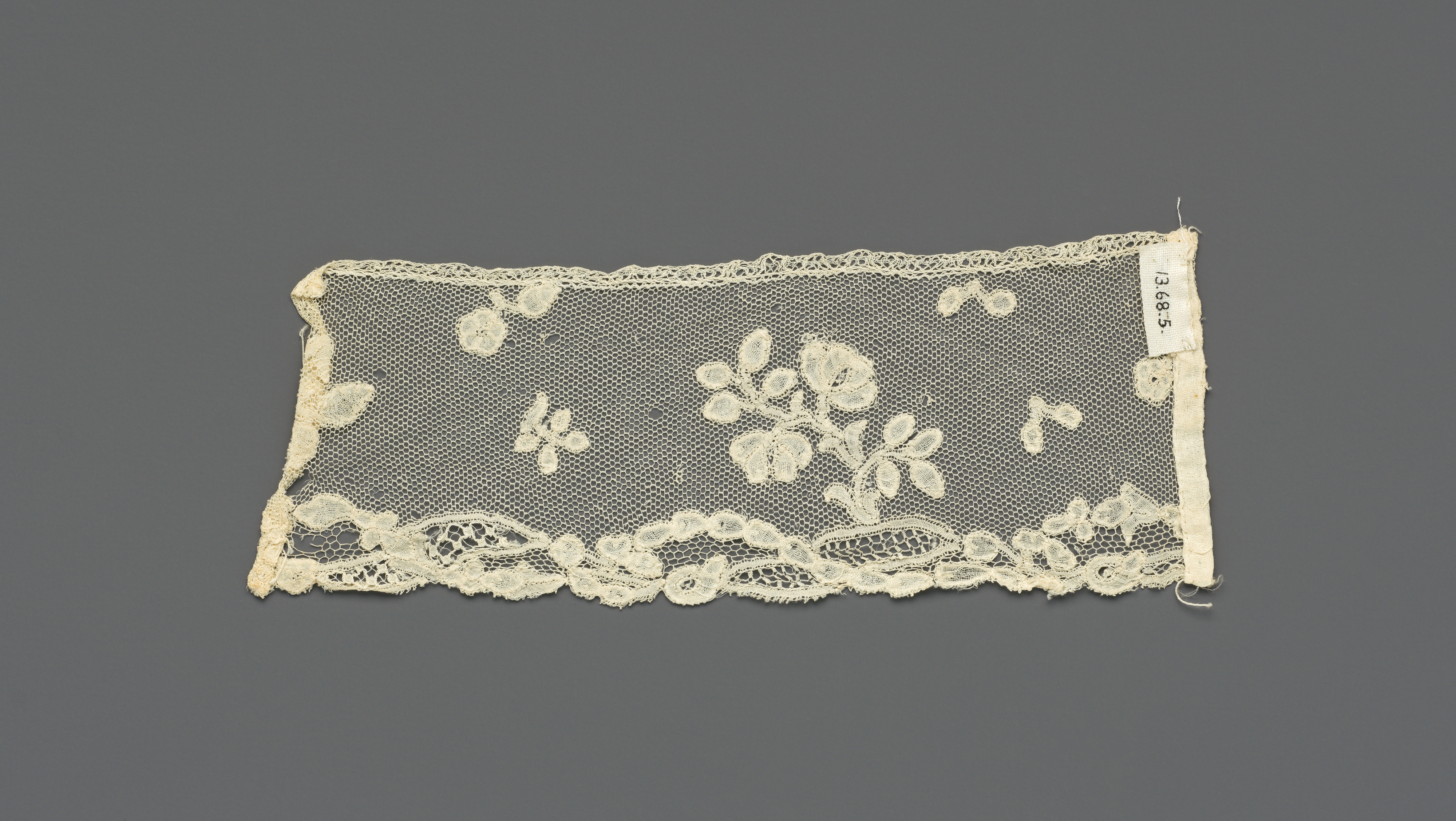
The Art of the Fragment: Deconstructing Heritage Through Bobbin Lace at Katherine Fashion Lab
In the rarefied world of haute couture, where innovation often masquerades as rupture, Katherine Fashion Lab presents a compelling counter-narrative with its latest standalone study, titled “Fragment.” This collection is not a wholesale rejection of tradition but a meticulous excavation of it. By zeroing in on the singular, often overlooked element of bobbin lace—a technique rooted in a global heritage spanning from 16th-century Flanders to the convents of South America—the Lab elevates a humble craft into a powerful lexicon of contemporary luxury. The result is a profound meditation on memory, materiality, and the inherent beauty of the incomplete.
Deconstructing the Global Lineage of Bobbin Lace
To understand the significance of “Fragment,” one must first appreciate the deep, transnational roots of its chosen medium. Bobbin lace is not a monolithic tradition; it is a diaspora of threads. Its origins trace back to the intricate punto in aria (stitches in the air) of Renaissance Italy, evolving through the commercial powerhouses of Brussels, the intricate Chantilly silks of France, and the geometric Maltese designs of the Mediterranean. Crucially, the craft was carried across oceans via colonial trade routes, finding new life in the encaje of the Philippines, the ñandutí (spider web) lace of Paraguay, and the delicate renda de bilros of Brazil.
Katherine Fashion Lab’s genius lies in treating this global heritage not as a static archive but as a living, fragmented language. The “Fragment” study does not attempt to recreate a specific historical pattern. Instead, it disassembles the very grammar of bobbin lace—the grid, the twist, the weave, the picot—and reassembles it through a contemporary, almost archaeological lens. Each garment becomes a palimpsest, where the ghost of a 17th-century Flemish collar might coexist with the structural logic of a 20th-century Andean arpillera. This is not cultural appropriation; it is a scholarly, reverent act of re-contextualization.
Materiality as Narrative: The Language of Thread and Void
The choice of bobbin lace as the sole material for “Fragment” is a masterstroke of conceptual discipline. Unlike machine-made lace, which is uniform and perfect, handmade bobbin lace is inherently imperfect. It bears the subtle tension of the artisan’s hand, the slight irregularities in thread tension, the occasional pulled loop. For the Lab, these “flaws” are not defects but signatures of human presence. In “Fragment,” the lace is often left unfinished—edges are raw, patterns are interrupted, and sections of the fabric are deliberately left as open, negative space.
This aesthetic of the incomplete is central to the collection’s thesis. The fragment is not a lack; it is a provocation. It invites the viewer to complete the story, to imagine the missing threads. The Lab’s artisans have employed a technique they call “disrupted plaiting,” where the classic diamond or rose patterns of bobbin lace are abruptly severed, leaving trailing ends of linen, silk, or even metallic thread. The visual effect is akin to a torn manuscript or a fractured mosaic—each piece beautiful, yet part of a larger, lost whole. The void becomes as expressive as the thread, a silent commentary on the ephemeral nature of tradition and the selective nature of memory.
Silhouette and Structure: The Architecture of Air
Standalone studies often risk being purely conceptual, but “Fragment” succeeds because it marries its intellectual rigor with wearable, albeit avant-garde, structure. The silhouettes are deliberately architectural, drawing on the stiffness of the lace itself. Bobbin lace, when worked in heavier threads or starched, can hold its shape with surprising rigidity. The Lab exploits this property to create garments that are both sculptural and ethereal.
Key pieces include a deconstructed ball gown where the bodice is a rigid cage of interlocking lace motifs, reminiscent of a Gothic vault, while the skirt dissolves into a cascade of unconnected lace fragments, floating like dust motes in light. Another standout is a tailored jacket where the lapels are formed by a single, unbroken strip of Chantilly lace, but the sleeves are entirely absent, replaced by a web of loose threads that trace the arm’s form. This interplay between presence and absence is a recurring motif. The garments do not clothe the body so much as they frame it, allowing the skin to become part of the textile’s conversation. The human form is the final fragment—the missing piece that completes the composition.
Color and Composition: A Monochrome Reverie
In keeping with the theme of fragmentation and heritage, the color palette is deliberately restrained. The collection is dominated by unbleached ecru, ivory, and deep charcoal—colors that evoke archival documents, aged parchment, and the patina of time. There are no vibrant dyes or prints. The only “color” comes from the play of light through the lace’s openwork, creating a chiaroscuro effect that shifts with the wearer’s movement. This monochrome approach forces the eye to focus on the texture and structure of the lace, turning each garment into a study in relief.
One exceptional piece features a double-layer technique: a base of dense, dark charcoal bobbin lace, overlaid with a looser, ivory web. The result is a visual depth that mimics the layering of historical textiles in a museum archive. The darker layer suggests the foundational heritage, while the lighter layer represents the contemporary interpretation—two fragments of time coexisting in a single fabric.
Conclusion: A New Lexicon for Couture
“Fragment” is more than a collection; it is a manifesto for a new kind of couture—one that values process over product, heritage over novelty, and fragmentation over completion. By isolating bobbin lace from its global origins and subjecting it to a rigorous, standalone analysis, Katherine Fashion Lab demonstrates that the most innovative path forward often lies in a deep, respectful look backward. The fragments are not remnants of a lost past; they are the building blocks of a future where craft and concept are inextricably woven together. In this study, every thread tells a story, and every gap invites a new one. This is couture as critical discourse, and it is breathtaking.