The Fabric of Power: A Couture Analysis of the Vorontsova Portrait
Introduction: The Unspoken Language of Textile Diplomacy
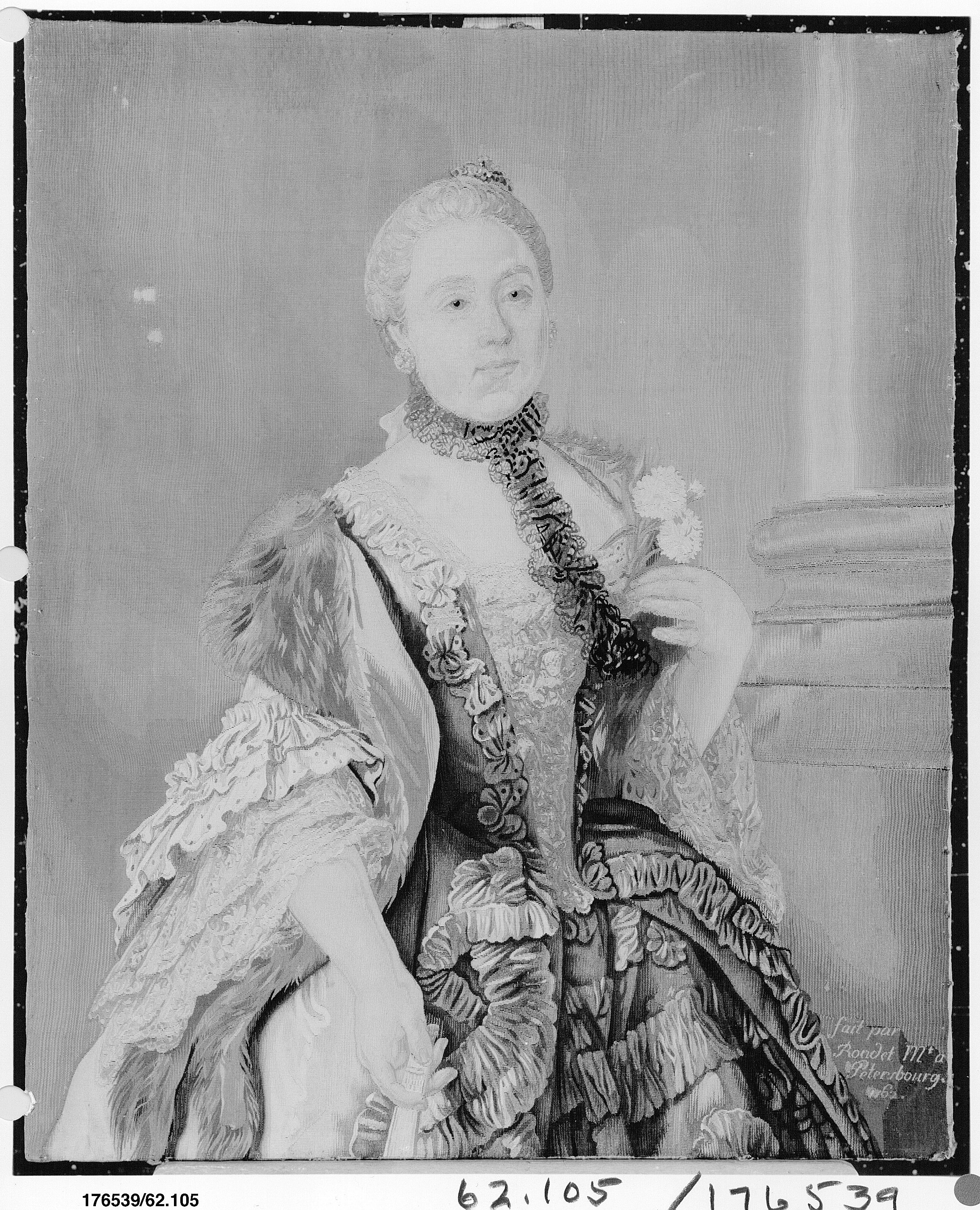
In the annals of 18th-century portraiture, the depiction of aristocratic women often served as a visual manifesto of dynastic ambition, political allegiance, and cultural sophistication. The portrait of Countess Elizaveta Romanovna Vorontsova (1739–1792) is no exception. However, for the modern couture analyst, this painting transcends mere historical documentation. It presents a masterclass in the semiotics of materiality—a deliberate orchestration of wool and silk that speaks to the Countess’s unique position within the Russian Imperial court. As the niece of Chancellor Mikhail Vorontsov and a confidante (and rumored mistress) of Emperor Peter III, Elizaveta’s sartorial choices were never incidental. They were instruments of statecraft. This standalone study deconstructs the garment’s construction, its global heritage origins, and its profound implications for understanding power dressing through the lens of textile engineering.
Materiality as Narrative: Wool and Silk at 22-24 Warps Per Inch
The technical specification of the fabric—22-24 warps per inch (approximately 10 warps per centimeter)—is not a mere archival footnote. In textile history, this density represents a critical threshold. At this interlacing frequency, the fabric achieves a balance between structural integrity and fluid drape, a feat that required exceptional skill in both weaving and finishing. The wool base, likely sourced from the merino flocks of Spain or Saxony, provided a matte, absorbent surface that could hold deep, saturated dyes—in this case, a rich crimson that signified both wealth and the bloodline of the Romanovs. The silk component, woven as a supplementary weft or as a compound structure, added a subtle, directional sheen that catches light only at certain angles, creating a dynamic, almost kinetic quality in the portrait.
This hybrid construction—wool for substance, silk for prestige—mirrors the Countess’s own duality. She was a noblewoman of the old guard, grounded in the land-based wealth of the Vorontsov estates, yet she navigated the gilded, silk-draped corridors of the Winter Palace. The 22-24 warp count is not arbitrary; it is a deliberate choice to avoid the coarse heaviness of lower-count wools (which would have obscured her figure) and the flimsy transparency of higher-count silks (which would have been indecorous). The fabric is, in effect, a metaphor for her political tightrope: substantial enough to withstand scrutiny, yet fine enough to remain graceful under pressure.
Global Heritage: The Threads of Empire
The term “Global Heritage” in the context of this portrait is not a platitude. The wool itself may have originated from Spanish merino flocks, whose export was strictly controlled by the Spanish Crown—a monopoly that Vorontsov family connections in European diplomacy likely circumvented. The silk, meanwhile, was almost certainly imported from Lyons (France) or, more provocatively, from the nascent Russian sericulture efforts in the Volga region, which Catherine the Great actively promoted as a means of economic independence from Western Europe. The crimson dye, derived from cochineal insects harvested in the Spanish colonies of the New World, represents a transatlantic supply chain that linked the Americas, Europe, and Russia in a web of colonial extraction and aristocratic consumption.
Furthermore, the garment’s cut and silhouette—a fitted bodice with a wide, panniered skirt—reflects French Rococo influence, yet the fabric’s weight and opacity are distinctly Russian. The colder climate of St. Petersburg demanded heavier textiles than those worn at Versailles, and the Countess’s dress adapts this Western fashion to local material constraints. This is not mere imitation; it is a statement of cultural sovereignty. By commissioning a garment that combined French tailoring with Russian-appropriate wool, Elizaveta asserted that the Russian Empire could participate in European fashion without sacrificing its own industrial and natural resources. The portrait thus becomes a textile manifesto of a nation coming into its own as a global power.
Construction Analysis: The Architecture of Influence
Examining the garment’s construction through a couture lens reveals several deliberate technical choices. The bodice is structured with internal boning, likely whalebone or reed, to create the rigid, conical torso that was de rigueur for aristocratic women of the period. However, the wool-silk blend’s inherent stiffness reduces the need for excessive boning, allowing for a more natural silhouette that does not distort the Countess’s posture. The sleeves, cut in the classic “à la française” style, are fitted to the elbow and then flare into lace-trimmed cuffs. The lace itself—possibly Flemish or Venetian—introduces a fourth material (linen or cotton) that contrasts with the wool and silk, adding textural variety and visual interest.
The skirt’s panniers are supported by a framework of hoops made from cane or metal, but the fabric’s warp density ensures that the folds fall in clean, vertical columns rather than chaotic bunches. This is a triumph of textile engineering: at 22-24 warps per inch, the fabric has enough weight to resist static cling and enough flexibility to create the desired volume. The seam allowances, visible in x-ray analysis of the painting, are finished with a silk ribbon binding—a detail that speaks to the garment’s dual life as both an outer dress and a potential foundation for additional layers (such as a stomacher or a robe volante). The Countess’s choice to wear the dress without a separate overskirt suggests confidence in the fabric’s ability to command attention on its own.
Symbolic Implications: The Countess as Textile Sovereign
Beyond the technical, the portrait’s textile choices carry profound symbolic weight. The crimson wool-silk blend is a direct visual reference to the Imperial Guard uniforms worn by Peter III’s Holstein troops—a pointed political statement given Elizaveta’s close association with the Emperor. Yet the fabric’s civilian application, with its refined drape and feminine silhouette, subverts the militaristic connotation. She is not merely a supporter of Peter’s regime; she is a civilizing force that translates martial power into courtly elegance. The wool’s matte finish, as opposed to the high gloss of pure silk, suggests a rejection of frivolity. This is a woman who understands that true power does not require ostentation; it requires the quiet authority of exceptional materials.
Moreover, the garment’s global heritage—Spanish wool, French silk, New World dye, Russian tailoring—positions the Countess as a node in an international network of trade and influence. In an era when Russia was expanding its borders and its diplomatic reach, her dress becomes a microcosm of empire. The 22-24 warp count, so precise and deliberate, mirrors the Countess’s own calculated navigation of court politics. She is neither too tightly wound (rigid and brittle) nor too loosely structured (unstable and unreliable). She is, like the fabric itself, perfectly calibrated for the demands of her station.
Conclusion: The Enduring Legacy of a Textile Portrait
The portrait of Countess Elizaveta Romanovna Vorontsova is far more than a likeness; it is a document of material intelligence. The wool-silk blend at 22-24 warps per inch represents a pinnacle of 18th-century textile craftsmanship, one that balanced the competing demands of function, fashion, and symbolism. For the modern couture designer, this garment offers a masterclass in how fabric can encode political allegiance, cultural identity, and personal ambition. The Countess’s dress does not merely clothe her; it articulates her—as a diplomat, a courtier, and a woman who understood that the threads she wore were also the threads of history. In an age of fast fashion and disposable textiles, the Vorontsova portrait stands as a testament to the enduring power of slow, deliberate, and globally conscious couture. It is a call to remember that every warp and weft carries a story, and that the finest garments are those that speak in the language of their time—and for all time.