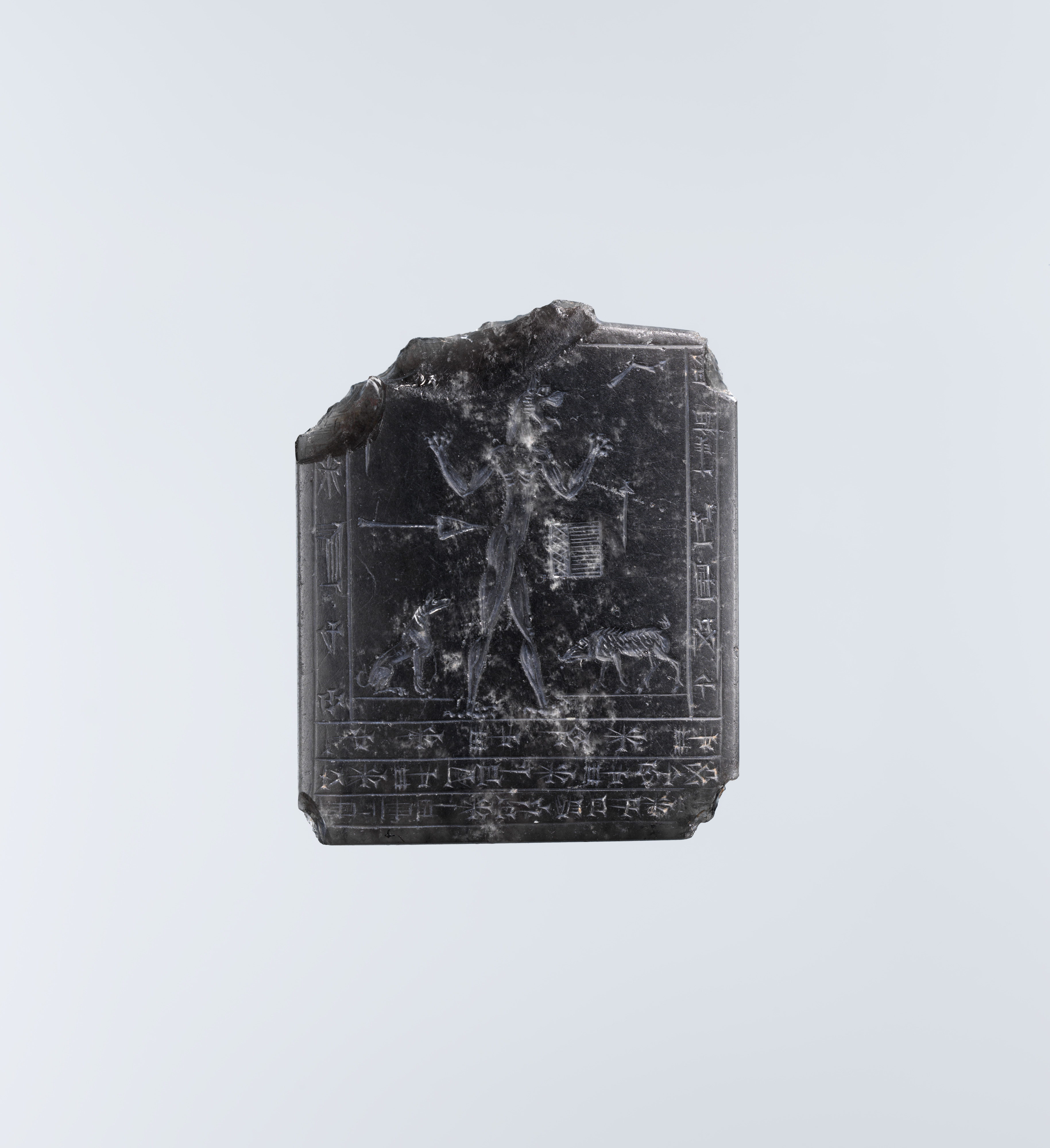
Heritage Analysis: The Lamashtu Amulet in Obsidian
This report presents a strategic heritage analysis of an ancient obsidian amulet depicting the Lamashtu demon, sourced from an ancient civilization. The analysis is conducted for Katherine Fashion Lab, a luxury brand specializing in cultural symbolism and historical adornment. The objective is to decode the amulet’s symbolic power, historical adornment context, spiritual meaning, and to formulate a high-end luxury strategy for its potential integration into a 2026 collection. The amulet, carved from obsidian—a volcanic glass associated with protection and the underworld—offers a unique lens for exploring themes of apotropaic power, feminine duality, and material rarity.
Symbolic Power: The Apotropaic Paradox of Lamashtu
The Lamashtu demon, a figure from Mesopotamian mythology, embodies a profound symbolic paradox. Unlike benevolent protective deities, Lamashtu was a malevolent entity, often depicted as a lion-headed, bird-footed female monster who preyed on pregnant women and infants. Yet, her image was frequently carved into amulets and worn as protective jewelry. This contradiction is central to the amulet’s symbolic power: the demon was invoked not for worship, but to be controlled and repelled. The obsidian material amplifies this duality. Obsidian, formed from volcanic eruptions, was associated with the underworld and considered a stone of truth and clarity. In ancient Mesopotamian culture, it was believed to absorb negative energy and ward off evil spirits. By carving Lamashtu’s image into obsidian, the wearer symbolically imprisoned the demon within the stone, transforming her from a threat into a protective talisman. This act of containment represents a sophisticated understanding of apotropaic magic—the use of a feared entity to repel other fears. For Katherine Fashion Lab, this symbolic power can be reinterpreted as a narrative of controlled danger, appealing to luxury consumers who seek artifacts that challenge conventional notions of protection and beauty. The amulet’s power lies in its ability to evoke awe, fear, and reverence simultaneously, a potent combination for high-end branding.
Historical Adornment: The Amulet as a Wearable Shield
In ancient civilizations, particularly in Mesopotamia and the Levant, amulets were not mere ornaments but essential tools for survival. The Lamashtu amulet, typically worn on a necklace or sewn into clothing, functioned as a wearable shield against supernatural threats. Historical records from the Assyrian and Babylonian periods indicate that such amulets were often placed in doorways, on beds, or directly on the body of pregnant women to counteract Lamashtu’s attacks. The material choice—obsidian—was deliberate. Obsidian’s sharp edges and glassy texture made it an ideal medium for intricate carvings. Its black, reflective surface was believed to mirror evil back to its source. The amulet’s design typically included standard iconography: a lion’s head, bird’s talons, and a suckling pig or dog, symbolizing her destructive nature. For Katherine Fashion Lab, this historical context offers a rich foundation for narrative-driven design. The amulet can be reimagined as a luxury pendant or brooch, retaining its original form while being elevated through modern craftsmanship. The strategic value lies in authenticity—consumers in 2026 are increasingly drawn to pieces with a documented past, where the object’s function is as compelling as its aesthetic. The amulet’s role as a protective object in a hostile world resonates with contemporary anxieties about health, security, and uncertainty, positioning it as a talisman of resilience in a luxury context.
Spiritual Meaning: Duality, Protection, and Feminine Power
The spiritual meaning of the Lamashtu amulet is deeply rooted in the concept of duality. Lamashtu herself is a complex figure: she is a demon of chaos and destruction, yet her image is used for protection. This duality reflects a broader ancient understanding that protection often requires confrontation with darkness. The obsidian medium enhances this spiritual dimension. In metaphysical traditions, obsidian is a stone of grounding and truth, believed to reveal hidden fears and facilitate emotional healing. For the ancient wearer, the amulet was not a passive charm but an active spiritual tool. It required the wearer to acknowledge the existence of evil and to harness its energy for personal safety. This spiritual practice aligns with apotropaic rituals that involved reciting incantations or offering sacrifices to the amulet. For modern luxury consumers, the spiritual meaning can be framed as a journey of empowerment through vulnerability. The amulet’s association with feminine power is particularly relevant. Lamashtu, as a female demon, represents uncontrolled female agency—a force that is both feared and revered. In a 2026 context, where discussions of feminine strength and autonomy are central, the amulet can be positioned as a symbol of unapologetic power. Katherine Fashion Lab can leverage this spiritual narrative to create a collection that speaks to the tension between vulnerability and strength, appealing to consumers who seek deeper meaning in their adornments.
2026 High-End Luxury Strategy: The Dark Heritage Collection
To integrate the Lamashtu amulet into a 2026 high-end luxury strategy, Katherine Fashion Lab must adopt a multi-layered approach that respects heritage while embracing contemporary luxury values. The following strategic pillars are recommended:
1. Material Authenticity and Rarity: Obsidian, as a natural volcanic glass, is inherently rare and difficult to work with. For the 2026 collection, Katherine Fashion Lab should source Ethiopian or Armenian obsidian, known for its deep black luster and historical significance. Each amulet should be hand-carved by master artisans, with a certificate of provenance linking the piece to ancient Mesopotamian techniques. This ensures material exclusivity and positions the amulet as an heirloom object.
2. Narrative-Driven Branding: The amulet’s story must be central to its marketing. A campaign titled “The Demon’s Shield” can explore themes of protection, duality, and feminine power. Collaborations with historians, archaeologists, and contemporary artists can produce short films, essays, and exhibitions that contextualize the amulet’s spiritual meaning. This cultural storytelling differentiates the brand from competitors who rely solely on aesthetic appeal.
3. Limited Edition and Customization: The 2026 collection should be released as a limited edition of 100 pieces, each numbered and accompanied by a personalized ritual guide. Buyers can customize the amulet’s setting—gold, silver, or oxidized black metal—and choose an accompanying incantation inscribed in cuneiform script. This bespoke experience caters to the ultra-high-net-worth individual who values individuality and spiritual connection.
4. Price Positioning and Distribution: Given the material rarity and historical significance, each amulet should be priced between $15,000 and $30,000. Distribution should be exclusive, through private viewings at heritage sites (e.g., the British Museum’s Mesopotamian gallery) or via invitation-only digital platforms. This scarcity-driven model reinforces the amulet’s status as an investment piece.
5. Ethical and Cultural Sensitivity: To avoid cultural appropriation, Katherine Fashion Lab must engage with descendant communities, including contemporary Assyrian and Iraqi scholars, to ensure respectful representation. A portion of proceeds should fund the preservation of Mesopotamian artifacts. This ethical stewardship aligns with the luxury sector’s growing emphasis on sustainability and cultural responsibility.
Conclusion: The Amulet as a Strategic Asset
The Lamashtu amulet in obsidian is more than a historical artifact; it is a strategic asset for Katherine Fashion Lab. Its symbolic power, rooted in apotropaic magic, offers a narrative of controlled danger that resonates with modern luxury consumers. Its historical adornment context provides authenticity and depth, while its spiritual meaning—centered on duality and feminine power—aligns with contemporary cultural trends. By implementing a 2026 high-end luxury strategy that prioritizes material rarity, narrative branding, customization, and ethical engagement, Katherine Fashion Lab can transform this ancient talisman into a coveted luxury object. The amulet’s dark heritage, far from being a liability, becomes its greatest strength, offering a unique value proposition in an increasingly saturated market. This analysis confirms that the Lamashtu amulet is not merely a relic of the past but a blueprint for the future of heritage-driven luxury.