Deconstructing Desire: A Couture Analysis of "Two Lovers" Through the Lens of Ukiyo-e
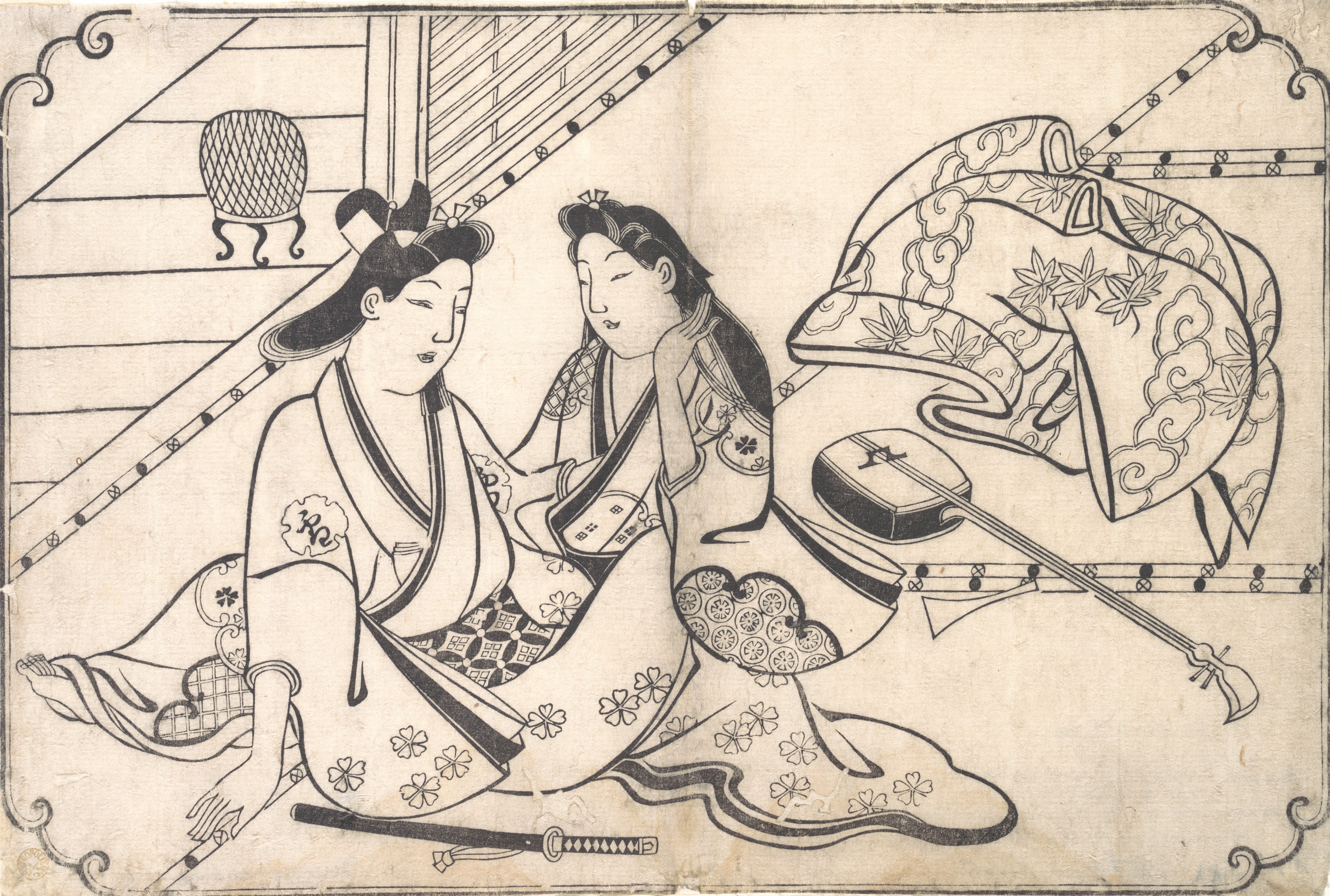
The artwork "Two Lovers," originating from Japan and rendered in the traditional medium of woodblock print, presents a profound case study for the Katherine Fashion Lab. Far beyond a mere depiction of romantic entanglement, this piece serves as a sophisticated sartorial manifesto. It encapsulates a complete ecosystem of dress, where textile, silhouette, gesture, and cultural context converge to articulate a narrative of intimacy, social codes, and transitory beauty. As a standalone study, it allows us to isolate and examine the core principles of a constructed aesthetic, where every fold of fabric and every printed pattern is a deliberate language. This analysis will deconstruct the ensemble not as costume, but as a pioneering blueprint for contemporary couture, focusing on its structural dialogue, symbolic materiality, and the profound psychology of wrapped form.
The Structural Dialogue: Architecture of Intimacy
The immediate power of the composition lies in its architectural interplay of silhouettes. The figures are not merely adjacent; they are interlocked in a manner that defines and redefines the garments they wear. The outer garment, or uchikake, of the female figure acts as a monumental canvas. Its A-line drape, broad at the hem and trailing, establishes a foundation of stability and luxury. Against this, the male figure’s kimono, likely a kosode, presents a more vertical, restrained line. This contrast creates a visual tension—the expansive, flowing form versus the contained, upright one—mirroring the dynamic of public display and private intimacy.
Couture translation begins here. The Lab would interpret this not as two separate garments but as a single, relational garment system. Imagine a ensemble where a voluminous, structured coat, embroidered or printed with a dominant narrative pattern, envelops a sleeker, plainer underlayer. The act of wearing—or partially revealing—the underlayer becomes performative, dictated by movement and interaction. The seams and closures would be designed not just for function, but to facilitate this dialogue of concealment and revelation, much like the lovers' embrace dictates which parts of the kimono are seen or hidden. The silhouette is therefore not static; it is kinetic and responsive, changing with the wearer's engagement with their environment or counterpart.
Symbolic Materiality: The Narrative in the Pattern
The woodblock print medium itself is instructive. The flat planes of color and precise, graphic patterns are not attempts at realistic depiction but are symbolic codes. In ukiyo-e, specific patterns (kasuri), family crests (mon), and seasonal motifs (wisteria, chrysanthemums, flowing water) communicate status, lineage, and emotional subtext. In "Two Lovers," the patterns adorning the kimono are integral to the narrative. They are a text woven into the fabric.
For a modern couture interpretation, Katherine Fashion Lab would move beyond literal floral prints. The concept demands that the material itself becomes a palimpsest of meaning. Techniques such as intarsia knitting, laser-cut lace with layered symbolism, or jacquard weaves that tell a fragmented story from different angles would be employed. The "ink and color on paper" translates to a mastery of fabric manipulation: devoré velvet that reveals a contrasting base, iridescent silks that change motif with light, or embroideries that are dense and illustrative in some areas and fade to mere suggestions in others. The pattern is not applied; it is engineered into the structure, much like the woodblock carver’s line is intrinsic to the print. The material tells the story of the wearer’s identity and intent, requiring a literate observer to fully decode.
The Psychology of the Wrapped Form
Perhaps the most radical couture principle present in "Two Lovers" is the philosophy of the wrapped and tied body. Unlike Western tailoring, which sculpts and confines the body to an idealized form, the kimono is a rectangular construct that drapes over the body's reality. The obi (sash) is the sole anchor, a focal point of immense complexity and artistry that holds the entire composition together. This creates a fundamentally different relationship between garment and wearer. The body defines the drape of the cloth in a unique way each time it is worn; the garment is an interactive partner.
This presents a groundbreaking couture directive: to design from the inside out, prioritizing the experience of enclosure and the poetry of closure. Imagine gowns that are single lengths of innovative fabric, transformed entirely by the method of wrapping and the choice of fastener—an obi-like belt that is a sculptural art piece in itself. The design process shifts from patterning darts and seams to engineering transformational folds, weighted hems, and strategic tie points that empower the wearer to participate in the final silhouette. It champions modesty not as concealment, but as a tool for heightening allure through suggestion—the glimpse of a neckline (eri), the tension of the fabric across the shoulders, the controlled spill of an inner sleeve (furisode). This is a couture of profound personal agency and psychological depth.
Conclusion: The Standalone Study as a Generative Blueprint
As a standalone study, "Two Lovers" is liberated from specific historical chronology, allowing its core sartorial ideologies to shine with universal clarity. For Katherine Fashion Lab, this analysis yields a potent creative framework: the Relational Silhouette, the Narrative Textile, and the Philosophy of the Wrap. The final couture manifestation would not be a pastiche of Japanese dress. It would be a rigorous, modern embodiment of these principles—a tailored coat that unfolds into a ceremonial robe, a gown whose embroidered story is only revealed in movement, a system of dressing where a single, masterful knot completes the architecture. In the quiet intensity of these two lovers, we find a world of aesthetic theory, proving that the most intimate human moments are often clad in the most revolutionary designs. The woodblock print, in its delicate layers of ink, offers an unexpectedly robust foundation for the future of conceptual fashion.