The Sleeve Band as a Microcosm of Couture
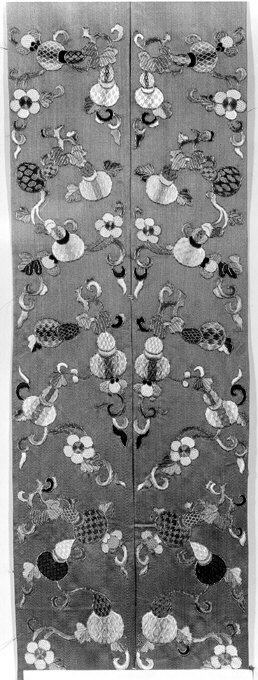
In the vast lexicon of haute couture, few elements possess the narrative density of the sleeve band. At Katherine Fashion Lab, we approach this seemingly modest component as a standalone study in material mastery, cultural resonance, and artistic precision. The subject under analysis—a sleeve band originating from China, crafted from silk and metallic thread embroidered onto a silk ground—offers a profound lens through which to examine the intersection of heritage craftsmanship and contemporary design philosophy. This is not merely an accessory to a garment; it is a concentrated statement of identity, technique, and aesthetic intention.
Materiality as a Language of Luxury
The choice of materials in this sleeve band is far from arbitrary. Silk, with its luminous sheen and fluid drape, has been a cornerstone of Chinese textile art for millennia. Its use as both the base and the primary thread material signifies a commitment to purity and refinement. Silk’s natural protein fibers absorb dye with exceptional depth, allowing for subtle gradations of color that synthetic fabrics cannot replicate. In this band, the silk ground provides a soft, almost ethereal canvas, while the silk embroidery thread introduces a matte contrast that enhances the tactile experience.
The inclusion of metallic thread elevates the piece from the purely organic to the opulent. Metallic threads—often composed of a thin strip of metal wrapped around a core of silk or polyester—introduce a dynamic interplay of light and shadow. When applied to silk, the metallic elements catch ambient light, creating a shifting mosaic that changes with the viewer’s angle. This effect is not merely decorative; it is a deliberate engineering of visual rhythm. The metallic thread in this band is woven with precision, forming patterns that suggest both natural forms and geometric abstraction. The contrast between the soft silk ground and the rigid, reflective metallic thread creates a tension that is central to the band’s allure—a dialogue between the ephemeral and the eternal.
Origins and Cultural Resonance
China’s textile heritage is vast, but the sleeve band occupies a specific niche within that history. Traditionally, sleeve bands were not merely functional cuffs; they were markers of status, regional identity, and even spiritual protection. In the Qing Dynasty, for example, elaborate sleeve bands known as xiù biān were embroidered with motifs ranging from dragons and phoenixes to floral scrolls, each symbol carrying layers of meaning. The band under analysis draws from this tradition but reinterprets it through a modern, minimalist lens. The motifs are not overtly representational; instead, they suggest organic forms—perhaps stylized waves or abstracted leaves—rendered in metallic thread against a monochromatic silk field.
This abstraction is a conscious departure from historical literalism. The band acknowledges its Chinese origins not through direct imitation but through a distillation of aesthetic principles: the emphasis on negative space, the balance of yin and yang in the interplay of light and dark, and the celebration of imperfection as a form of beauty. The metallic thread, while opulent, is used sparingly, allowing the silk to breathe. This restraint is a hallmark of Chinese aesthetics, where the void is as important as the form.
Technical Execution: The Art of Embroidery
To understand the sleeve band’s significance, one must appreciate the technical rigor required to produce it. The embroidery technique employed is likely a variant of silk embroidery, a discipline that demands extraordinary patience and skill. Each stitch is placed by hand, with the artisan controlling tension, angle, and density. The metallic thread, being less pliable than silk, requires additional care to prevent kinking or breaking. The result is a surface that is both uniform and alive—each stitch a micro-decision in a larger composition.
The band’s dimensions—typically narrow, ranging from two to four inches in width—present a unique challenge. Within this confined space, the designer must create a cohesive visual narrative. The metallic thread forms a continuous line that weaves through the silk, sometimes appearing as a solid band, other times as a delicate tracery. The interplay of positive and negative space is critical; the silk ground is not merely a background but an active participant. Where the metallic thread recedes, the silk asserts its own texture and color, creating a subtle counterpoint.
From a structural perspective, the sleeve band must also accommodate the garment’s movement. Silk, while luxurious, is inherently delicate. The addition of metallic thread, which is heavier and less flexible, could compromise the fabric’s drape. The artisan must therefore balance density with pliability, ensuring that the embroidery does not stiffen the band or create stress points. This technical acumen elevates the band from a decorative trim to a functional work of art.
Standalone Study: The Band as Art Object
By isolating the sleeve band as a standalone study, we liberate it from the context of the full garment. This approach allows for a focused examination of its intrinsic qualities. Without the distraction of a dress or jacket, the band becomes a pure expression of material and technique. It invites the viewer to consider the relationship between the organic silk and the industrial metallic thread, between the fluid and the fixed.
In this standalone context, the band functions as a microcosm of couture itself. Couture is, at its core, the art of the exceptional—the creation of objects that are both functional and transcendent. The sleeve band embodies this duality. It is a practical element, securing the sleeve and defining its silhouette, yet it is also a canvas for artistic expression. The metallic thread catches the light, and the silk responds to touch, creating a sensory experience that transcends the visual.
Comparative Analysis: East Meets West
When juxtaposed with Western couture traditions, the Chinese sleeve band reveals distinct philosophical differences. Western embroidery often prioritizes volume and texture, using dense stitching to create three-dimensional effects. The Chinese approach, by contrast, values flatness and precision. The metallic thread in this band lies flush with the silk surface, creating a two-dimensional illusion of depth through color and light. This is not a technique of accumulation but of subtraction—a careful editing of form.
Furthermore, the band’s color palette—likely dominated by neutrals with accents of gold or silver—reflects a Chinese preference for subtlety over spectacle. In Western couture, metallic threads are often used to create bold, dramatic statements. Here, they are employed with restraint, as whispers rather than declarations. This understatement is a form of power; it demands that the viewer look closely, rewarding patience with discovery.
Conclusion: The Enduring Relevance of the Sleeve Band
In an era of fast fashion and digital design, the handcrafted sleeve band stands as a testament to the enduring value of artisanal skill. It is a reminder that couture is not merely about creating garments but about preserving traditions while pushing boundaries. The silk and metallic thread band from China, analyzed in isolation, reveals the depth of thought and labor that defines true craftsmanship. At Katherine Fashion Lab, we see such pieces not as relics of the past but as blueprints for the future—a future where material, technique, and cultural heritage converge to create objects of lasting beauty.
This sleeve band is more than a detail; it is a declaration. It speaks of origins, of hands that worked with unwavering focus, and of a design philosophy that finds strength in subtlety. For the discerning eye, it offers a world within a few inches of fabric—a world worth exploring.