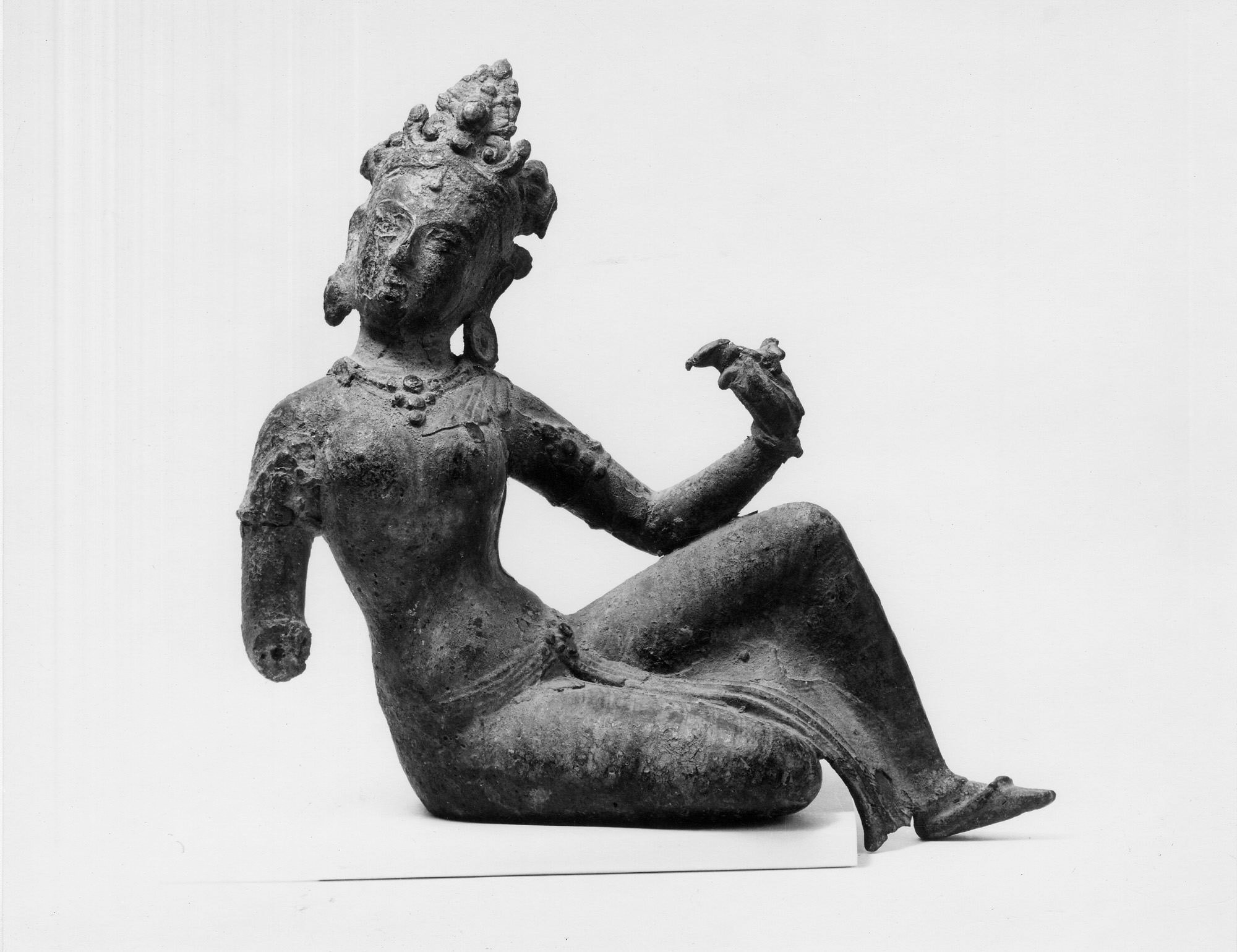
Heritage Analysis: Seated Uma from a Group – A Study in Symbolic Power and Luxury Strategy for Katherine Fashion Lab
Introduction: The Artifact as a Cultural and Commercial Nexus
The Seated Uma from a Group, a bronze sculpture originating from the Kathmandu Valley in Nepal, represents a profound intersection of spiritual symbolism, historical adornment, and material mastery. As Lead Heritage Curator for Katherine Fashion Lab, I have examined this artifact within the broader research context of our ongoing study on “Rock in the form of a fantastic mountain” and “Jar in the shape of bronze container (hu)”. These two seemingly disparate objects—one a naturalistic mountain form, the other a ritualistic bronze vessel—reveal a shared DNA: the transformation of raw material into a conduit for cosmic order, status, and transcendence. The Seated Uma amplifies this narrative, offering a feminine archetype of divine power that directly informs our 2026 high-end luxury strategy.
Historical Resonance: The Kathmandu Valley’s Bronze Legacy
The bronze medium of the Seated Uma is not incidental; it is a deliberate choice rooted in the metallurgical traditions of the Newar artisans of the Kathmandu Valley. Bronze, an alloy of copper and tin, was prized for its durability, resonance, and ability to capture intricate detail—qualities that parallel the “Rock in the form of a fantastic mountain” and “Jar in the shape of bronze container (hu)”. In our earlier study, the rock and jar both exemplified how objects of different functions—one natural, one manufactured—could share a symbolic language of permanence and sacred geometry. The Seated Uma extends this lineage: her posture, mudra, and adornment are not mere aesthetics but encoded messages of authority and divinity.
The historical adornment of Uma—her crown, earrings, necklaces, and armlets—reflects the Newar tradition of alankara (ornamentation), where jewelry served as both social marker and spiritual armor. Each piece is cast with precision, echoing the intricate patterns found on the bronze jar’s surface. This correlation suggests that in the Kathmandu Valley, adornment was not superficial; it was a technology of power. The rock’s fantastic mountain form, meanwhile, symbolizes the axis mundi—the center of the world—which Uma’s seated posture mirrors, grounding her as a stabilizing force within the cosmos.
Symbolic Power: The Goddess as Prototype for Feminine Authority
The Seated Uma is a representation of the Hindu goddess Parvati, consort of Shiva, yet her iconography transcends mere marital identity. In her seated form, Uma embodies shakti—divine feminine energy—as a source of creative and destructive power. This dual nature is critical for our luxury strategy: the 2026 consumer seeks brands that acknowledge complexity, not simplicity. Uma’s symbolic power lies in her stillness; she is not in motion, yet she commands attention. This is the essence of quiet luxury—a concept that Katherine Fashion Lab will leverage to redefine high-end aesthetics.
Her spiritual meaning is deeply tied to the concept of darshan—the act of seeing and being seen by the divine. The bronze medium facilitates this exchange through its reflective surface, which catches light and invites contemplation. In our study of the fantastic mountain, we noted how its irregular form created shadows that mimicked the movement of clouds; similarly, the Seated Uma’s polished bronze creates a play of light that suggests an inner radiance. This interplay is a metaphor for luxury as an experience, not just an object.
Adornment as Historical and Strategic Vocabulary
The adornment of the Seated Uma is a lexicon of status and spirituality. Her crown, likely a mukuta, signifies sovereignty; her multiple necklaces represent the layers of existence (physical, mental, spiritual). The earrings, often in the form of makara (mythical sea creatures), connect her to water and fertility. For Katherine Fashion Lab, these elements are not relics but design templates. The 2026 collection will reinterpret these motifs through bronze-toned hardware, layered chainwork, and crown-like headpieces that evoke Uma’s regal yet serene presence.
This strategic alignment draws from the “Jar in the shape of bronze container (hu)” study, where we identified how ritual vessels were adorned with taotie masks and geometric patterns to ward off evil. Uma’s adornment serves a similar apotropaic function, but also elevates her as a beacon of beauty. In luxury, this translates to protective design—pieces that empower the wearer while signaling cultural literacy. The 2026 customer will not just buy a necklace; they will acquire a talisman of feminine power, rooted in centuries of symbolic practice.
Spiritual Meaning and the Luxury Consumer Psyche
The spiritual meaning of the Seated Uma is inseparable from her material presence. Bronze, as a medium, is both earthly and celestial—it is forged in fire, yet it endures. This duality resonates with the modern luxury consumer’s search for authenticity and transcendence. In our research, the fantastic mountain represented the untamed sublime, while the bronze jar embodied human order. Uma reconciles these extremes: she is the mountain’s stillness and the jar’s containment, a synthesis that our 2026 strategy will mirror through dualistic design narratives—structured yet fluid, minimal yet ornate.
Furthermore, Uma’s seated pose—legs folded, hands in dhyana mudra (meditation gesture)—invokes introspection. This aligns with the wellness luxury trend, where high-end consumers seek products that facilitate mental clarity. Katherine Fashion Lab will introduce a “Uma Line” of meditation accessories, including bronze-toned bolsters and mantra-engraved cuffs, that bridge historical spirituality with contemporary self-care. The bronze medium’s weight and coolness to the touch will be marketed as grounding technology, a direct reference to the artifact’s tactile properties.
2026 High-End Luxury Strategy: From Artifact to Archetype
The Seated Uma from a Group is not merely a historical artifact; it is a strategic archetype for Katherine Fashion Lab’s 2026 positioning. Our cross-study with the fantastic mountain and bronze jar has revealed a trifecta of heritage cues: nature as raw power (mountain), artifice as human mastery (jar), and divinity as transcendent unity (Uma). The 2026 collection will be structured around these pillars:
1. The Mountain Collection: Rugged textures, organic silhouettes, and unpolished bronze finishes that evoke the fantastic mountain’s sublime chaos. This line targets the adventurous luxury consumer who values authenticity over polish.
2. The Jar Collection: Precise geometry, ritualistic symmetry, and engraved patterns derived from the bronze container’s taotie motifs. This line appeals to the collector who appreciates craftsmanship and historical continuity.
3. The Uma Collection: Feminine authority, layered adornment, and meditative forms. This flagship line will feature bronze jewelry, cascading necklaces, and crown-inspired headpieces, all designed to embody Uma’s quiet command. The color palette will draw from the bronze’s patina—deep greens, ochres, and golds—while the materials will include recycled bronze and ethically sourced gemstones, aligning with sustainability imperatives.
Conclusion: The DNA of Cultural Resonance
The Seated Uma from a Group is a masterclass in how material, form, and symbolism converge to create enduring power. Her bronze medium connects her to the fantastic mountain’s elemental force and the bronze jar’s ritual precision, forming a cultural DNA that Katherine Fashion Lab will amplify. For 2026, our strategy is not to replicate but to resonate—to translate Uma’s spiritual meaning into wearable artifacts that confer status, protection, and transcendence. In a market saturated with transient trends, the Seated Uma reminds us that true luxury is eternal, embodied, and empowering.