Strategic Heritage Analysis: A Dispersed Kalpa Sutra Page as Foundational Code for Katherine Fashion Lab
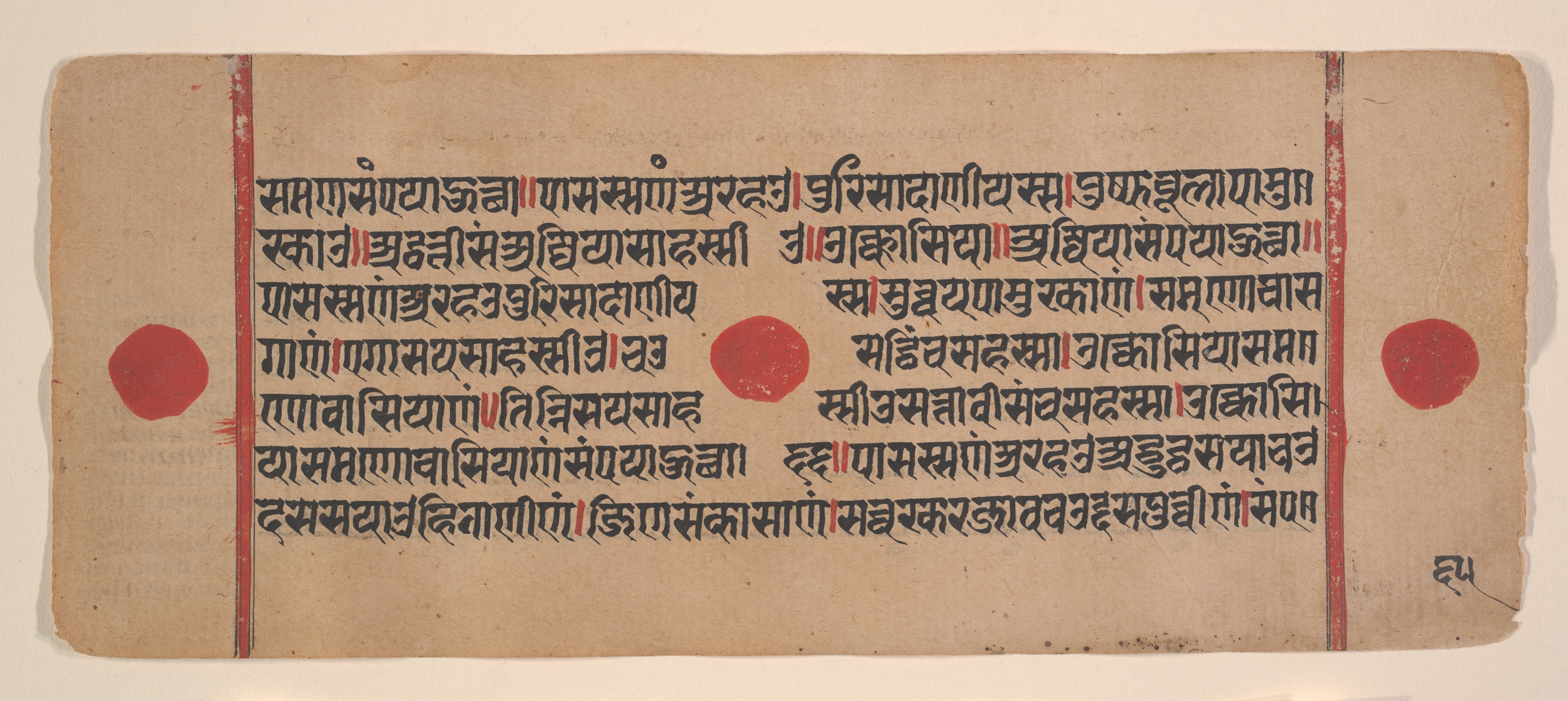
This analysis examines a single page from a dispersed Kalpa Sutra, a Jain ritual text originating from 15th-century Gujarat, as a strategic heritage asset for Katherine Fashion Lab. Executed in ink, opaque watercolor, and gold on paper, this artifact transcends its liturgical function to embody a complete philosophy of adornment, precision, and symbolic power. For a luxury house establishing its legacy, this page is not merely an inspiration but a foundational codex. It provides a rigorous framework for a 2026 high-end strategy built on intangible value, spiritual resonance, and meticulous craftsmanship, positioning the brand within the rarefied space where art, devotion, and luxury converge.
Decoding the Symbolic Power: Geometry, Color, and Absence
The symbolic power of the Kalpa Sutra page is architectural. Its composition is governed by a rigid hierarchy and geometric purity. Central figures, likely a Tirthankara (spiritual teacher) or royal personage, are framed within precisely delineated bands of narrative and ornament. This structure is a visual manifestation of the Jain principle of order within the cosmos—a universe governed by precise laws. For Katherine Fashion Lab, this translates to a design philosophy where every seam, dart, and proportion is intentional, carrying meaning. The symbolic power lies not in flamboyance but in calibrated restraint and placement. The use of vibrant, mineral-derived opaque watercolors—lapis lazuli blues, vermilion reds, verdant greens—against a flat plane speaks a language of clarity and distinction. Each color is isolated, potent, and symbolic (e.g., red for sacrifice, white for liberation), advocating for a luxury strategy where color is deployed with deliberate, meaningful saturation rather than arbitrary trend. Most profoundly, the generous use of negative space, the unpainted paper ground, reflects the Jain concept of ‘Anekāntavāda,’ or multiplicity of viewpoints. In luxury terms, this symbolizes the space for the wearer’s identity to inhabit the garment, making the client an active participant in the narrative, not a passive mannequin.
Historical Adornment as a Language of Status and Sanctity
The page serves as a critical document of historical adornment, blurring the line between spiritual and regal iconography. Figures are adorned with intricate jewelry—elaborate necklaces, armlets, earrings, and crowns—that are rendered with the same devotional attention as the figures themselves. This detail is paramount. Adornment here is not superfluous; it is an integral marker of identity, status, and spiritual attainment. The textiles depicted, with their precise patterns and fluid drapery, demonstrate a sophisticated understanding of fabric behavior and decorative motif. This provides Katherine Fashion Lab with a deep, non-Western canon of silhouette and embellishment. The drapery, often sheer and layered, suggests a luxury of texture and movement. The patterns, geometric and floral, are not mere prints but encoded symbols of fertility, eternity, and the cosmos. A 2026 strategy informed by this source moves beyond surface-level “ethnic” inspiration. It requires a scholarly approach to construction—reinterpreting the draped dhoti or sari through modern tailoring, or translating the symbolic parasol (a symbol of sovereignty) into structural silhouettes or hat designs. The adornment in the manuscript is deliberate and meaningful; every proposed sequin, embroidery thread, or cut must withstand the same scrutiny.
Spiritual Meaning and the Luxury of Ritual
The core spiritual meaning of the artifact revolves around the concepts of illumination, discipline, and transcendence. The application of gold is not decorative; it is alchemical. It represents divine light, purity, and the ultimate goal of liberating the soul from material bondage—an intriguing paradox for a material luxury brand. This invites a sophisticated brand narrative: luxury as a medium for personal transcendence and mindful practice. The creation of the manuscript itself was a ritual, a meditative act of devotion requiring immense discipline. This parallels the atelier practice of haute couture—the silent focus, the years of mastery, the reverence for material. Katherine Fashion Lab can champion this as its core ethic: the garment as a focal point for mindful creation and mindful wearing. For the 2026 high-end client, increasingly seeking meaning and authenticity, this spiritual layer offers profound resonance. It shifts the value proposition from product to experience—from a dress to an object of contemplation, from a purchase to a participation in a legacy of meticulous, intentional making.
Strategic Integration: 2026 High-End Luxury Market Application
For the 2026 strategy, this analysis dictates a move towards “Quiet Iconography.” In a market saturated with logos and overt status symbols, the Kalpa Sutra page teaches the power of subtle, knowledge-based signaling. The strategy unfolds across four pillars:
1. The Color & Material Archive: Develop a proprietary color palette derived from the manuscript’s mineral pigments, presented with their symbolic meanings (e.g., "Verdigris Enlightenment," "Lapis Contemplation"). Partner with ethical mines and mills to create exclusive cloths, embedding gold thread not as flash but as integrated, subtle luminosity.
2. Geometric Architecture & Draping: Launch a signature line focused on architectural silhouettes derived from the page’s compositional bands and frames. Complement this with a "Draped Code" collection, reinterpreting historical textile flows through innovative tech fabrics and minimalist cuts, emphasizing wearer-defined style.
3. The Adornment Library: Establish an in-house atelier for embellishment where every motif is traceable to a symbolic source from the manuscript. Jewelry and hardware become integral to the garment’s design, not add-ons, mirroring the integrated adornment of the Jain figures.
4. Client Experience as Ritual: Transform the retail and purchase journey into a curated ritual. Private viewings could resemble manuscript illuminations, focusing on single, iconic pieces. Documentation (look books, certificates) should emulate the gravitas of a sacred text, explaining the heritage and symbolism embedded in the garment.
Conclusion: From Manuscript to Modern Codex
The dispersed Kalpa Sutra page offers Katherine Fashion Lab a complete and untapped luxury paradigm. It moves the brand beyond seasonal trends into the realm of enduring philosophy. By decoding its symbolic power, historical adornment language, and deep spiritual meaning, the Lab can construct a 2026 high-end strategy that is both intellectually rigorous and emotionally compelling. The goal is not to produce literal translations but to embody the manuscript’s core principles: precision as virtue, symbolism as wealth, light as material, and creation as a sacred act. In doing so, Katherine Fashion Lab will not just sell products; it will curate a modern codex for meaningful luxury, attracting a discerning clientele that seeks legacy, authenticity, and quiet, profound beauty.