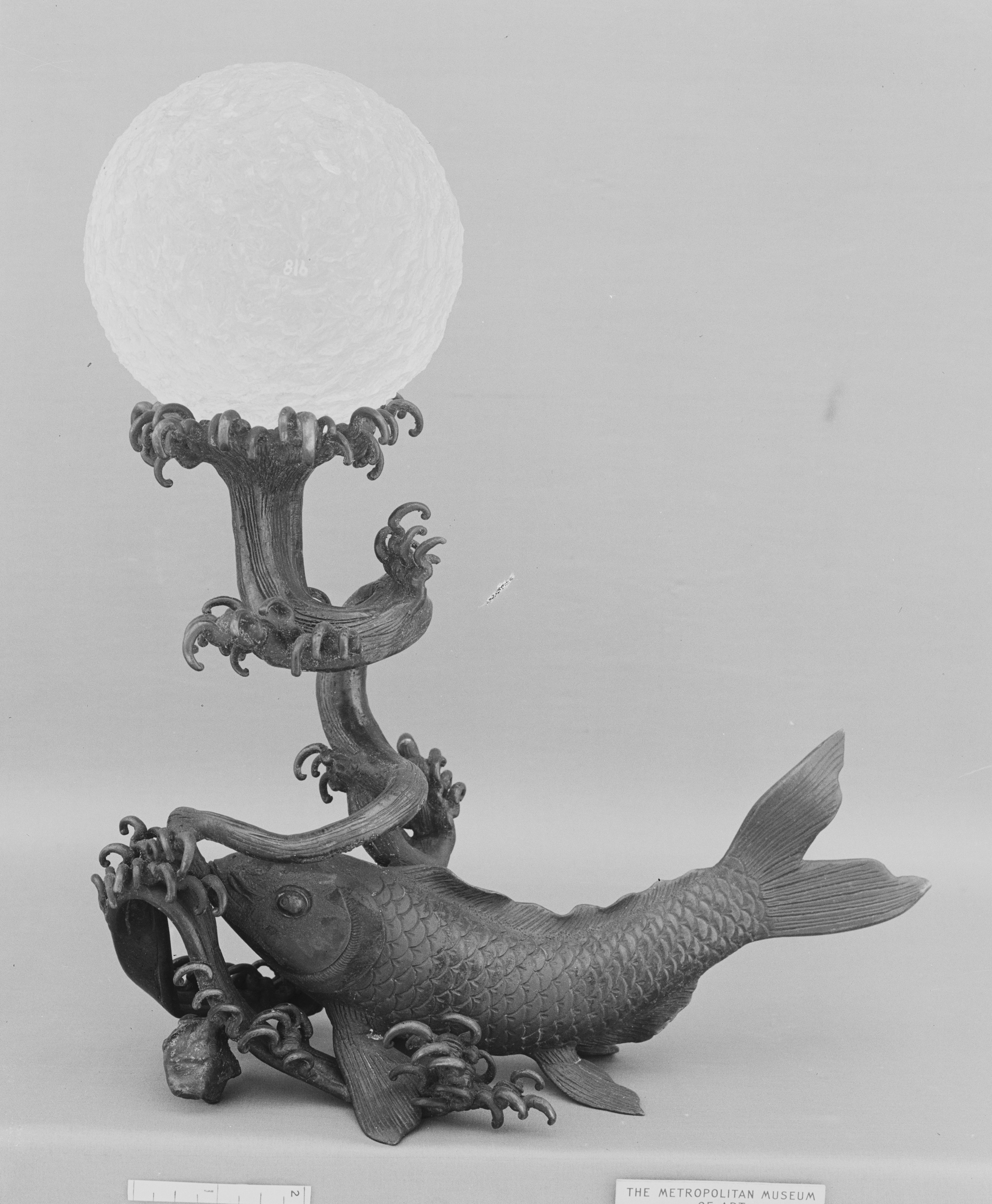
Heritage Analysis: Crystal Ball on a Bronze Stand in the Shape of a Fish
Introduction: The Object as a Nexus of Power and Prestige
The Crystal Ball on a Bronze Stand in the Shape of a Fish represents a singular convergence of material luxury, symbolic cosmology, and strategic cultural capital. As a standalone artifact of Chinese origin, it embodies a dual medium—rock crystal and bronze—each carrying distinct historical weight. For Katherine Fashion Lab, this object is not merely an antique; it is a strategic asset for positioning within the 2026 high-end luxury market. This analysis deconstructs its symbolic power, historical adornment practices, spiritual meanings, and actionable strategy for contemporary luxury branding.
Symbolic Power: The Fish and the Crystal as Emblems of Prosperity and Clarity
In Chinese cultural semiotics, the fish (鱼, yú) is a potent symbol of abundance, fertility, and harmony. Its homophonic relationship with the word for “surplus” (余) renders it an enduring emblem of wealth and prosperity. The bronze stand, cast in the form of a fish, anchors the object in a tradition of ritual and domestic adornment where aquatic motifs signified flow, adaptability, and the cyclical nature of fortune. The fish’s upward-curving posture, typical of such stands, suggests aspiration and movement—qualities that resonate with the luxury consumer’s desire for transcendence.
The rock crystal ball amplifies this symbolism. Rock crystal, or shuijing (水晶), has been venerated in China since the Han Dynasty as “water essence”—a material believed to concentrate pure yang energy. When paired with the fish, the crystal ball becomes a lens of clarity, focusing the fish’s auspicious energy into a single, luminous point. Together, they form a microcosm of cosmic order: the bronze fish grounds the object in earthly prosperity, while the crystal ball elevates it to spiritual insight. For the luxury market, this duality offers a narrative of grounded aspiration—a balance of material success and inner wisdom.
Historical Adornment: From Scholar’s Desk to Imperial Court
Historically, such objects were not merely decorative but functional talismans within the Chinese scholar-official class. During the Ming and Qing dynasties, rock crystal carvings and bronze stands adorned scholar’s desks (shufang), serving as focal points for meditation and intellectual clarity. The fish stand, often placed near inkstones or scrolls, reinforced the scholar’s pursuit of knowledge, harmony, and bureaucratic success. The bronze material—an alloy of copper, tin, and lead—was itself a marker of ritual authority, harkening back to Shang Dynasty bronze vessels used in ancestral rites.
In the context of adornment, the crystal ball’s transparency and refraction were prized as manifestations of moral purity. Confucian aesthetics valued materials that revealed inner virtue, and rock crystal’s clarity was read as a metaphor for an unblemished character. The bronze fish stand, with its patina of age, added a layer of historical gravitas—a reminder of lineage and permanence. For Katherine Fashion Lab, this historical context positions the object as a bridge between intellectual heritage and personal luxury—a piece that speaks to the modern collector’s desire for meaning beyond materiality.
Spiritual Meaning: Feng Shui and the Alignment of Energies
From a spiritual perspective, the crystal ball on a fish stand operates as a Feng Shui tool for activating wealth and wisdom. In traditional Chinese geomancy, the fish represents the Water element, associated with flow, communication, and abundance. The crystal ball, particularly when faceted or polished, is understood to concentrate and direct qi (energy). Placed in the southeast corner of a home or office—the wealth sector—this object is believed to attract financial opportunities and mental clarity.
The bronze stand’s material properties further enhance this spiritual function. Bronze, as a metal element, supports water in the Five Elements cycle (Wu Xing), creating a productive energy loop. The fish’s form, often with an open mouth or raised tail, symbolizes receptivity and movement, ensuring that prosperity does not stagnate. For the 2026 luxury consumer, who increasingly seeks holistic well-being and intentional living, this spiritual dimension offers a compelling value proposition: the object is not just an aesthetic acquisition but a tool for personal transformation.
2026 High-End Luxury Strategy: Curating Symbolic Capital
To leverage this heritage object for Katherine Fashion Lab’s 2026 luxury strategy, three actionable pillars emerge:
1. Narrative Architecture of Dual Mediums. The rock crystal and bronze must be framed as contrasting yet complementary materials—one transparent and ethereal, the other opaque and grounded. This duality mirrors the luxury consumer’s desire for balance between visibility and privacy, tradition and innovation. In marketing collateral, highlight the craftsmanship journey: the bronze casting (a lost-wax process dating back millennia) and the crystal faceting (a lapidary art requiring precision). Use terms like “material alchemy” and “elemental unity” to evoke exclusivity.
2. Spiritual Positioning as a Wellness Artifact. The 2026 luxury market will see accelerated demand for objects that serve emotional and spiritual utility. Position this crystal ball and fish stand as a curated Feng Shui instrument for high-net-worth individuals. Develop limited-edition “Wellness Editions” with certificates of authenticity that include energy alignment documentation—i.e., a Feng Shui master’s verification of the piece’s placement and purpose. This transforms the object from a decorative item into a bespoke wellness asset.
3. Cultural Stewardship and Provenance Storytelling. For the 2026 ultra-luxury segment, provenance is paramount. Emphasize the object’s Chinese heritage as a marker of cultural intelligence. Partner with institutions like the Palace Museum or independent scholars to authenticate the bronze’s patina and the crystal’s geological origin. Create a digital provenance ledger using blockchain to track the object’s journey from artisan to collector. This addresses the luxury consumer’s growing demand for transparency and ethical curation.
4. Experiential Retail Integration. In flagship stores, display the crystal ball and fish stand within a sensory installation that mimics a scholar’s study: ambient lighting, subtle incense, and recorded readings of classical Chinese poetry about clarity and prosperity. Offer private consultations where clients learn the object’s Feng Shui applications. This creates an immersive brand experience that justifies a premium price point—estimated between $15,000 and $50,000 for a historically attributed piece.
Conclusion: The Object as a Strategic Mirror
The Crystal Ball on a Bronze Stand in the Shape of a Fish is more than a heritage artifact; it is a strategic mirror reflecting the aspirations of the 2026 luxury consumer. Its symbolic power—abundance and clarity—aligns with contemporary desires for meaningful wealth and personal enlightenment. Its historical adornment roots in scholar culture offer a narrative of intellectual refinement. Its spiritual meaning as a Feng Shui tool provides actionable utility. For Katherine Fashion Lab, integrating this object into a curated luxury portfolio—through meticulous narrative, spiritual positioning, and provenance stewardship—will not only honor its heritage but also secure its relevance in the evolving high-end market. The fish swims forward; the crystal sees clearly. Together, they chart a course for sustainable luxury in an age of intentional consumption.