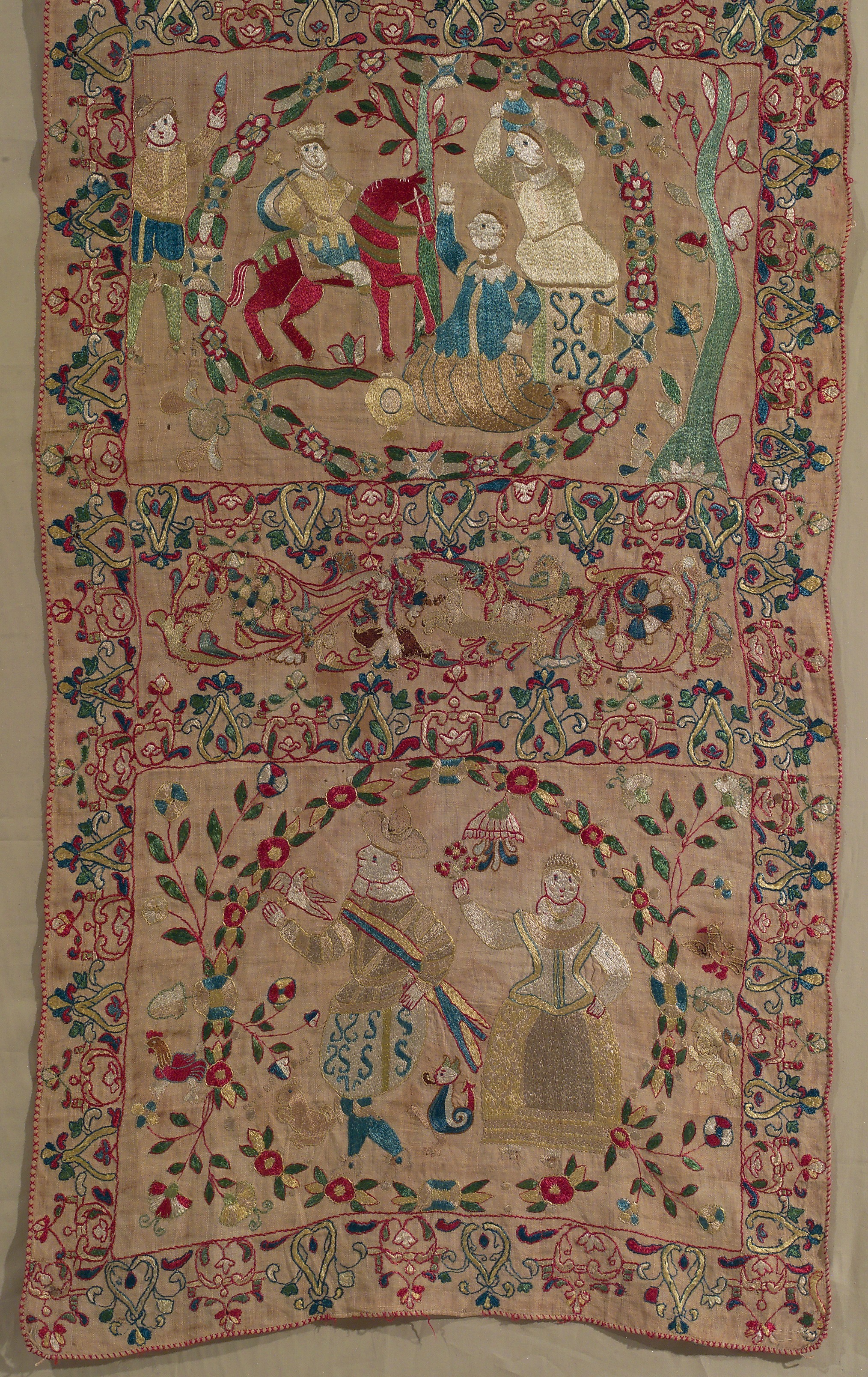
The Panel: A Study in Textural Heritage and Modernist Restraint
In the rarefied world of haute couture, where narrative is woven as meticulously as the fabric itself, the standalone panel emerges as a profound dialectic between heritage and modernity. Katherine Fashion Lab’s latest offering—a rectangular composition of linen, silk, and metal-wrapped thread—eschews the theatricality of the full garment to present a fragment that speaks volumes. This is not a swatch nor a mere sample; it is a resolved work of art, a microcosm of the atelier’s philosophy. To analyze this panel is to decode a language of global lineage, material intelligence, and the quiet power of restraint.
Materiality as Global Lexicon
The foundation of this piece is a plain-weave linen, chosen not for its simplicity but for its archaeological resonance. Linen, one of the oldest textiles known to civilization, carries the weight of Egyptian, Celtic, and Mediterranean histories. Its crisp, matte surface provides a neutral canvas—a ground that is both humble and authoritative. Yet Katherine Fashion Lab subverts this humility by overlaying it with raw silk filaments, introducing a contrasting sheen and a tactile friction. The silk here is not the polished, glossy variety of evening wear; it retains a slight irregularity, a nubby texture that speaks to hand-reeled traditions from East Asian sericulture.
The most arresting material intervention is the metal-wrapped thread, a technique that traces its origins from Byzantine opulence to Mughal courtly attire. These threads—likely a core of silk or polyester wrapped in fine silver or gold-toned metal—are not used for ostentation. Instead, they are applied with deliberate scarcity. The thread creates a subtle, linear architecture, catching light at oblique angles. This is not the gilded excess of ceremonial regalia; it is a whisper of metallic memory, a nod to the global trade routes that have long connected East and West. The panel thus becomes a cartographic object, mapping the Silk Road, the linen routes of the Baltic, and the metalworking traditions of the Andes into a single, coherent surface.
Technique: Embroidered Restraint
The embroidery on this panel is a masterclass in negative space and precision. Rather than dense, baroque fillings, the atelier employs a surface satin stitch and couched work to create a geometric lattice. The pattern—reminiscent of a fragmented trellis or a deconstructed tartan—is executed with mathematical rigor. Each stitch is placed with an awareness of its relationship to the weave; the metal thread does not overpower the linen but rather articulates its grid. This is a deliberate choice, one that honors the structural integrity of the plain weave while elevating it through intervention.
The technique also reveals a dialogue with global heritage embroidery traditions. The linear, almost architectural quality of the stitching recalls the suzani of Central Asia, where long, flowing stitches create bold, graphic forms. Yet there is also an echo of whitework from Renaissance Europe, where monochromatic threads create texture through relief. By limiting the color palette—the metal thread against the neutral linen and silk—the lab forces the viewer to focus on light and shadow as active participants. The panel changes with the angle of observation, the metal thread glinting like a constellation against the matte ground. This is embroidery as optical engineering, a controlled interplay of reflection and absorption.
Cultural Synthesis and the Standalone Object
What makes this panel particularly compelling is its presentation as a standalone study. In an industry often obsessed with the complete silhouette—the gown, the jacket, the ensemble—Katherine Fashion Lab asserts the fragment as a legitimate site of meaning. This object does not need a body to be understood. It is a portable heritage, a textile manuscript that can be framed, draped, or studied in isolation. This approach aligns with contemporary curatorial practices in fashion, where garments and textiles are increasingly treated as art objects worthy of gallery contemplation.
The panel’s heritage references are not nostalgic. They are synthesized—not borrowed but transformed. The linen speaks to European peasantry and monastic simplicity, while the silk and metal thread evoke Asian and Middle Eastern luxury. Yet the final composition is resolutely modern: clean, asymmetrical, and devoid of ornament for ornament’s sake. This is a global heritage without hierarchy, where no single tradition dominates. Instead, the panel becomes a third culture object, born from the atelier’s research into textile histories across continents. It challenges the viewer to see heritage not as a static archive but as a living, adaptable language.
Structural and Aesthetic Implications
From a structural standpoint, the panel’s plain weave base provides stability, allowing the embroidery to act as a surface relief without distorting the fabric. The silk filaments, interwoven with the linen, add a subtle drape and weight that prevents the piece from feeling stiff. The metal-wrapped thread, despite its rigidity, is couched with enough flexibility to allow the panel to be mounted or hung without cracking. This is engineering at the service of aesthetics—a balance between durability and delicacy.
Aesthetically, the panel operates on principles of asymmetry and tension. The embroidered lattice does not cover the entire surface; it concentrates in a diagonal swath, leaving large areas of bare linen. This creates a visual rhythm, a push-pull between the decorated and the unadorned. The metal thread introduces a temporal dimension—it tarnishes, it catches light differently over time. The panel is thus not a fixed object but an evolving one, a living document that will age with grace. This aligns with the lab’s philosophy of slow couture, where materials are allowed to express their own lifecycle.
Conclusion: The Panel as Manifesto
Katherine Fashion Lab’s panel is more than a textile study; it is a manifesto for a new kind of global luxury. One that respects the integrity of heritage techniques while embracing modernist restraint. One that values the fragment as a complete statement. And one that understands that true sophistication lies not in abundance but in the precision of the chosen mark. The linen, silk, and metal thread are not merely materials; they are ambassadors of civilizations, brought into dialogue through the discipline of the needle. In this panel, we see the future of couture: a future that is learned, layered, and luminous in its quiet confidence.