The Art of Fragmentation: A Couture Analysis of Katherine Fashion Lab's Bobbin Lace Study
Conceptual Origins: Global Heritage as a Fragmentary Narrative
In the realm of haute couture, where fabric often serves as a canvas for storytelling, Katherine Fashion Lab's standalone study on "Fragment" redefines the very essence of heritage. This analysis delves into a singular piece that draws from a global tapestry of cultural memory, yet eschews the conventional approach of recreating a complete, historically accurate garment. Instead, the design embraces fragmentation as a deliberate aesthetic and philosophical choice. The concept of "Fragment" is not merely about incompleteness; it is a sophisticated commentary on how heritage is transmitted across time and geography—always partial, always reinterpreted, and always personal.
The global heritage referenced here is not a specific national costume or a singular tradition. Rather, it is a synthesis of motifs found in diverse cultures: the delicate geometric patterns of European lace, the asymmetrical draping of East Asian textiles, and the earthy, organic forms of Indigenous American adornments. Katherine Fashion Lab has curated these influences into a cohesive narrative that speaks to our interconnected world. The fragment becomes a metaphor for the modern condition—a world where cultural identities are not monolithic but are assembled from pieces of a larger, often forgotten, whole. This approach is particularly resonant in an era of globalization, where designers must navigate the fine line between homage and appropriation, between inspiration and extraction.
Material Mastery: Bobbin Lace as a Structural and Symbolic Medium
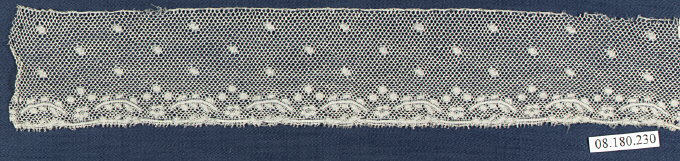
The choice of bobbin lace as the primary material is both a technical tour de force and a deeply symbolic decision. Bobbin lace, with its origins in 16th-century Europe, is a painstaking craft that involves weaving threads around a pillow using multiple bobbins. It is a medium that embodies patience, precision, and fragility—qualities that align perfectly with the theme of fragmentation. Katherine Fashion Lab has elevated this traditional craft by treating it not as a decorative trim but as the foundational structure of the garment itself. The lace is not merely applied; it is the architecture.
In this standalone study, the bobbin lace is constructed in panels that are deliberately left unfinished at the edges. These raw, unhemmed borders are not mistakes but intentional design elements that reinforce the fragment concept. The threads are allowed to fray slightly, creating a soft, ethereal silhouette that mimics the dissolution of memory over time. The lace pattern itself is a hybrid: it incorporates classic floral and arabesque motifs alongside abstract, modern geometries. This juxtaposition creates a visual tension between the historical and the contemporary, the complete and the incomplete.
From a technical perspective, the use of bobbin lace in couture is exceptionally demanding. Each panel requires hundreds of hours of handwork, and the fragility of the material necessitates careful handling during assembly. Katherine Fashion Lab has employed a technique of micro-stitching to join the lace panels, ensuring that the seams are nearly invisible. This allows the lace to flow as a continuous, albeit fragmented, surface. The result is a garment that appears to be in a state of becoming—a snapshot of a process that is never truly finished.
Structural Analysis: The Architecture of Incompleteness
The garment's silhouette is deceptively simple: a long, columnar dress that falls asymmetrically, with one shoulder exposed and the other covered by a cascading drape of lace. The asymmetry is crucial to the fragment narrative. It suggests that the dress is not a whole but a remnant of a larger, imagined garment. The hemline is deliberately uneven, with some panels extending to the floor while others stop mid-calf. This irregularity is not chaotic but carefully orchestrated, guiding the eye across the body in a rhythmic, almost musical, progression.
The bodice is constructed from multiple layers of bobbin lace, each with a different density. The densest layers are concentrated at the waist and hips, creating a sense of grounding, while the upper bodice and sleeves are more open and airy. This gradient from solid to transparent mirrors the fading of cultural memory—the most vivid details are preserved at the core, while the periphery dissolves into ambiguity. The back of the dress features a dramatic open panel, revealing a second layer of lace in a contrasting pattern. This inner layer, visible only through the gaps, adds depth and invites the viewer to consider what is hidden and what is revealed.
Katherine Fashion Lab has also incorporated subtle structural supports, such as fine boning sewn into the seams, to maintain the dress's shape without compromising the lace's fluidity. The use of a nude silk underlay beneath the lace ensures modesty while preserving the transparency that is central to the fragment aesthetic. The underlay itself is cut in a fragmented pattern, echoing the outer lace, so that the two layers interact visually. This interplay creates a sense of depth and complexity that rewards close inspection.
Context and Significance: A Standalone Study in Contemporary Couture
This piece is presented as a standalone study, meaning it is not part of a larger collection. This context is essential to understanding its impact. By isolating the garment from the narrative of a seasonal collection, Katherine Fashion Lab forces the viewer to engage with it as an object of pure inquiry—a meditation on material, heritage, and form. The absence of a thematic framework allows the fragment concept to stand on its own, unencumbered by commercial or narrative constraints.
In the broader landscape of contemporary couture, this study challenges the industry's obsession with completeness and perfection. Traditional couture is often about creating flawless, finished objects that are meant to be preserved. Here, the fragment is celebrated as a valid aesthetic state. This aligns with a growing movement in fashion that embraces impermanence, decay, and the passage of time. Designers like Rei Kawakubo and Martin Margiela have explored similar themes, but Katherine Fashion Lab's use of bobbin lace adds a layer of historical and cultural specificity that is uniquely compelling.
The global heritage referenced in this study also serves as a critique of cultural appropriation in fashion. By presenting the fragment as a deliberate, self-aware choice, the designer acknowledges that no single garment can fully represent a culture. Instead, the fragment becomes a respectful nod—a recognition that our understanding of heritage is always partial. This is a sophisticated, MBA-level approach to design strategy: it acknowledges the complexity of global markets while maintaining artistic integrity.
Conclusion: The Enduring Power of the Incomplete
Katherine Fashion Lab's "Fragment" study is a masterclass in how couture can transcend mere clothing to become a philosophical statement. Through the meticulous use of bobbin lace, the deliberate asymmetry, and the embrace of incompleteness, the designer has created a garment that is both a tribute to global heritage and a forward-looking commentary on the nature of memory and identity. In a world that often demands wholeness and certainty, this piece dares to celebrate the beauty of the fragment. It is a reminder that what is left behind—whether in culture, history, or fabric—can be as powerful as what is preserved. For the discerning observer, this study is not just a garment; it is a lesson in the art of seeing the world as it truly is: a mosaic of fragments, each one telling a story that is never fully told.