Heritage Analysis: The Qajar Travelogue as a Blueprint for 2026 Luxury Strategy
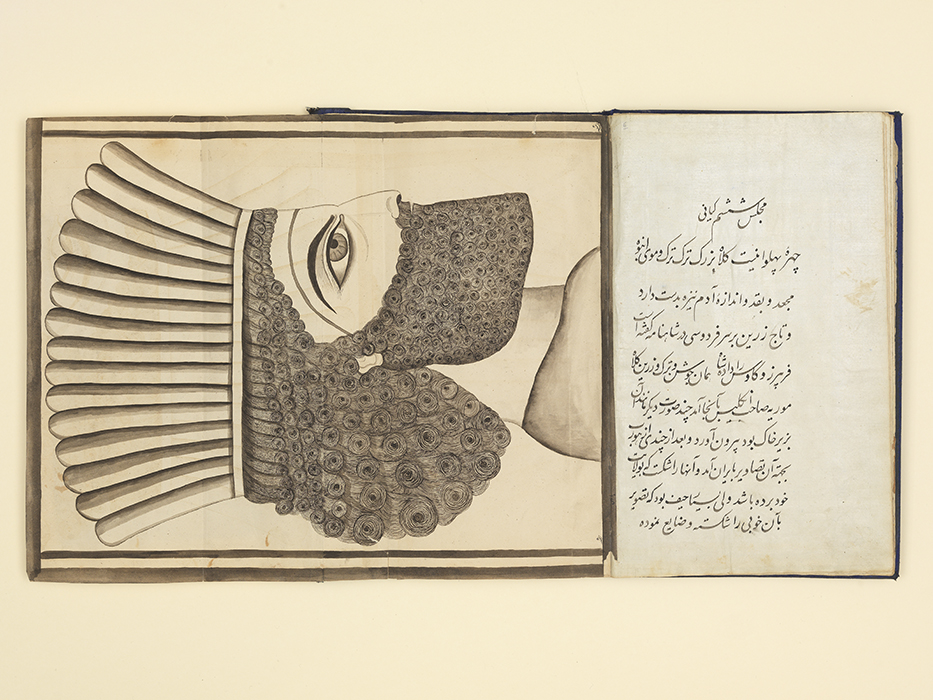
The object under analysis—a Qajar-era Persian travelogue documenting a journey through the region of Fars—is far more than a historical manuscript. Bound in blue velvet with marbled paper doublures, written in black ink on paper, and sewn onto cotton-hemp cords, this artifact embodies a convergence of symbolic power, historical adornment, and spiritual meaning. For Katherine Fashion Lab, this object serves as a strategic standalone research case, offering a rich lexicon of motifs, materials, and narratives that can be translated into a high-end luxury strategy for 2026. This paper deconstructs the travelogue’s heritage layers and proposes actionable pathways for brand elevation.
Symbolic Power: The Authority of the Journey and the Gaze
The travelogue’s primary symbolic power resides in its status as a document of authorized witness. In Qajar Iran, travel writing was not merely personal reflection; it was a political and cultural act. The author, likely a courtier or a learned elite, recorded observations of Fars—the heartland of ancient Persia—to assert control over narrative, geography, and memory. The act of journaling became a form of territorial and intellectual possession. For Katherine Fashion Lab, this translates into a luxury strategy centered on narrative sovereignty. A 2026 collection should not merely reference Persian motifs but claim them as part of a curated, authoritative story. The brand must position itself as a gatekeeper of heritage, using each garment or accessory as a “page” that recounts a journey—from the silk roads to the atelier. The symbolic power of the travelogue lies in its ability to transform the private into the public, the personal into the imperial. Similarly, Katherine Fashion Lab can leverage limited-edition “travelogue” capsules, each narrating a specific region or craft, thereby imbuing products with the gravitas of discovery and exclusivity.
Historical Adornment: Materiality as Status and Memory
The travelogue’s physical construction reveals a sophisticated language of adornment. The blue velvet binding is not accidental; blue, in Qajar culture, symbolized protection, the divine, and the infinite sky. Velvet, a luxury textile imported from Europe or produced in Isfahan, signaled wealth and cosmopolitan taste. The marbled paper doublures—intricate, fluid patterns—mirrored the art of ebru and represented the unpredictable beauty of nature and the cosmos. The cotton-hemp cords, though utilitarian, were chosen for durability, linking the object to the earth and to trade networks. Every material choice was a deliberate act of adornment, transforming a functional diary into a jewel-like object.
For Katherine Fashion Lab’s 2026 strategy, historical adornment must be reinterpreted through material storytelling. The blue velvet can inspire a signature “Qajar Blue” dye, applied to cashmere or silk, with a narrative of protection and prestige. The marbled paper doublures offer a direct visual language for print and pattern design—fluid, asymmetrical, and organic. These patterns can be digitized and woven into brocades or printed on sustainable fabrics, creating a bridge between traditional craft and modern technology. The cotton-hemp cords, humble yet strong, can be reimagined as raw-edge trims, tassels, or braided belts, emphasizing the beauty of functional construction. The key is to treat each material as a historical artifact that carries memory, not mere decoration. In high-end luxury, customers seek objects with soul and provenance; the travelogue’s material palette provides exactly that.
Spiritual Meaning: The Journey as Inner Cartography
Beyond its physical form, the travelogue holds profound spiritual meaning. The region of Fars is the cradle of Zoroastrianism, the ancient Persian faith that emphasized the duality of light and dark, truth and falsehood. The journey through Fars was not only a geographical expedition but a spiritual pilgrimage—a mapping of the soul onto the landscape. The black ink on paper symbolizes the inscription of knowledge onto the blank slate of existence. The act of writing was a meditative practice, a way to anchor the ephemeral into permanence. The blue velvet cover, often associated with the prophet’s mantle in Islamic culture, further sacralized the object.
For Katherine Fashion Lab, this spiritual dimension offers a profound differentiator in the 2026 luxury market. Consumers increasingly seek meaningful consumption—products that resonate with inner values and rituals. The brand can develop a “Pilgrimage” collection that uses color symbolism (deep blues, ochres, blacks) to evoke spiritual journeys. Garments could be designed with hidden inscriptions—embroidered verses or symbols—visible only to the wearer, echoing the private nature of a diary. The concept of “inner cartography” can be applied to bespoke services: clients co-create a garment that maps their own life journey, with motifs representing milestones. This transforms fashion from a product into a sacred object, a talisman of personal history. The travelogue teaches that the most powerful luxury is not opulence but reverence—for craft, for narrative, for the self.
2026 High-End Luxury Strategy: From Artifact to Archetype
Translating the Qajar travelogue into a 2026 strategy requires a three-pillar framework: Narrative Authority, Material Provenance, and Ritual Engagement.
Narrative Authority
Katherine Fashion Lab must position itself as a curator of cultural memory. Each collection should be introduced through a “travelogue” format—a limited-edition book, a podcast series, or an immersive digital experience that documents the inspiration journey. This builds a mythology around the brand, making the customer a participant in the story, not just a buyer. The travelogue’s authorial voice becomes the brand’s voice: confident, learned, and exclusive.
Material Provenance
Every fabric, dye, and trim must be traceable to a cultural or artisanal origin. The blue velvet inspires a partnership with Isfahan velvet weavers. The marbled paper leads to collaborations with Turkish ebru artists. The cotton-hemp cords support rural hemp cooperatives in Iran or Central Asia. This supply chain storytelling justifies high price points and appeals to the conscious luxury consumer. The materials themselves become certificates of authenticity.
Ritual Engagement
Luxury in 2026 is about experience, not possession. Katherine Fashion Lab can create ritualistic retail moments: a “binding ceremony” where customers choose their garment’s closure (inspired by the travelogue’s flap), or a “diary room” where they inscribe a personal message onto a garment tag. The act of purchase becomes a rite of passage, mirroring the travelogue’s own function as a record of transformation. The brand can also launch a “Fars Fellowship”—an annual patronage program that funds artisans and scholars, reinforcing the brand’s commitment to heritage conservation.
Conclusion: The Eternal Diary
The Qajar travelogue from Fars is not a relic; it is a living blueprint for how heritage can inform the future of luxury. Its symbolic power, historical adornment, and spiritual meaning offer Katherine Fashion Lab a coherent, differentiated strategy for 2026. By treating each garment as a page in an eternal diary, the brand can elevate itself beyond fashion into the realm of cultural stewardship. In a market saturated with transient trends, the travelogue reminds us that true luxury is permanent, personal, and profound. The ink may be black, the velvet blue, but the story it tells is infinite—and it is now Katherine Fashion Lab’s story to continue.