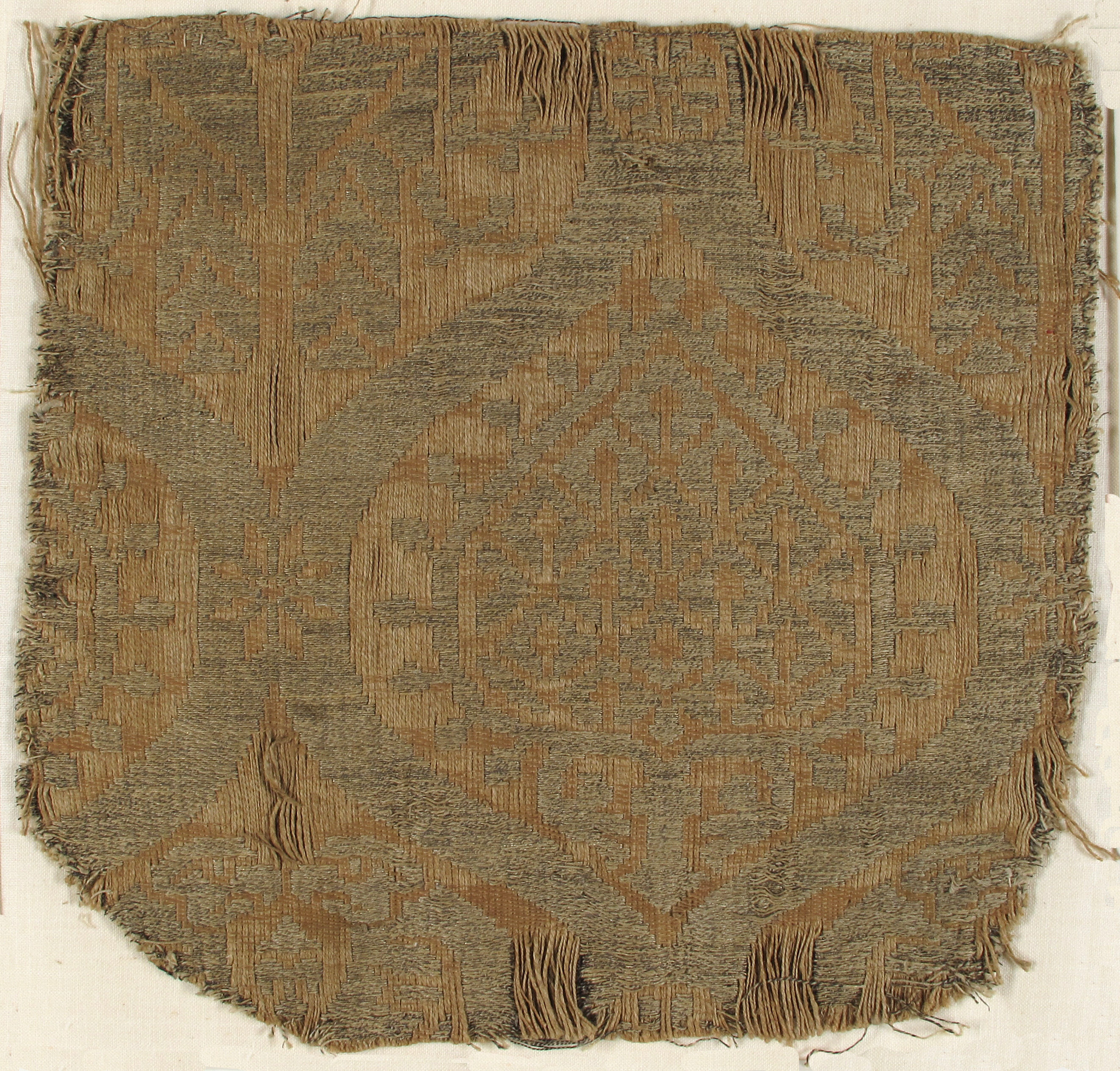
Brocatelle Textile: A Study in Structural Grandeur
In the rarefied realm of haute couture, fabric is not merely a substrate for design; it is the architect of silhouette, the narrator of narrative, and the arbiter of luxury. At Katherine Fashion Lab, our curatorial lens is perpetually trained on textiles that transcend the ordinary—materials that demand both technical mastery and artistic reverence. Among these, the German-origin brocatelle textile, woven from silk, linen, and metal thread, stands as a singular testament to the confluence of engineering precision and opulent expression. This standalone analysis dissects the brocatelle’s structural DNA, its historical resonance, and its contemporary applicability within the couture ecosystem, revealing why this fabric remains an enduring cornerstone of elevated fashion.
Defining Brocatelle: The Architectonics of Relief
Brocatelle is often misidentified as a variant of brocade, yet its distinction lies in its relief structure. Unlike brocade, which employs supplementary weft threads to create a flat pattern, brocatelle utilizes a complex weave of two warp and two weft systems to produce a raised, almost sculptural effect. The German provenance of this particular specimen is critical: German textile mills, particularly those in Saxony and the Rhineland, have historically excelled in precision weaving, marrying industrial rigor with artisanal finesse. The result is a fabric that is not merely decorative but architectonic—a textile that rises from the loom with a three-dimensional presence, as if carved from fabric rather than woven.
The composition of silk, linen, and metal thread further amplifies this structural dialogue. Silk provides the luminous ground, its natural luster catching light and casting shadows across the raised patterns. Linen, with its inherent tensile strength and slight crispness, serves as the stabilizing backbone, preventing the fabric from collapsing under its own weight. Metal thread—typically a fine silver or gold core wrapped in silk or cotton—introduces both rigidity and radiance, tracing the brocatelle’s motifs with a metallic sheen that feels almost liturgical. This triad of materials creates a fabric that is simultaneously supple and stiff, a paradox that challenges the couturier to harness its unique physicality.
Historical Context: From Ecclesiastical Splendor to Courtly Fashion
The origins of brocatelle can be traced to 17th-century Italy, where it was initially developed for ecclesiastical vestments and aristocratic upholstery. However, its migration to German workshops during the Baroque and Rococo periods marked a transformation. German weavers, renowned for their mathematical precision, refined the brocatelle’s weave structure to achieve even greater relief and durability. This German iteration became a favorite in the courts of Vienna, Dresden, and Munich, where it adorned ceremonial robes, throne canopies, and the opulent gowns of empresses. The metal thread, in particular, signified not just wealth but divine right—a fabric woven with gold or silver was a material declaration of power.
In the context of Katherine Fashion Lab’s curatorial inquiry, this historical weight is not mere nostalgia; it informs how the brocatelle can be recontextualized for modern couture. The fabric’s association with ceremonial grandeur offers a counterpoint to contemporary fashion’s often transient, fast-paced ethos. To work with German brocatelle is to engage with a lineage of meticulous craftsmanship—a reminder that luxury, in its truest form, is an investment in permanence.
Technical Analysis: Weave, Weight, and Wearability
From a technical standpoint, this brocatelle exhibits a compound weave structure that demands careful handling. The fabric’s weight—typically ranging from 300 to 500 grams per square meter—places it firmly in the category of heavy-duty couture textiles. This density is advantageous for sculptural garments: structured jackets, tailored bodices, and dramatic sleeves that hold their shape without internal boning. However, the same weight poses challenges for draping. The brocatelle’s stiffness resists soft gathers and fluid folds, favoring instead sharp angles, architectural pleating, and geometric seams.
The metal thread, while visually stunning, introduces fragility. Over time, the metal can tarnish or snap if subjected to excessive tension or moisture. At Katherine Fashion Lab, we recommend hand-stitching for all seams involving metal-thread areas, as machine sewing can shear the delicate filaments. Furthermore, the fabric’s raised pattern creates a variable surface tension; pattern cutting must account for the motif’s repeat to ensure that the design’s focal points align with the garment’s structural lines. This is not a fabric for mass production—it is a medium for atelier-level precision, where each cut and stitch is a considered gesture.
Design Potential: Reimagining Baroque Grandeur for the Modern Silhouette
The brocatelle’s baroque heritage need not confine it to period recreations. At Katherine Fashion Lab, we envision its application in deconstructed couture—garments that acknowledge tradition while subverting it. Consider a tailored blazer with exaggerated, peaked shoulders, where the brocatelle’s raised floral motifs are allowed to dominate the lapels and back panel. The metal thread, when paired with matte silk charmeuse or raw linen, creates a textural dialogue that is both opulent and restrained. Alternatively, a column gown with a high neckline and dramatic train could leverage the brocatelle’s structural integrity to eliminate the need for crinolines or hoops, allowing the fabric itself to serve as the garment’s skeleton.
Color, too, is a critical consideration. This German brocatelle typically features a deep, monochromatic ground—midnight blue, burgundy, or charcoal—with the pattern rendered in contrasting metallic tones. The absence of polychromatic excess allows the tactile relief to take center stage. For a contemporary audience, this restraint is key: the brocatelle speaks not through garish display but through the subtle interplay of light and shadow across its raised surfaces. In a minimalist aesthetic, a single brocatelle element—a collar, a cuff, a panel—becomes the garment’s defining feature, a quiet proclamation of craftsmanship.
Preservation and Sustainability: The Case for Heirloom Couture
In an era of ecological consciousness, the brocatelle’s durability aligns with the principles of sustainable luxury. Unlike synthetic fabrics that degrade after a few seasons, a well-maintained brocatelle garment can endure for decades, even centuries. The linen and silk components are biodegradable, while the metal thread, if properly cared for, retains its integrity. At Katherine Fashion Lab, we advocate for heirloom couture—garments designed to be passed down, not discarded. This German brocatelle, with its robust construction and timeless aesthetic, is an ideal candidate for such a philosophy. Dry cleaning by a specialist in historical textiles, storage in acid-free tissue, and avoidance of direct sunlight are essential practices for preserving its luster and structure.
Conclusion: A Textile for the Discerning Curator
The German brocatelle of silk, linen, and metal thread is not a fabric for the faint of heart or the hasty of hand. It demands respect—for its history, its technical complexity, and its uncompromising physicality. Yet for the couturier who embraces these demands, the rewards are unparalleled: a garment that is not merely worn but inhabited, a piece that stands as a monument to the art of weaving. At Katherine Fashion Lab, we recognize that true luxury is not found in novelty but in mastery. This brocatelle is a master’s medium, and in the right hands, it becomes a dialogue between the past and the future, the structural and the sublime.