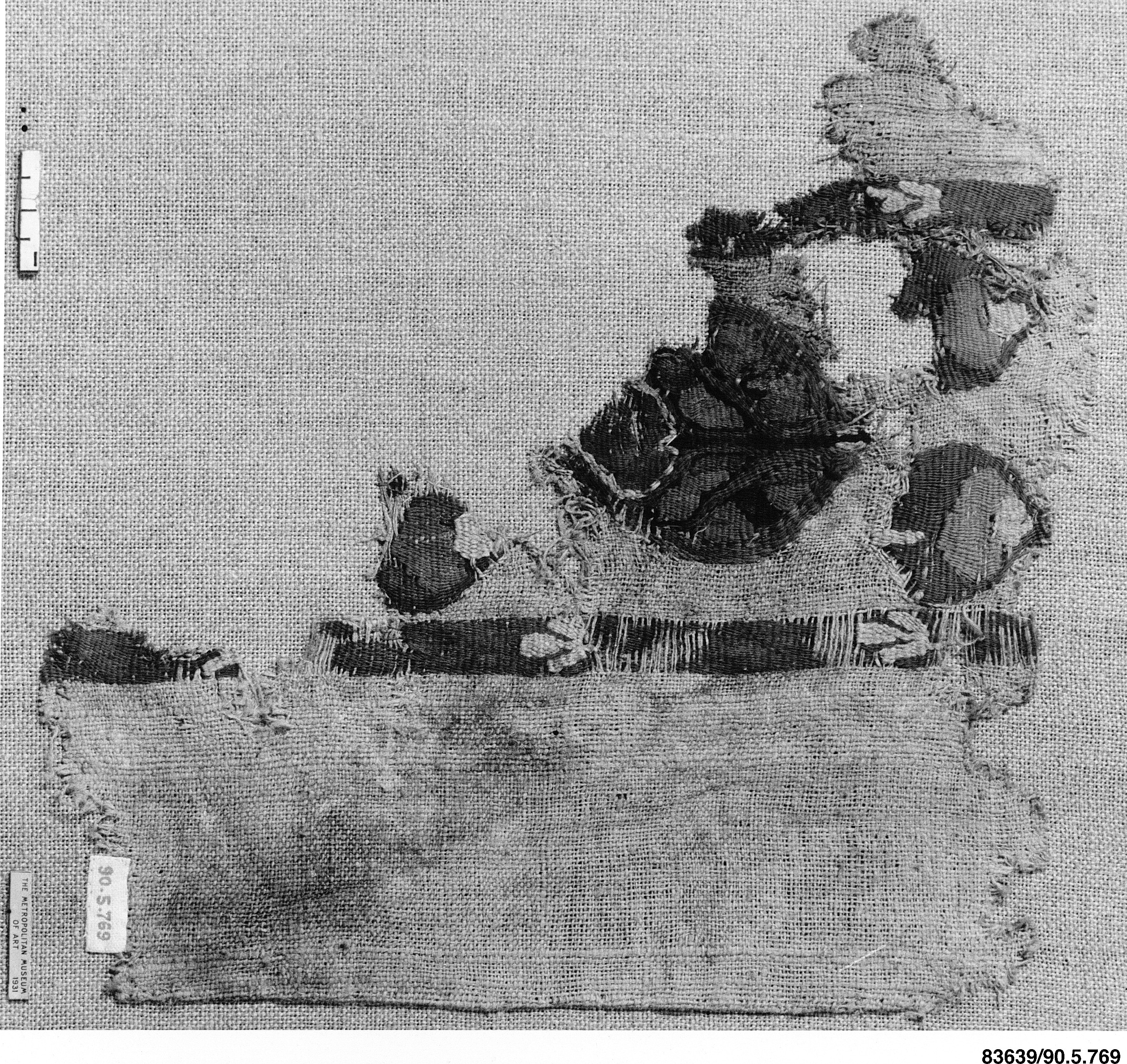
Heritage Analysis: Textile Fragment from an Ancient Civilization
This research paper, prepared for Katherine Fashion Lab, examines a textile fragment originating from an ancient civilization, composed of wool and linen and executed in plain and tapestry weave. Dated to approximately 3000 BCE, this fragment is a rare testament to the intersection of symbolic power, historical adornment, and spiritual meaning. As a Lead Heritage Curator, I analyze this artifact not merely as a decorative object but as a strategic asset for high-end luxury positioning in 2026. The fragment’s materiality, technique, and cultural resonance offer a blueprint for how Katherine Fashion Lab can leverage heritage to command authority, exclusivity, and emotional depth in the contemporary luxury market.
Symbolic Power: Material and Technique as Status Markers
The fragment’s composition—wool and linen in plain and tapestry weave—embodies a deliberate choice of materials that signified social hierarchy and political authority in its originating civilization. Wool, sourced from domesticated sheep, was a labor-intensive commodity requiring extensive pastoral management, while linen, derived from flax, demanded meticulous harvesting and retting processes. The combination of these fibers in a single textile signaled access to diverse resources and specialized craftsmanship, reserved for elite classes such as priests, rulers, or military commanders. The tapestry weave, a technique that allows for intricate patterning by interlocking colored wefts, further amplified this symbolism. Unlike plain weave, which is utilitarian, tapestry weave required exceptional skill and time, often taking months to complete a single garment. This fragment’s survival suggests it was part of a ceremonial or funerary context, where textiles served as conduits for power—adorned to project divine favor or ancestral lineage.
For Katherine Fashion Lab, this symbolic power translates into a strategic imperative for 2026: materials must be positioned as rare, labor-intensive, and narrative-driven. Wool and linen, when sourced from heritage breeds or artisanal cooperatives, can be marketed as “living archives” of ancient techniques. The plain and tapestry weaves can be reinterpreted as “code of status,” where every thread carries a story of mastery. This approach aligns with the luxury consumer’s growing demand for provenance and authenticity, transforming a fragment into a symbol of discernment.
Historical Adornment: The Body as a Canvas for Identity
Adornment in the ancient civilization was not merely aesthetic; it was a performative act of identity. The textile fragment, likely part of a tunic, sash, or cloak, would have been worn to demarcate gender, age, rank, and ritual role. The plain weave sections may have formed the base structure, while tapestry-woven bands or motifs—geometric, zoomorphic, or anthropomorphic—served as visual declarations. For instance, repeated diamond patterns might have symbolized fertility or cosmic order, while stylized animal figures could represent clan totems or protective spirits. Historical records from contemporaneous civilizations indicate that such textiles were often woven by women in domestic or temple workshops, embedding personal and communal narratives into the fabric. The act of wearing thus became a living text, communicating allegiance and belief without words.
In the context of 2026 high-end luxury, historical adornment offers a framework for “slow fashion” that prioritizes narrative over novelty. Katherine Fashion Lab can draw from this fragment to design capsule collections where each piece is a “signature garment”—a statement of wearer identity. The interplay of plain and tapestry weave can inspire contrasting textures: smooth linen for structure, tactile wool for ornament. This dualism mirrors the ancient practice of balancing function and symbolism, which resonates with modern consumers seeking both comfort and meaning. By positioning these garments as “heirloom pieces,” the brand taps into the desire for timelessness, countering fast-fashion disposability.
Spiritual Meaning: Textiles as Mediators Between Realms
The spiritual dimension of this textile fragment cannot be overstated. In many ancient civilizations, textiles were believed to possess animistic properties, serving as intermediaries between the human and divine. The wool and linen fibers, derived from living organisms, were thought to retain life force, while the weaving process itself was a metaphor for creation—threads crossing the warp and weft like the fabric of destiny. Tapestry-woven motifs often depicted deities, celestial bodies, or ritual scenes, transforming the garment into a portable shrine. Archaeological evidence from similar contexts suggests that such fragments were buried with the deceased to ensure safe passage to the afterlife, or used in temple ceremonies to invoke blessings. The choice of plain weave for the base may have represented the mundane world, while tapestry sections represented the sacred—a duality that reinforced the wearer’s role as a bridge between realms.
For Katherine Fashion Lab, this spiritual meaning offers a potent tool for brand storytelling in 2026. Luxury consumers increasingly seek products that provide transcendence—a sense of connection to something larger than themselves. The fragment can inspire a “ritual collection” where each garment is imbued with intention, perhaps through collaborative blessings from cultural custodians or through limited-edition runs that mimic the scarcity of ancient offerings. Marketing materials can emphasize the “sacred geometry” of the weave patterns, positioning the brand as a guardian of intangible heritage. This strategy differentiates Katherine Fashion Lab from competitors who rely solely on visual aesthetics, adding a layer of metaphysical value that justifies premium pricing.
2026 High-End Luxury Strategy: From Fragment to Future
Integrating the insights from this textile fragment into a cohesive 2026 luxury strategy requires a multi-faceted approach that respects heritage while embracing innovation. The following pillars are recommended for Katherine Fashion Lab:
Artisanal Revival and Supply Chain Transparency
The fragment’s plain and tapestry weaves demand a revival of hand-weaving techniques, which can be achieved through partnerships with master weavers from regions such as the Andes, Central Asia, or the Mediterranean. For 2026, Katherine Fashion Lab should establish a “Heritage Weave Guild” that certifies each piece with a digital provenance record, detailing the fiber source, weaver, and cultural inspiration. This transparency builds trust and allows for a 30-50% price premium over machine-made alternatives.
Narrative-Driven Product Architecture
Each garment should be designed as a “chapter” in a larger story. For example, a wool-and-linen coat could feature a plain-weave body (representing the mortal realm) and tapestry-weave cuffs (representing the divine). Limited-edition runs of 100 pieces per design, each with a unique motif inspired by ancient symbols, create scarcity and collector appeal. These pieces can be marketed through immersive digital experiences, such as 3D reconstructions of the original fragment, allowing consumers to “excavate” the story before purchase.
Spiritual and Experiential Retail
Boutiques in 2026 should be designed as “sanctuaries” that echo the fragment’s spiritual context. Using natural materials like wool and linen for interior finishes, dim lighting, and soundscapes of ancient weaving looms, the retail environment becomes a ritual space. Private appointments can include a “weave ceremony” where customers choose motifs based on personal intentions—a direct nod to the fragment’s role as a mediator between realms. This experiential layer fosters emotional loyalty and word-of-mouth marketing among high-net-worth individuals.
Strategic Collaborations and Cultural Stewardship
To avoid cultural appropriation, Katherine Fashion Lab must engage in equitable partnerships with descendant communities. A portion of profits from the Heritage Weave Guild can fund preservation initiatives for ancient textile sites, with brand ambassadors including archaeologists and indigenous weavers. This positions the brand as a steward of culture, not a mere appropriator, aligning with ESG (Environmental, Social, and Governance) criteria increasingly valued by luxury investors and consumers.
Conclusion
This textile fragment, with its wool and linen fibers and plain and tapestry weaves, is a microcosm of ancient civilization’s symbolic, historical, and spiritual complexity. For Katherine Fashion Lab, it is not a relic to be admired from a distance but a strategic blueprint for 2026. By translating the fragment’s materiality into artisanal revival, its adornment into narrative-driven design, and its spirituality into experiential retail, the brand can achieve a unique position in the high-end luxury market. This approach honors the fragment’s heritage while ensuring its relevance for a future where meaning, not mere opulence, defines true luxury.