The Fragment: Deconstructing Heritage Through Bobbin Lace at Katherine Fashion Lab
In the rarefied air of haute couture, where innovation often competes with tradition, Katherine Fashion Lab’s latest standalone study—titled simply “Fragment”—represents a masterclass in material storytelling. The collection, rooted in the concept of Global Heritage and executed almost exclusively in bobbin lace, challenges the very notion of completeness in fashion. Rather than presenting a seamless, finished garment, the Lab offers a deliberate, intellectual exploration of the fragment as a vessel for cultural memory, technical virtuosity, and emotional resonance.
The Philosophy of the Fragment
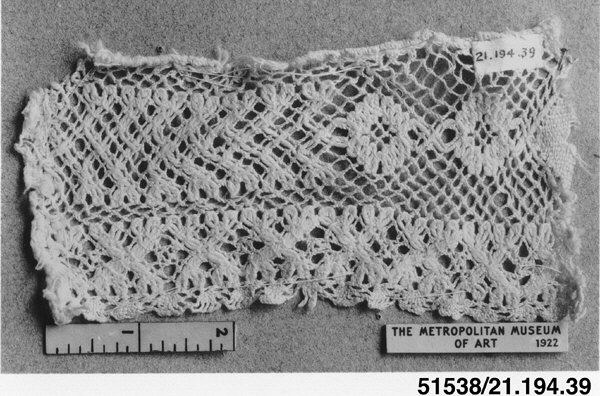
The term “fragment” in this context is not a signifier of incompleteness but a deliberate curatorial choice. Katherine Fashion Lab’s design team posits that heritage is never whole—it is always a collection of surviving pieces, reinterpreted through time. The bobbin lace, a technique that dates to the 16th century and spans cultures from Flanders to Venice, from Malta to the indigenous communities of South America, becomes the perfect medium for this thesis. Each lace fragment in the study is a microcosm of global craftsmanship, a thread that connects disparate geographies and histories.
The Lab’s approach is rigorously academic. The garments are not merely adorned with lace; they are constructed from lace. The bobbin lace is the primary fabric, not an embellishment. This inversion of hierarchy forces the viewer to reconsider the value of what is often dismissed as “trim” or “detail.” Here, the fragment is the foundation, and the body becomes the scaffolding upon which heritage is draped.
Materiality and Mastery: Bobbin Lace as Architecture
Bobbin lace is notoriously labor-intensive, requiring the simultaneous manipulation of dozens of threads wound on bobbins, pinned to a pillow, and twisted in precise patterns. Katherine Fashion Lab’s technicians have elevated this craft to an architectural discipline. The lace in this study is not delicate in the conventional sense; it is structured, almost sculptural. By varying the thickness of the linen and cotton threads—some as fine as 0.2 millimeters, others braided into cords—the Lab creates a spectrum of opacity and transparency that mimics the play of light through a fragmented stained-glass window.
One standout piece, a “Fragmentary Bodice”, is constructed from multiple disconnected lace panels that are joined only by invisible silk organza strips. The gaps between the panels are intentional, allowing the skin to become part of the design. This interplay between absence and presence speaks to the incomplete nature of historical records: we can never fully reconstruct the past, but we can honor its surviving fragments. The bodice’s structural integrity is maintained by a system of internal boning that echoes the lace’s geometric patterns, creating a dialogue between the rigid and the fluid.
Global Heritage: A Cartography of Lace
The “Global Heritage” origin of this study is not a superficial nod to multiculturalism. Katherine Fashion Lab has conducted extensive research into the regional variations of bobbin lace, and each fragment in the collection references a specific tradition. For instance, the “Flandrian Mantle” draws from the dense, floral motifs of 17th-century Flemish lace, while the “Venetian Veil” employs the airy, geometric patterns of punto in aria. A third piece, the “Andean Collar”, incorporates the bold, zigzagging lines characteristic of the lace-making traditions of Bolivia and Peru, where Spanish colonial techniques merged with indigenous textile knowledge.
This cartographic approach is not merely decorative. The Lab’s designers have mapped the lace patterns onto the human form in ways that evoke the routes of trade and migration. The “Silk Road Torso”, for example, features a central panel of lace that transitions from a dense, Middle Eastern-inspired geometric pattern at the collarbone to a looser, Chinese-inspired floral motif at the waist. This visual journey mirrors the historical movement of lace-making knowledge along the Silk Road, from the Mediterranean to East Asia. The garment thus becomes a wearable atlas, a fragment of a much larger story.
Context: The Standalone Study as a Curatorial Statement
Katherine Fashion Lab’s decision to present “Fragment” as a standalone study rather than part of a seasonal collection is a deliberate curatorial statement. In an industry driven by rapid cycles of production and consumption, the standalone study offers a space for deep, unhurried exploration. This format allows the Lab to focus on a single material and concept without the commercial pressures of a full runway show. The result is a body of work that feels more like a museum exhibition than a fashion presentation—a meditation on the value of craft in an age of digital reproduction.
The study’s presentation further reinforces this ethos. Each garment is displayed on a mannequin that is partially obscured by a sheer, backlit panel, evoking the experience of viewing a historical artifact through museum glass. The lighting is calibrated to cast shadows that mimic the intricate negative spaces of the lace, emphasizing the fragmentary nature of the designs. Visitors are encouraged to walk around each piece, to observe the interplay of thread and light from multiple angles. This immersive experience transforms the viewer into an active participant in the process of heritage interpretation.
Implications for Contemporary Couture
“Fragment” is not merely an exercise in nostalgia. Katherine Fashion Lab uses the bobbin lace fragment to critique contemporary fashion’s obsession with perfection and completeness. In an era of fast fashion and digital rendering, where garments are often designed to be flawless in photographs, the Lab’s deliberately unfinished edges and asymmetrical compositions are a radical act. They remind us that beauty can reside in the incomplete, the worn, the repaired. This is a deeply humanistic perspective, one that resonates with the current cultural interest in sustainability and the slow fashion movement.
Moreover, the study challenges the hierarchy of materials in haute couture. By elevating bobbin lace—a technique often associated with folk art or domestic craft—to the status of primary structural material, the Lab questions what constitutes “high” fashion. The lace fragments are not secondary to the silhouette; they are the silhouette. This inversion is a powerful statement about the value of marginalized crafts and the women who historically practiced them.
Conclusion: The Enduring Fragment
Katherine Fashion Lab’s “Fragment” is a triumph of intellectual and material rigor. It demonstrates that couture can be a medium for historical scholarship, a platform for cultural dialogue, and a space for technical innovation—all at once. The bobbin lace, with its delicate strength and global lineage, proves to be the perfect vehicle for this exploration. In a world that often demands wholeness and immediacy, the fragment offers an alternative: a way to honor what remains, to find beauty in what is missing, and to construct meaning from the pieces we inherit.
As viewers leave the study, they carry with them not the image of a complete garment, but the memory of a pattern, a thread, a gap. This is the power of the fragment: it invites us to fill in the blanks with our own imagination, our own heritage, our own story. Katherine Fashion Lab has not just created a collection; it has created a space for reflection, a fragment of time in the relentless march of fashion. And that, perhaps, is the most precious thing of all.