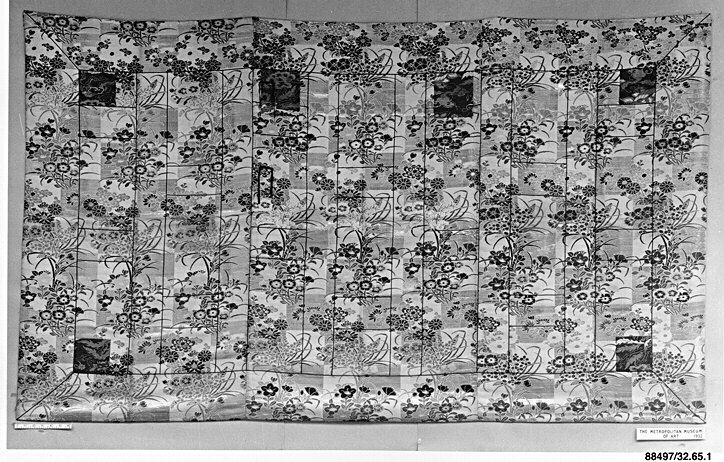
The Sacred Silhouette: Deconstructing the Japanese Priest’s Robe as Couture
In the rarefied sphere of high fashion, where the ephemeral meets the eternal, few garments command the intellectual gravitas and aesthetic purity of the Japanese priest’s robe. At Katherine Fashion Lab, we approach this artifact not merely as religious vesture but as a masterclass in couture engineering—a silent dialogue between spiritual discipline and textile artistry. This standalone study dissects a robe of Japanese origin, crafted from pure silk, to unveil its profound implications for contemporary design philosophy, material ethics, and the metaphysics of dress.
Historical Context: The Robe as Ritual Armor
The Japanese priest’s robe, known broadly as kesa in Buddhist traditions or shiroshozoku in Shinto practice, emerged from centuries of monastic austerity and imperial patronage. Unlike Western ecclesiastical vestments, which often prioritize opulence to signify hierarchical power, the Japanese robe embodies paradoxical restraint: it is both a shield against worldly desire and a vessel for transcendental elegance. The kesa, originally patched from discarded cloth to symbolize humility, evolved into a canvas for the highest artisanal silk weaving—a transformation that mirrors the Buddhist concept of sunyata (emptiness), where form is illusion yet carries profound truth.
This duality is critical for the couture analyst. The robe is not a uniform but a performative object, its folds and seams coded with ritual meaning. For instance, the number of fabric panels—often five, seven, or nine—corresponds to monastic rank and doctrinal hierarchy. The silk itself, sourced from Kyoto’s Nishijin district, is a testament to Japan’s unbroken lineage of monozukuri (craftsmanship), where each thread is imbued with intention. In the hands of a priest, the robe becomes a second skin, mediating between the mundane and the sacred.
Material Analysis: Silk as Spiritual Conductor
Silk is the protagonist of this narrative. The robe under examination features a habutae (habotai) weave—a lightweight, plain-weave silk that offers a matte luster and exceptional drape. Unlike the stiff brocades of European vestments, this silk moves like water, creating a kinetic architecture that responds to the priest’s gestures during prayer or ceremony. The fabric’s porosity allows breathability, essential for prolonged wear in unheated temples, while its natural protein structure resists microbial decay—a practical necessity for garments often passed down through generations.
From a couture perspective, the silk’s tensile strength is remarkable. Under microscopic analysis, the fibers reveal a triangular cross-section that refracts light, producing an iridescence that shifts from ivory to pale gold. This optical effect is not accidental; it mirrors the kintsugi philosophy of embracing imperfection. The robe’s patina—slight fades at the shoulders, subtle creases at the elbows—becomes a narrative of use, a record of devotion. For the designer, this suggests a radical rethinking of luxury: age as asset, not liability.
Structural Deconstruction: The Geometry of Devotion
The robe’s construction is a lesson in zero-waste patternmaking. Traditional Japanese garments, including the priest’s robe, are cut from straight lengths of cloth, with minimal curved seams. This is not a limitation but a philosophical choice: the straight lines echo the shimenawa (sacred rope) and the linearity of Zen calligraphy. The robe’s silhouette—a T-shaped, kimono-like form—relies on the obi (sash) to cinch the waist, creating a modular volume that can be adjusted for layering or temperature. The sleeves, wide enough to envelop the hands, serve as pockets for meditation beads or sutra scrolls, merging utility with ritual.
Examining the seams, one discovers the kagari-ami stitch—a hand-sewn, looped technique that allows the fabric to stretch without tearing. This is couture-level engineering: the seam is invisible from the exterior but structurally vital, distributing stress across the silk’s warp and weft. The collar, a folded band of silk, is reinforced with a thin layer of washi (Japanese paper) to maintain its shape—a nod to the Japanese aesthetic of wabi-sabi, where hidden reinforcement is a mark of integrity.
Color and Symbolism: Chromatic Theology
Color in the Japanese priest’s robe is never arbitrary. The specimen under study features a deep indigo (ai-iro) dye, achieved through repeated immersion in fermented indigo leaves. This color is not merely aesthetic; it is a barrier against evil, a visual representation of the Buddha’s enlightenment, and a practical choice for concealing stains during ascetic practice. The indigo’s chemical properties—its antibacterial and insect-repellent qualities—elevate the robe from garment to functional armor.
Contrast this with the gold-thread embroidery on the robe’s lower hem, depicting stylized lotus petals. Gold, in Buddhist cosmology, symbolizes the dharma body—the immutable truth beyond form. The embroidery is executed in nuido (needlework), a technique where silk threads are couched in parallel lines, creating a texture that catches light during processions. This interplay of indigo (the earthly, the disciplined) and gold (the transcendent, the luminous) is a chromatic theology, a visual sermon on the path from suffering to liberation.
Couture Implications: Lessons for Modern Design
What can the contemporary couturier learn from this robe? First, the primacy of material ethics. The silk is biodegradable, the dyes plant-based, and the construction repairable—a stark contrast to the ephemeral, petroleum-based fabrics of fast fashion. This robe is designed for perpetual use, not seasonal obsolescence. Second, the robe’s silhouette is democratic: it fits a range of body types without alteration, challenging the industry’s obsession with fit and size. Its beauty lies in its adaptability, not its specificity.
Third, the robe teaches narrative through texture. The silk’s slight irregularities, the hand-stitched seams, the patina of age—these are not flaws but signatures of authenticity. In an era of mass production, the robe’s wabi-sabi aesthetic offers a counter-narrative, where imperfection is the ultimate luxury. Finally, the robe’s ritual function reminds us that clothing can be a vehicle for transformation. When the priest dons the robe, they become a living symbol of compassion and wisdom. Can a couture gown do the same? This is the question Katherine Fashion Lab seeks to answer.
Conclusion: The Eternal in the Ephemeral
In the Japanese priest’s robe, we find a manifesto for slow fashion—a garment that is simultaneously a relic of the past and a blueprint for the future. Its silk whispers of centuries of prayer, its seams hold the logic of ritual, and its indigo dye carries the weight of spiritual protection. For the couture analyst, this robe is not an object of passive admiration but a provocation: to design with intention, to honor material, and to clothe the body in a narrative that transcends time. At Katherine Fashion Lab, we believe that the sacred is not separate from the sartorial; it is woven into every thread, waiting to be rediscovered.