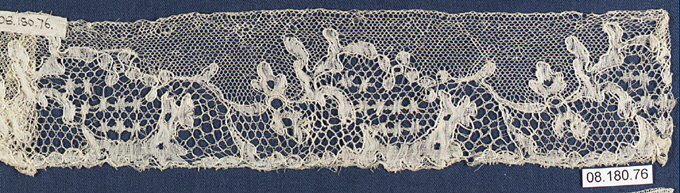
The Poetics of Fragmentation: A Couture Analysis of Katherine Fashion Lab's Bobbin Lace Study
Introduction: Deconstructing Heritage Through the Lens of Fragment
In the rarefied arena of haute couture, where narrative and technique converge to produce garments of profound cultural resonance, Katherine Fashion Lab (KFL) has established itself as a vanguard of conceptual rigor. The subject of this standalone study—Fragment, with its origin rooted in Global Heritage and its material soul woven from Bobbin Lace—represents a masterful interrogation of memory, absence, and the tactile poetics of decay. This analysis dissects how KFL transforms a traditional, geographically dispersed craft into a contemporary lexicon of fragmentation, where the incomplete becomes a statement of wholeness. The piece does not simply reference heritage; it reconfigures it, using the very structure of bobbin lace—a net of tension and void—to embody the thesis of the fragment.
I. The Material Dialectic: Bobbin Lace as a Medium of Absence
Bobbin lace, historically a painstaking handcraft associated with European courts and peasant economies alike, is defined by its negative space. The threads do not fill a surface; they create an architecture of holes, a lattice of deliberate gaps. KFL’s choice of this material for the Fragment study is not merely decorative but deeply semiotic. The lace itself is a fragment of a larger textile tradition, a remnant of pre-industrial global labor that spans from Flanders to Oaxaca, from Bruges to Burano. By isolating bobbin lace as the exclusive material, KFL elevates its inherent fragility into a strength. The lace’s openwork becomes a metaphor for historical amnesia—the threads that remain are the fragments of a story that cannot be fully reconstructed.
In this study, the lace is not pristine. It is deliberately distressed, with intentional pulls, broken loops, and asymmetrical tension. This is not a flaw but a design strategy. The materiality of the fragment is foregrounded: the lace appears as if excavated from an archive, a relic of a globalized past where trade routes carried threads and patterns across continents. KFL’s hand-finishing techniques—using raw silk threads to mend or disrupt the lace’s original grid—create a dialogue between preservation and destruction. The result is a textile that breathes with the memory of its making, a surface that invites touch while asserting its ephemerality.
II. Structural Deconstruction: The Silhouette of the Incomplete
The silhouette of the Fragment garment—a draped, asymmetrical bodice with a cascading train that dissolves into unspun threads—defies conventional couture structure. KFL rejects the rigid armature of traditional tailoring in favor of a floating architecture. The bodice is constructed from multiple panels of bobbin lace, each cut and reassembled to suggest a garment that is both being formed and undone. The seams are exposed, the edges raw, and the interior structure—often hidden in couture—is laid bare. This is the aesthetics of the ruin, where the incomplete silhouette references archaeological fragments: a Greek kore’s draped himation, a Ming dynasty robe’s lost sleeve, a Victorian lace collar separated from its dress.
KFL’s draping technique emphasizes gravity and tension. The lace is weighted with tiny glass beads—clear as water—that pull the fabric downward, creating vertical lines that mimic the passage of time. The train, which extends several feet behind the wearer, is not a continuous piece but a series of overlapping lace fragments, each edge unfinished. This suggests a garment that is perpetually in a state of unraveling, a metaphor for the diasporic nature of global heritage—always moving, always losing something. The silhouette is not about the body but about the space around the body, the absence that the lace frames.
III. Global Heritage as a Fragmented Narrative
The origin of Fragment is explicitly tied to Global Heritage, a term that KFL interprets not as a monolithic tradition but as a mosaic of displaced techniques. Bobbin lace, while often associated with European courts, was profoundly shaped by global trade. The cotton used in Flemish lace came from India; the silk in Italian lace traveled from China; the patterns themselves absorbed motifs from Ottoman textiles and pre-Columbian weavings. KFL’s study acknowledges this hybridity by incorporating fragments of non-European lace traditions into the piece. A section of the bodice uses a geometric pattern reminiscent of Mexican encaje de bolillos, while another section employs a floral motif from Chinese knotting techniques, translated into bobbin lace structure.
This deliberate mixing of geographic references is not a pastiche but a critical commentary on cultural diffusion. KFL presents heritage as inherently fragmented—no tradition is pure, all are the result of centuries of contact, theft, adaptation, and loss. The garment’s uneven edges and mismatched patterns mirror the uneven power dynamics of global history. The lace does not tell a single story; it tells many, each incomplete. By refusing to finish the garment into a coherent whole, KFL argues that heritage is not a closed archive but an open field of fragments, waiting for reinterpretation.
IV. The Standalone Study: A Methodological Provocation
This analysis is designated as a standalone study, a term that carries specific weight in KFL’s practice. Unlike a collection piece, which exists within a seasonal narrative, a standalone study is a concentrated exploration of a single conceptual thesis. The Fragment study operates as a thesis in textile form. It does not need a runway context or a collection theme to be understood; its meaning is self-contained within the interplay of material, origin, and technique. This format allows KFL to push the boundaries of couture as a research methodology, treating the garment as a primary source document.
The standalone study also challenges the commercial imperatives of fashion. Without the pressure of seasonal sales or market trends, KFL can prioritize intellectual depth over wearability. The Fragment piece is not intended for daily wear; it is a wearable artifact, a piece of conceptual art that interrogates the very definition of couture. The absence of a full collection context forces the viewer to engage with the piece on its own terms, to read the lace as a text, and to consider what it means to inherit a global tradition that is always already broken.
V. Conclusion: The Wholeness of the Fragment
Katherine Fashion Lab’s Fragment study is a profound meditation on the nature of heritage, memory, and materiality. By using bobbin lace—a technique defined by its voids—to explore the concept of the fragment, KFL inverts the traditional relationship between the part and the whole. The fragment is not a deficiency; it is a mode of knowing. In a world saturated with fast fashion and digital reproduction, the slow, deliberate, and incomplete nature of this piece offers a counter-narrative. It insists that the most honest representation of global heritage is not a seamless, sanitized whole but a collection of fragments, each carrying the weight of its own journey. The Fragment study stands as a testament to the power of couture to think through material, to make visible the threads that connect us to a fractured past, and to find beauty in the spaces where something is missing.