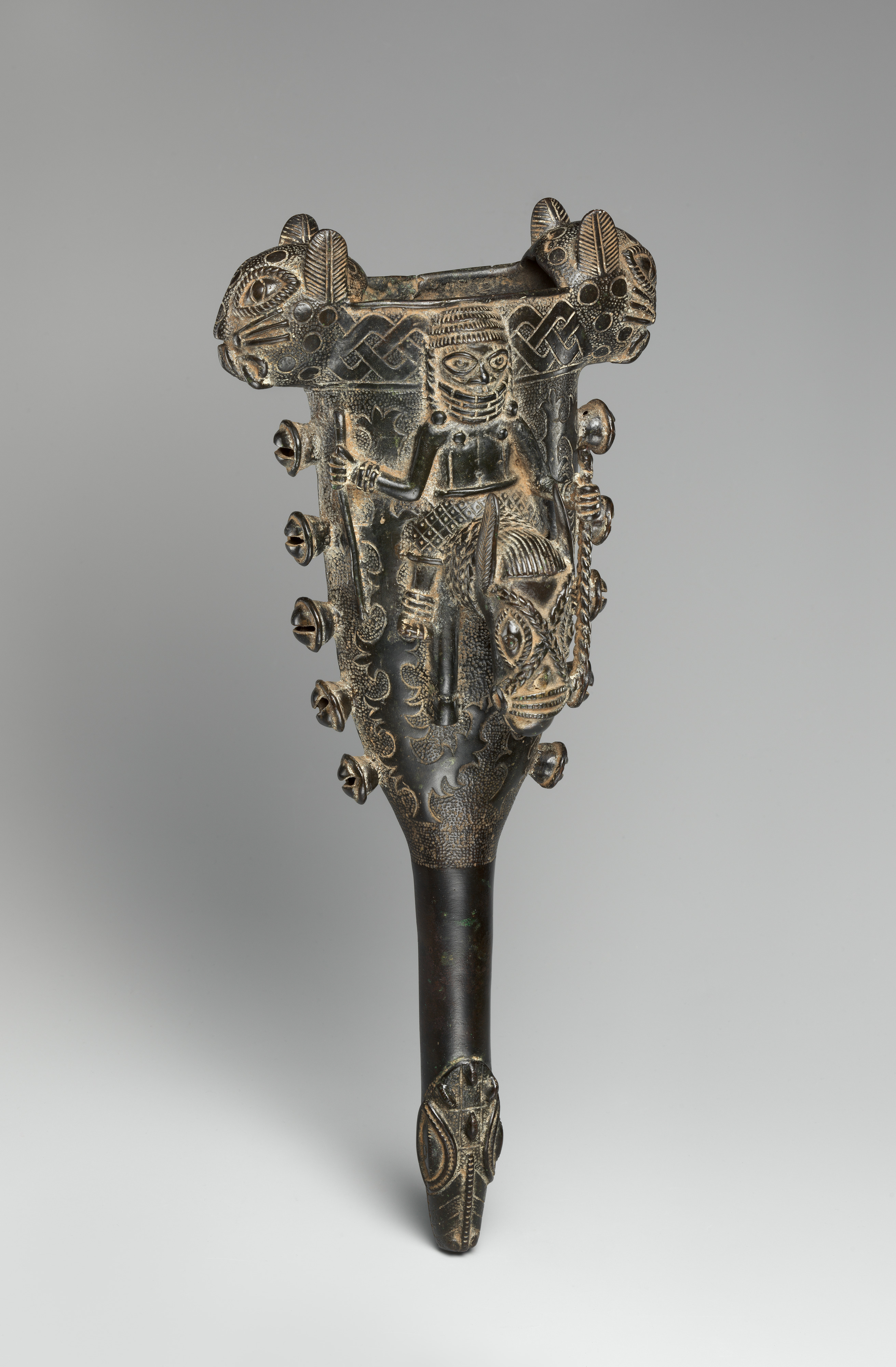
Heritage Analysis: The Bell (Ekure) of the Edo People
Introduction: The Bell as a Cultural Artifact and Luxury Archetype
The Bell (Ekure), originating from the Edo culture of the historic Kingdom of Benin (present-day Nigeria), is a masterwork of brass casting that transcends mere ornamentation. As a Strategic Standalone Research subject for Katherine Fashion Lab, this artifact offers a profound narrative of symbolic power, historical adornment, and spiritual meaning. For the 2026 high-end luxury strategy, the Ekure bell represents an untapped reservoir of narrative depth—a tangible link to royal authority, ancestral communication, and artisanal excellence. This analysis will deconstruct the bell’s heritage, distilling its core values into actionable insights for a luxury brand poised to redefine cultural storytelling.
Symbolic Power: Authority, Communication, and Ritual Hierarchy
In Edo cosmology, the Ekure bell was not merely a decorative object but a symbol of hierarchical power and divine communication. Traditionally, these bells were worn by palace chiefs, royal messengers, and spiritual intermediaries during state ceremonies, religious rituals, and processions. The sound of the bell—a clear, resonant ring—served as an audible marker of status, announcing the presence of authority and clearing spiritual pathways. In the context of the Benin Kingdom, the Oba (king) was considered a divine ruler, and the Ekure bell reinforced his earthly and celestial dominion. Each bell was cast with specific iconographic motifs, such as stylized faces, geometric patterns, or animal forms, which encoded the wearer’s rank, lineage, and ritual function. For luxury branding, this symbolic power translates into a narrative of exclusivity and commanding presence. The bell’s legacy suggests that luxury objects can function as talismans of influence, where the wearer is not just adorned but imbued with an aura of authority. Katherine Fashion Lab can leverage this by designing pieces that incorporate auditory elements—subtle chimes or resonant materials—that signal sophistication without overt display.
Historical Adornment: Craftsmanship, Materiality, and Royal Patronage
The brass Ekure bell is a testament to the lost-wax casting technique perfected by Edo artisans over centuries. This process, known as Igueghae in the local vernacular, involved creating a wax model, encasing it in clay, and then melting the wax to leave a mold for molten brass. The result was a highly detailed, durable object that could withstand ritual use and display. Historically, these bells were commissioned by the royal court and reserved for the elite, making them status-conferring artifacts. They were often worn as part of elaborate regalia, attached to belts, necklaces, or anklets, and their weight and sound were calibrated to enhance the wearer’s gait and presence. The material itself—brass—was a symbol of wealth and permanence, often associated with the sun and divine radiance. For a 2026 luxury strategy, this historical context underscores the value of artisanal heritage and material integrity. Modern luxury consumers increasingly seek objects with a provenance of mastery—pieces that tell a story of human skill and cultural continuity. Katherine Fashion Lab can position the Ekure bell’s legacy as a benchmark for bespoke craftsmanship, where each piece is individually cast, numbered, and accompanied by a narrative of its cultural origins. This approach aligns with the new luxury paradigm of meaning over mass production.
Spiritual Meaning: Ancestral Connection and Protective Function
Beyond its social role, the Ekure bell held profound spiritual significance. In Edo belief systems, sound is a conduit to the ancestral realm. The bell’s ring was thought to invoke protective spirits, ward off malevolent forces, and facilitate communication between the living and the dead. During ceremonies such as the Igue festival (a royal purification rite), bells were used to cleanse spaces and bless participants. The brass material itself was considered spiritually potent, capable of absorbing and redirecting negative energy. This spiritual dimension adds a layer of intangible value to the artifact—a sense of protection, blessing, and transcendence. For high-end luxury, this translates into a wellness-oriented narrative. Contemporary luxury buyers are increasingly drawn to objects that offer emotional and spiritual resonance, not just aesthetic appeal. Katherine Fashion Lab can reinterpret the Ekure bell as a modern talisman—a piece that embodies protection, clarity, and ancestral wisdom. By integrating symbolic soundscapes or ritual-inspired design elements (e.g., incised patterns that evoke spiritual motifs), the brand can create products that serve as personal artifacts of empowerment. This strategy taps into the growing market for mindful luxury, where objects are valued for their holistic impact on the wearer’s well-being.
2026 High-End Luxury Strategy: Integrating the Ekure Bell’s Heritage
To operationalize this heritage for Katherine Fashion Lab’s 2026 strategy, the Ekure bell should be positioned as a narrative anchor for a collection that celebrates African royal aesthetics and ritual luxury. The following strategic pillars are recommended:
1. The "Auditory Signature" Concept: Incorporate the bell’s sound into product design. For example, a limited-edition jewelry line could feature miniaturized brass bells with tuned frequencies, creating a signature chime unique to the brand. This auditory branding enhances sensory memorability and distinguishes Katherine Fashion Lab in a crowded market.
2. Artisanal Partnerships and Provenance: Collaborate with contemporary Edo brass casters who continue the lost-wax tradition. Each piece should include a digital provenance certificate with QR codes linking to video documentation of the casting process. This transparency builds trust and exclusivity, appealing to the conscious luxury consumer.
3. Spiritual Wellness Narrative: Market the collection as protective amulets for the modern elite. Use storytelling that emphasizes the bell’s role in cleansing energy and connecting to ancestral strength. This can be amplified through experiential retail, where customers participate in a brief ritual (e.g., a guided meditation or sound bath) at the point of purchase, deepening the emotional bond with the product.
4. Limited Edition and High Price Point: Position the Ekure-inspired pieces as investment objects with prices reflecting their cultural weight and artisanal labor. A numbered edition of 100 pieces, each with a unique bell tone, creates scarcity and collectability. The target demographic is the ultra-high-net-worth individual who values cultural capital and narrative-driven design.
5. Collaborative Storytelling: Partner with Edo cultural institutions or African art museums for exclusive exhibitions or digital content. This not only authenticates the brand’s heritage claims but also positions Katherine Fashion Lab as a custodian of cultural heritage—a powerful differentiator in the luxury sector’s ongoing shift toward ethical representation.
Conclusion: The Bell as a Blueprint for Heritage Luxury
The Bell (Ekure) of the Edo people is far more than a historical artifact; it is a blueprint for heritage luxury in the 2026 market. By decoding its symbolic power, artisanal mastery, and spiritual resonance, Katherine Fashion Lab can craft a distinctive brand narrative that marries cultural depth with modern luxury sensibilities. The Ekure bell teaches that true luxury is not about ostentation but about presence, meaning, and connection—to history, to craft, and to the self. As the brand moves forward, this research serves as a foundation for a collection that will not only adorn but also empower and elevate its wearers, echoing the bell’s timeless role as a conduit of authority and transcendence.