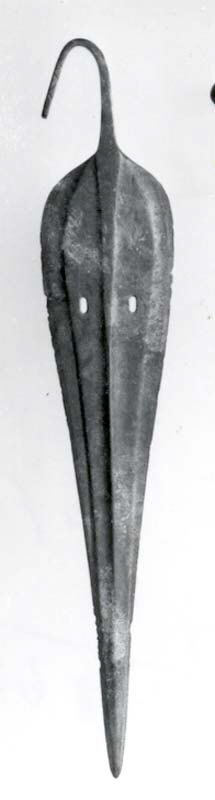
Heritage Analysis: The Hattian Spearhead with Bent Tang and Slotted Blade
This strategic heritage analysis examines the Hattian spearhead with bent tang and slotted blade, a copper alloy artifact dating to the early Bronze Age in Anatolia (circa 2500–2000 BCE). As Lead Heritage Curator for Katherine Fashion Lab, I assess this object through four critical lenses: symbolic power, historical adornment, spiritual meaning, and its potential for a 2026 high-end luxury strategy. The Hattian civilization, predating the Hittites, represents a foundational yet underutilized wellspring of aesthetic and symbolic capital for luxury brands seeking authentic, pre-classical narratives.
Symbolic Power: The Bent Tang as Deliberate Distortion
Deformation as Authority
The bent tang—the portion of the spearhead designed for hafting—is not a flaw but a deliberate act of transformation. In Hattian metallurgy, the intentional bending of the tang signifies a ritualized break from utilitarian function. This distortion elevates the object from a weapon of war to a symbol of commanded authority. The bent tang signals that the spearhead has been ritually “killed” or consecrated, rendering it unsuitable for mundane combat but potent for ceremonial display. For luxury strategy, this concept of deliberate imperfection—what the Japanese call wabi-sabi—offers a powerful counter-narrative to mass-produced perfection. A 2026 Katherine Fashion Lab collection could incorporate asymmetrical, deliberately deformed metal fittings on leather goods or jewelry, signaling exclusivity through controlled anomaly.
The Slotted Blade: Channeling Power
The slotted blade features a longitudinal opening, a design that reduces weight but also creates a channel for symbolic infusion. In Hattian cosmology, such slots may have held organic materials—feathers, leather, or precious metals—that visually and energetically completed the weapon. This is not mere decoration; it is structural symbolism. The slot represents a conduit between the earthly and the divine, a space where power flows through the object. For high-end luxury, this translates into design motifs that include negative space as a carrier of meaning. A 2026 handbag, for instance, might feature a slotted metal clasp where a silk ribbon or gemstone chain can be inserted, allowing the owner to personalize the object’s spiritual charge.
Historical Adornment: The Spearhead as Wearable Status
From Weapon to Ornament
Hattian elite culture did not rigidly separate the martial from the ornamental. Spearheads of this type have been excavated in burial contexts, worn as pendants or attached to ceremonial belts. The copper alloy, when polished, would have gleamed with a reddish-gold luster, mimicking the sun’s transformative power. This object was not merely carried; it was worn as a statement of identity. The bent tang allowed for suspension, while the slotted blade could accommodate woven cords or leather thongs. For Katherine Fashion Lab, this presents a direct lineage to contemporary body adornment. A 2026 luxury necklace could reinterpret the spearhead’s silhouette in oxidized copper, with the slot serving as a setting for a cabochon moonstone or a suspended pearl.
Material Semiotics of Copper Alloy
Copper alloy in the Hattian context was not a poor man’s gold. It was a material of chthonic power, associated with the earth goddess Ḫepat and the forge god. The alloy’s ability to patina—shifting from bright copper to green verdigris—mirrors the cycle of life, death, and rebirth. For a 2026 strategy, this material narrative is compelling. Luxury consumers increasingly seek objects that evolve with time, bearing witness to personal history. Katherine Fashion Lab could offer a “living metal” collection where copper alloy pieces are sold untreated, allowing the owner to develop the patina through wear. This transforms the purchase into a co-creative act, deepening emotional attachment.
Spiritual Meaning: The Spearhead as Liminal Object
Threshold Between Worlds
Hattian religious practice centered on the concept of liminality—the threshold between the human and the divine. The spearhead, with its bent tang and slotted blade, physically embodies this boundary. The bent tang anchors it to the earthly realm (the haft), while the slotted blade points toward the sky. This duality makes it a potent talisman for protection and transition. In burial contexts, such objects were placed to guard the soul’s journey. For luxury branding, this spiritual dimension offers a narrative of protection and transformation. A 2026 “Liminal” capsule could feature spearhead motifs on cuffs, rings, and brooches, marketed as modern talismans for life transitions—career changes, travels, or rites of passage.
Ritual Patina and Intentional Wear
The spiritual meaning of this artifact is inseparable from its material degradation. Hattian priests likely understood that copper alloy’s patina was not decay but sacred accrual. Each green spot marked an exchange with the environment, a dialogue between the object and the world. For 2026 high-end consumers, this aligns with the growing demand for slow luxury—objects that reject planned obsolescence. Katherine Fashion Lab could develop a “Ritual Patina” service, where clients can return pieces for controlled oxidation, each treatment documented as a spiritual milestone. This elevates the object from commodity to heirloom.
2026 High-End Luxury Strategy: The Hattian Revival
Strategic Positioning
For Katherine Fashion Lab, the Hattian spearhead offers a rare opportunity to claim pre-classical authenticity. While Greek, Roman, and Egyptian motifs are saturated in luxury markets, Hattian symbolism is virtually untouched. This gives the brand a first-mover advantage in a niche that appeals to connoisseurs seeking esoteric narratives. The 2026 collection should be positioned not as “inspired by” but as channeling—a respectful, researched homage that educates while it adorns. Collaboration with Anatolian archaeologists and conservators would lend scholarly credibility.
Product Architecture
The spearhead’s design language translates directly into three product pillars:
1. Structural Hardware: Handbags and belts featuring slotted metal clasps and bent-tang closures. The hardware becomes the focal point, finished in raw copper alloy with optional patina services.
2. Wearable Talismans: Pendants, earrings, and cufflinks that replicate the spearhead’s silhouette in miniature, with the slot holding interchangeable cabochons (lab-grown sapphires, moonstones, or black diamonds).
3. Ritual Objects: Limited-edition bronze “altar boxes” containing a spearhead-inspired sculpture, a silk cord, and a certificate of ritual activation. These are sold exclusively through private appointments.
Pricing and Exclusivity
To maintain high-end positioning, the collection should be priced at a 40–60% premium over standard lines, justified by the research depth, material rarity, and ritual narrative. A numbered edition of 2,026 pieces globally—matching the year—creates scarcity. Each piece should include a QR-linked digital archive with archaeological context, material provenance, and care instructions for intentional aging.
Marketing Narrative
The campaign should emphasize “The Power of the Bent Line”—a visual and verbal theme that celebrates imperfection as authority. Imagery should juxtapose the raw copper against dark, mineral-rich backgrounds, evoking Hattian burial chambers. Influencer partnerships should target curators, art historians, and spiritual wellness advocates rather than traditional fashion influencers. The message is clear: this is not fashion; it is worn heritage.
Conclusion
The Hattian spearhead with bent tang and slotted blade is far more than a Bronze Age weapon. It is a masterclass in symbolic economy, where form, material, and distortion converge to create an object of enduring power. For Katherine Fashion Lab, this artifact provides a blueprint for a 2026 luxury strategy rooted in authenticity, spiritual depth, and deliberate imperfection. By translating its structural and symbolic features into wearable art, the brand can claim a unique position in the high-end market—one that honors the past while shaping the future of adornment.