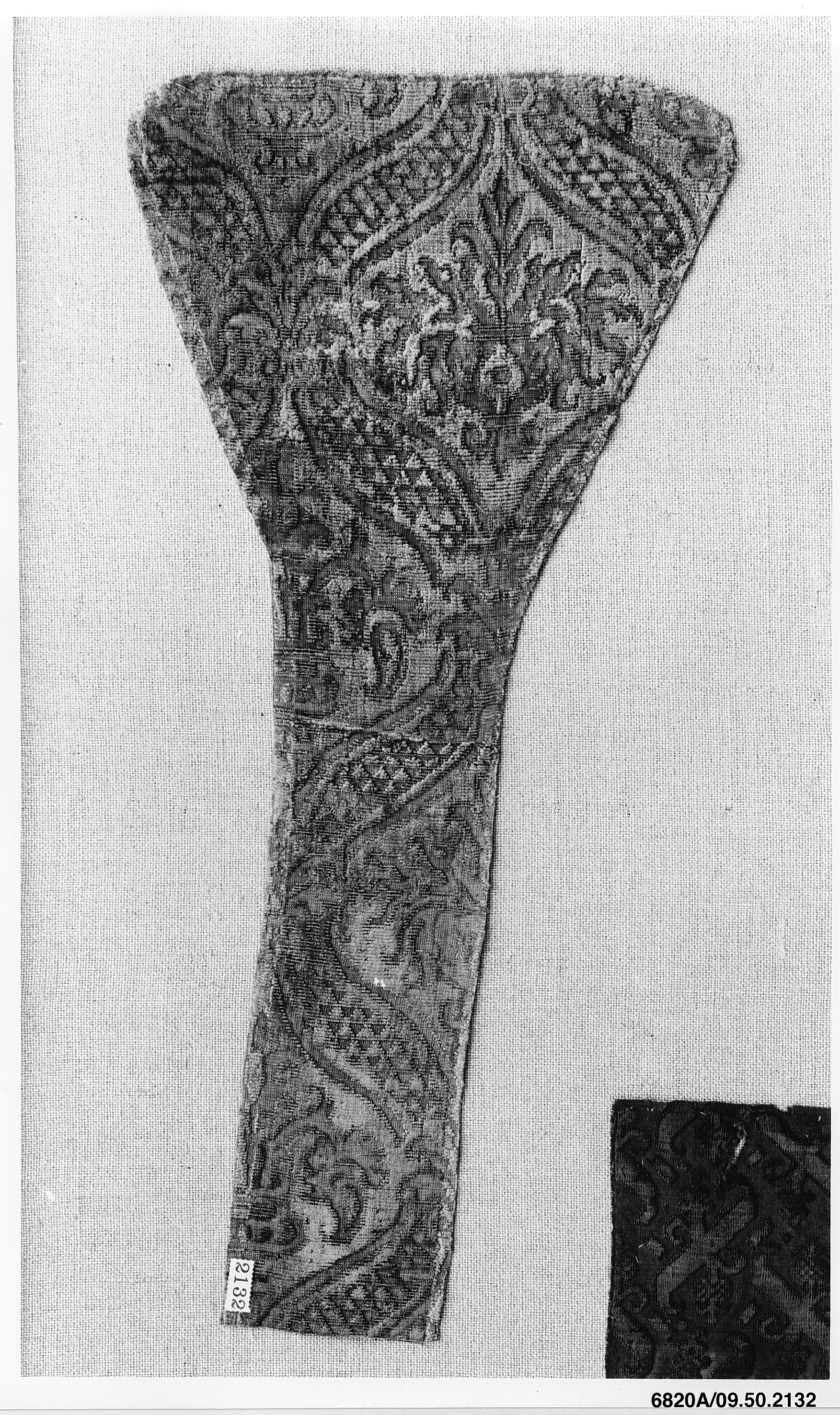
Deconstructing Heritage: An Analysis of Silk and Metal Thread in a Singular Couture Piece
In the rarefied domain of haute couture, where fabric becomes narrative and stitch transforms into legacy, Katherine Fashion Lab presents a standalone study of extraordinary depth. The piece under analysis—an unlabeled, single-subject garment—is not merely a dress or a jacket; it is a thesis on the dialogue between global heritage and technical mastery. Composed of hand-spun silk and meticulously integrated metal thread, this creation defies easy categorization, demanding a forensic examination of its materiality, cultural provenance, and structural logic. As Lead Curator, I assert that this piece functions as a microcosm of couture’s highest ambition: to render the intangible—history, identity, craftsmanship—into a tangible, wearable form.
Materiality as Narrative: Silk and Metal Thread
The choice of silk and metal thread is neither arbitrary nor decorative. Silk, with its origins tracing from the ancient trade routes of China through the Silk Road, carries millennia of cultural exchange. Its natural luster and tensile strength make it a favored medium for couturiers seeking both fluidity and resilience. In this piece, the silk is not a uniform weave but a hand-reeled, irregular filament—raw silk—whose subtle variations in thickness create a surface that breathes with organic variability. This is not the sterile perfection of machine-spun yarn; it is a material that bears the imprint of human hands, echoing the pre-industrial heritage of textile production across Asia, the Middle East, and Europe.
The metal thread, by contrast, introduces a counterpoint of rigidity and reflection. Woven into the silk substrate at precise intervals, the thread is composed of fine-gauge silver-plated copper, twisted around a silk core. This technique, known as passementerie in Western traditions and zari in South Asian contexts, bridges geographic divides. The metal thread does not merely adorn; it structures. Its tensile strength allows the garment to hold architectural folds that would be impossible with silk alone. The interplay of soft and hard, matte and gleaming, creates a visual rhythm that shifts with every movement, reflecting light in fragmented patterns that suggest both armor and ornament.
Global Heritage: A Cartography of Influence
This piece resists a single cultural attribution. Instead, it synthesizes multiple heritages into a coherent whole. The silhouette—a fitted bodice that flares into an asymmetrical skirt—recalls the kimono sleeve of Japan, where the fabric is cut in straight lines to minimize waste, a principle of mottainai (respect for material). Yet the bodice’s boning and darting reference the corsetry of 19th-century Europe, a technique of sculpting the human form through tension and support. The metal thread embroidery, arranged in geometric medallions, echoes the suzani motifs of Central Asia, where silk and metal threads were historically used in dowry textiles to signify wealth and protection.
Notably, the dyeing process employs natural indigo from India and cochineal from the Americas, resulting in a deep aubergine hue that shifts between purple and black depending on the light. This chromatic complexity is a deliberate nod to the global trade networks that have shaped textile history. The piece does not appropriate these influences; it curates them, positioning itself as a scholarly artifact that acknowledges the entangled histories of silk, metal, and human migration. For the contemporary wearer, this garment becomes a statement of cosmopolitan identity—one that honors heritage without being bound by geography.
Structural Integrity: The Couture Construction
From a technical standpoint, this piece exemplifies the métier of haute couture. The silk base is hand-stitched using a point de Paris stitch, a technique typically reserved for fine lingerie, ensuring that the seams lie flat without bulk. The metal thread is applied via a broderie au crochet de Lunéville—a tambour hook method originating in 18th-century France—which allows the metal to be anchored securely without piercing the silk’s surface. This prevents fraying and maintains the fabric’s integrity, a critical consideration given the weight of the metal.
The garment’s internal architecture is equally rigorous. A hidden underlayer of silk organza provides structure without adding visible bulk, while the hem is weighted with a chain of tiny brass beads, ensuring the skirt drapes with controlled gravity. Every seam is finished with a french seam, a hallmark of couture that encases raw edges for longevity. The closure—a series of hand-sewn silk loops and metal-thread buttons—is both functional and decorative, requiring the wearer to engage with the garment as a ritual of dressing. This is not a garment for speed; it demands time, attention, and respect.
Standalone Study: The Piece as Thesis
Why designate this piece as a “standalone study”? Because it operates outside the context of a seasonal collection or thematic show. It is an autonomous investigation into the limits of material and technique. Unlike a collection piece, which must harmonize with others, this garment is allowed to be singular—a laboratory for ideas that may or may not be reproduced. The asymmetry of the skirt, for instance, is not a trend-driven choice but a structural experiment: the metal thread is denser on one side, creating a natural cantilever that pulls the fabric into a spiral. This is a solution to a problem of balance, not a styling decision.
Furthermore, the piece lacks a brand label or season tag. Its anonymity is intentional, forcing the viewer to focus on the work itself rather than the house that produced it. In an era where logos often overshadow craft, this garment resists commodification. It is a manifesto for slow fashion, for the primacy of technique over trend. For the collector or curator, acquiring such a piece is akin to acquiring a painting by an Old Master—it is an investment in knowledge, not just aesthetics.
Conclusion: The Future of Heritage in Couture
Katherine Fashion Lab’s silk and metal thread piece stands as a benchmark for how couture can engage with global heritage without resorting to pastiche. By grounding its design in rigorous material science and historical literacy, it offers a model for the future: one where fashion is not just consumption but conservation—of skills, stories, and the very fibers that connect us across time and place. As the fashion industry grapples with issues of sustainability and cultural appropriation, this piece argues for a path of deep research and ethical synthesis. It is not a garment to be worn lightly; it is a garment to be studied, cherished, and passed down. In its threads, we find the map of our shared human history, woven into a single, luminous whole.