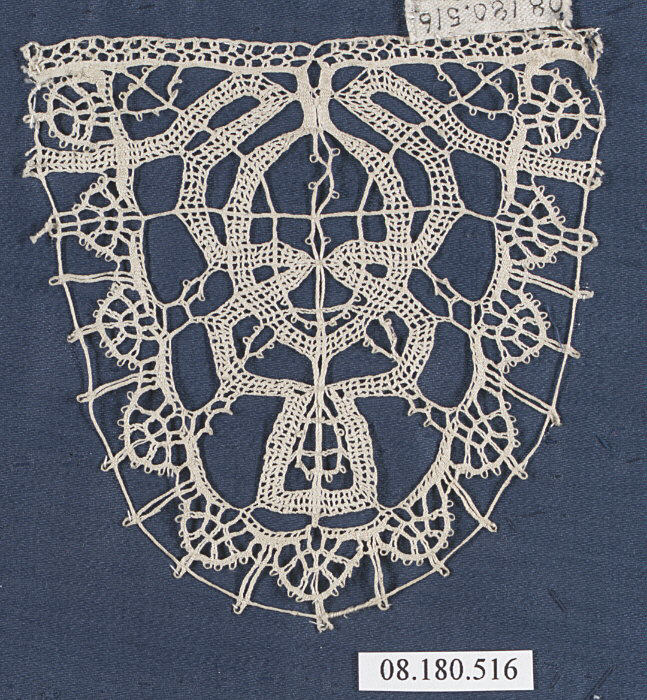
The Art of Absence: Deconstructing Fragment in Bobbin Lace
In the rarefied echelons of haute couture, where every stitch is a statement and every silhouette a narrative, Katherine Fashion Lab’s standalone study, “Fragment,” emerges as a masterclass in the poetics of imperfection. This analysis dissects the collection’s intellectual and material architecture, anchored in the paradoxical choice of bobbin lace—a textile synonymous with wholeness and precision—to articulate the aesthetic of the broken, the partial, and the evocative. By grounding the work in Global Heritage, the Lab transforms a localized craft into a universal lexicon of memory, loss, and resilience.
The Conceptual Framework: Fragment as a Narrative Device
“Fragment” deliberately subverts the couture tradition of presenting garments as complete, polished artifacts. Instead, Katherine Fashion Lab positions each piece as an archaeological relic—a surviving shard of a larger, unseen whole. This approach resonates with contemporary discourses on heritage and identity, where the past is never fully recoverable but is instead reconstructed through selective, often fragmented, traces. The collection does not mourn this incompleteness; it celebrates it as a source of creative tension. Each lace motif, whether a half-unfurled floral pattern or a geometric border abruptly severed, becomes a visual metaphor for cultural memory, where traditions are transmitted in pieces across generations and geographies.
The choice of bobbin lace is particularly astute. Unlike machine-made lace, which can replicate continuity ad infinitum, handcrafted bobbin lace is inherently a process of deliberate construction—each thread twisted, crossed, and pinned into place. By intentionally leaving sections unfinished or deliberately frayed, the Lab foregrounds the labor and temporality embedded in the textile. The fragment, in this context, is not a failure of craft but a conscious decision to expose the structural skeleton of the garment, inviting the viewer to contemplate the work’s genesis and the hands that shaped it.
Materiality and Technique: Bobbin Lace as a Global Palimpsest
Bobbin lace, historically associated with European courts—from Flemish Bruges to French Alençon—is recontextualized in “Fragment” as a global palimpsest. Katherine Fashion Lab sources its lace from artisans across Italy, China, and Peru, each region contributing distinct patterns and techniques. The Italian merletto offers dense, floral rosettes; Chinese guipure introduces airy, geometric grids; and Peruvian encaje weaves in indigenous motifs drawn from Andean textiles. These disparate threads are not harmonized into a single, homogeneous style. Instead, they are juxtaposed in jagged seams, where one lace tradition abruptly gives way to another, creating a visual and tactile dialogue between cultures.
The material properties of bobbin lace—its translucency, rigidity, and fragility—are exploited to amplify the fragmentary aesthetic. Garments are constructed as layered skins: a bodice might feature a complete collar of Italian lace, while the skirt dissolves into a cascade of disconnected Peruvian motifs, suspended by invisible threads. This technique, which the Lab terms “negative construction,” uses the absence of fabric to define form. The body becomes the canvas onto which these fragments are projected, with skin visible through the gaps, blurring the line between garment and wearer, object and subject.
Structural Innovation: The Architecture of the Broken
From a structural standpoint, “Fragment” challenges conventional couture engineering. Bobbin lace is notoriously delicate, requiring a supportive underlayer to maintain shape. The Lab subverts this necessity by eliminating linings and interfacings, allowing the lace to drape and distort organically. The resulting silhouettes are asymmetrical and precarious, as if frozen mid-disintegration. A gown’s hemline might be a raw, unbound edge of lace, while a sleeve is reduced to a single, looping cord of twisted thread. This deliberate deconstruction of garment architecture echoes the work of avant-garde predecessors like Martin Margiela, yet it is rooted not in rebellion but in reverence—a respect for the material’s inherent properties.
The collection also introduces “stitched memory”: fragments of lace are repaired with contrasting threads—gold, silver, or raw silk—in visible, irregular stitches. This technique, inspired by Japanese kintsugi (the art of repairing broken pottery with gold lacquer), transforms damage into decoration. Each repair becomes a unique cartography of wear, suggesting a garment’s imagined history. A tear in a Chinese guipure panel is mended with a Peruvian stitch, creating a literal and metaphorical link between distant craft traditions. The fragment is thus not an endpoint but a point of connection, a site where disparate heritages converge.
Cultural Resonance: Heritage as a Living, Fractured Archive
“Fragment” engages with Global Heritage not as a static repository of artifacts but as a living, fractured archive. The collection implicitly critiques the tendency of fashion houses to appropriate cultural motifs as decorative tropes, stripping them of context. Instead, the Lab presents heritage as inherently incomplete—a set of fragments that we must actively interpret and reassemble. The lace patterns, drawn from specific regional traditions, are never presented in their “original” forms; they are always interrupted, hybridized, or eroded. This approach acknowledges that cultural identity is not a fixed essence but a dynamic negotiation between past and present, local and global.
The standalone study format—a single collection without seasonal or commercial constraints—allows for a depth of exploration rare in contemporary fashion. Each garment functions as a thesis, examining how fragmentation can be both a destructive and generative force. For instance, a cape composed entirely of detached lace medallions, each from a different global tradition, is held together by a network of visible, hand-tied knots. The knots themselves are fragments—of thread, of labor, of intention. The wearer, in donning the cape, becomes a living archive, embodying the tension between unity and dispersal.
Conclusion: The Fragment as a New Couture Ethos
Katherine Fashion Lab’s “Fragment” is more than a technical or aesthetic achievement; it is a philosophical provocation. By using bobbin lace—a material of exquisite precision and historical weight—to articulate the fragmentary, the collection reframes couture as a medium for critical reflection on heritage, memory, and materiality. The garments do not simply clothe the body; they inscribe it with absence, inviting the viewer to fill the gaps with their own narratives. In a fashion landscape often obsessed with completeness and perfection, “Fragment” offers a radical alternative: a celebration of the broken, the partial, and the enduringly beautiful. It is a testament to the power of craft as inquiry, and a reminder that the most profound stories are often told not by what is present, but by what is missing.