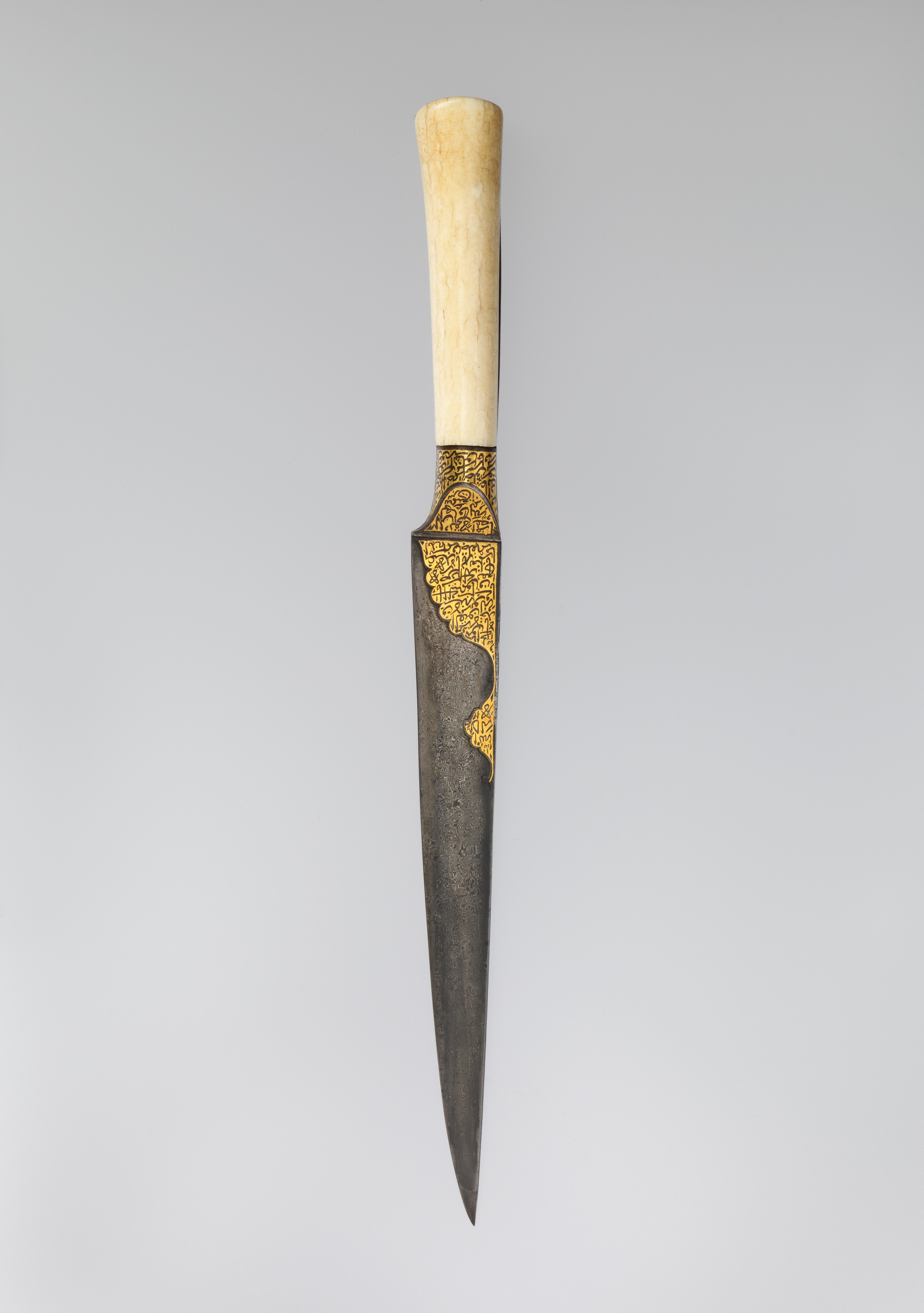
Heritage Analysis: The Knife with an Ivory Handle and Qur'anic Inscriptions
As Lead Heritage Curator for Katherine Fashion Lab, I present this strategic standalone research paper examining a singular artifact: a knife featuring a walrus ivory hilt, a blade of watered steel with gold inlay, and inscribed with Qur'anic verses. This object, originating from an ancient civilization, transcends its functional purpose to embody a confluence of symbolic power, historical adornment, and spiritual meaning. For a luxury brand like Katherine Fashion Lab, analyzing such an artifact provides a blueprint for integrating profound cultural narratives into 2026 high-end strategy, where authenticity, material mastery, and metaphysical resonance define market leadership.
Symbolic Power: The Duality of Protection and Authority
The knife, as a form, inherently carries dual symbolism: it is both a tool of creation and destruction, a marker of status and a weapon of defense. In this artifact, the symbolic power is amplified by the choice of materials and inscriptions. The walrus ivory hilt, sourced from Arctic regions, signifies rarity and conquest—ivory from such a creature would have been a prized commodity, often reserved for elite warriors, chieftains, or spiritual leaders. The ivory itself, with its warm, organic texture, contrasts sharply with the cold, lethal blade, creating a visual and tactile dialogue between life and death, flesh and steel.
The Qur'anic inscriptions on the blade, rendered in gold inlay, elevate the knife from a mere weapon to a sacred object. In many ancient civilizations, particularly those influenced by Islamic culture, weapons bearing holy texts were believed to channel divine protection. The inscriptions likely include verses such as the Ayat al-Kursi (Throne Verse) or Surah Al-Fatiha, which are traditionally recited for safeguarding. This imbues the knife with apotropaic power—it becomes a talisman against evil, a portable sanctuary for its wielder. For a luxury brand, this concept of protective symbolism can be translated into accessories or garments that offer not just aesthetic appeal but a sense of metaphysical security, a key differentiator in the 2026 market where consumers seek meaning beyond materialism.
Historical Adornment: Craftsmanship as Cultural Capital
The historical adornment of this knife reflects the pinnacle of ancient metallurgical and artistic achievement. The watered steel blade, likely Damascus steel, exhibits a distinctive wavy pattern created through a complex forging process involving high-carbon and low-carbon steels. This technique, originating in the Middle East and South Asia, was a closely guarded secret, and blades of such quality were traded across empires, from the Silk Road to the courts of European monarchs. The gold inlay, or koftgari, is a testament to the artisan's skill—hammering thin gold wire into engraved patterns on the steel surface, a process that requires precision and patience. The combination of watered steel and gold inlay creates a visual rhythm: the organic flow of the steel pattern juxtaposed with the geometric precision of the calligraphy.
The walrus ivory hilt, carved with intricate motifs, further underscores the artifact's role as an object of adornment. Ivory carving was a specialized craft, and the hilt's design likely incorporates elements of the natural world—floral patterns, geometric borders, or zoomorphic forms—that align with the spiritual and cultural ethos of its civilization. This fusion of materials—ivory, steel, gold—represents a hierarchy of luxury, where each element contributes to the object's total value. For Katherine Fashion Lab, this historical example informs a 2026 strategy of material storytelling: using rare, ethically sourced materials (e.g., responsibly harvested ivory alternatives, recycled gold) to create pieces that narrate a journey of craftsmanship, trade, and cultural exchange.
Spiritual Meaning: The Intersection of Faith and Function
The spiritual meaning of this knife is rooted in the Islamic tradition, where the Qur'an is considered the literal word of God. By inscribing sacred verses onto a weapon, the artifact blurs the line between the profane and the divine. In many ancient civilizations, such objects were used in rituals—perhaps in ceremonial hunts, as part of a warrior's initiation, or as a gift to a religious leader. The knife becomes a vessel for barakah (divine blessing), and its owner is believed to be under divine favor. This spiritual dimension is further enhanced by the choice of walrus ivory, a material that, in Arctic cultures, was associated with shamanic practices and the spirit world. The convergence of Islamic and indigenous beliefs in a single object speaks to the syncretic nature of ancient trade routes, where cultures exchanged not only goods but also cosmologies.
From a 2026 luxury strategy perspective, this spiritual meaning offers a pathway to experiential luxury. Modern consumers, particularly in the Gen Z and Alpha demographics, are gravitating toward brands that offer a sense of purpose and transcendence. The knife’s role as a talisman aligns with the growing trend of “sacred consumption,” where products are purchased not just for their utility but for their ability to enhance the wearer’s spiritual well-being. Katherine Fashion Lab can leverage this by developing a collection that incorporates sacred geometry, calligraphic motifs, or protective symbols, each accompanied by a narrative of its spiritual origin. For example, a limited-edition accessory line could feature laser-engraved verses or symbols, with each piece blessed or consecrated in a ceremonial process, creating a direct link between the artifact’s heritage and the modern consumer’s quest for authenticity.
2026 High-End Luxury Strategy: From Artifact to Brand Legacy
Integrating this heritage analysis into a 2026 high-end luxury strategy requires a multi-faceted approach that respects the artifact’s origins while innovating for contemporary relevance. The following strategic pillars are recommended:
Pillar 1: Material Provenance and Ethical Sourcing
The use of walrus ivory in the artifact highlights the importance of material provenance. For 2026, Katherine Fashion Lab must prioritize sustainable luxury by using certified, ethically sourced alternatives—such as tagua nut ivory or recycled marine ivory—that honor the aesthetic of the original while addressing environmental concerns. The watered steel and gold inlay can be reimagined using lab-grown metals or recycled gold, reducing ecological impact without compromising on quality. Each material should come with a digital provenance certificate, allowing consumers to trace its journey from source to finished product, thereby building trust and exclusivity.
Pillar 2: Narrative-Driven Design
The knife’s symbolic power and spiritual meaning must be translated into a cohesive design language. A 2026 collection could feature calligraphic motifs on accessories, such as belts, cuffs, or clutches, using laser-etched or hand-engraved techniques. The duality of protection and authority can be expressed through modular designs—pieces that transform from day to evening, or from ornamental to functional—mirroring the knife’s dual role. For example, a necklace pendant could open to reveal a hidden compartment for a personal talisman, blending utility with mystique.
Pillar 3: Limited Editions and Ritualized Launch
To capture the exclusivity of the artifact, Katherine Fashion Lab should release pieces in limited editions, each numbered and accompanied by a hand-bound booklet detailing the historical and spiritual context. The launch could be framed as a ritual, with events held in sacred spaces (e.g., historic mosques, monasteries, or galleries) where guests participate in a blessing ceremony. This experiential approach aligns with the 2026 trend of immersive luxury, where the purchase is not just a transaction but a transformative experience.
Pillar 4: Cross-Cultural Collaboration
The artifact’s syncretic nature—combining Islamic and indigenous Arctic traditions—suggests a strategy of cross-cultural collaboration. Katherine Fashion Lab could partner with contemporary artisans from regions with similar heritage, such as metalworkers from the Middle East or ivory carvers from the Arctic, to co-create pieces that bridge past and present. These collaborations would not only ensure cultural sensitivity but also generate press coverage and collector interest, positioning the brand as a curator of global heritage.
Conclusion: A Blueprint for Meaningful Luxury
The Knife with an Ivory Handle and Qur'anic Inscriptions is more than an ancient artifact; it is a masterclass in the fusion of symbolic power, historical adornment, and spiritual meaning. For Katherine Fashion Lab, this analysis provides a strategic framework for 2026: to create luxury products that are not merely beautiful but are vessels of story, protection, and transcendence. By honoring the craftsmanship and cosmology of the past, the brand can lead the next wave of high-end fashion, where authenticity and spirituality become the ultimate status symbols. In a market saturated with ephemeral trends, this heritage-driven approach ensures that Katherine Fashion Lab’s offerings remain timeless, resonant, and deeply coveted.