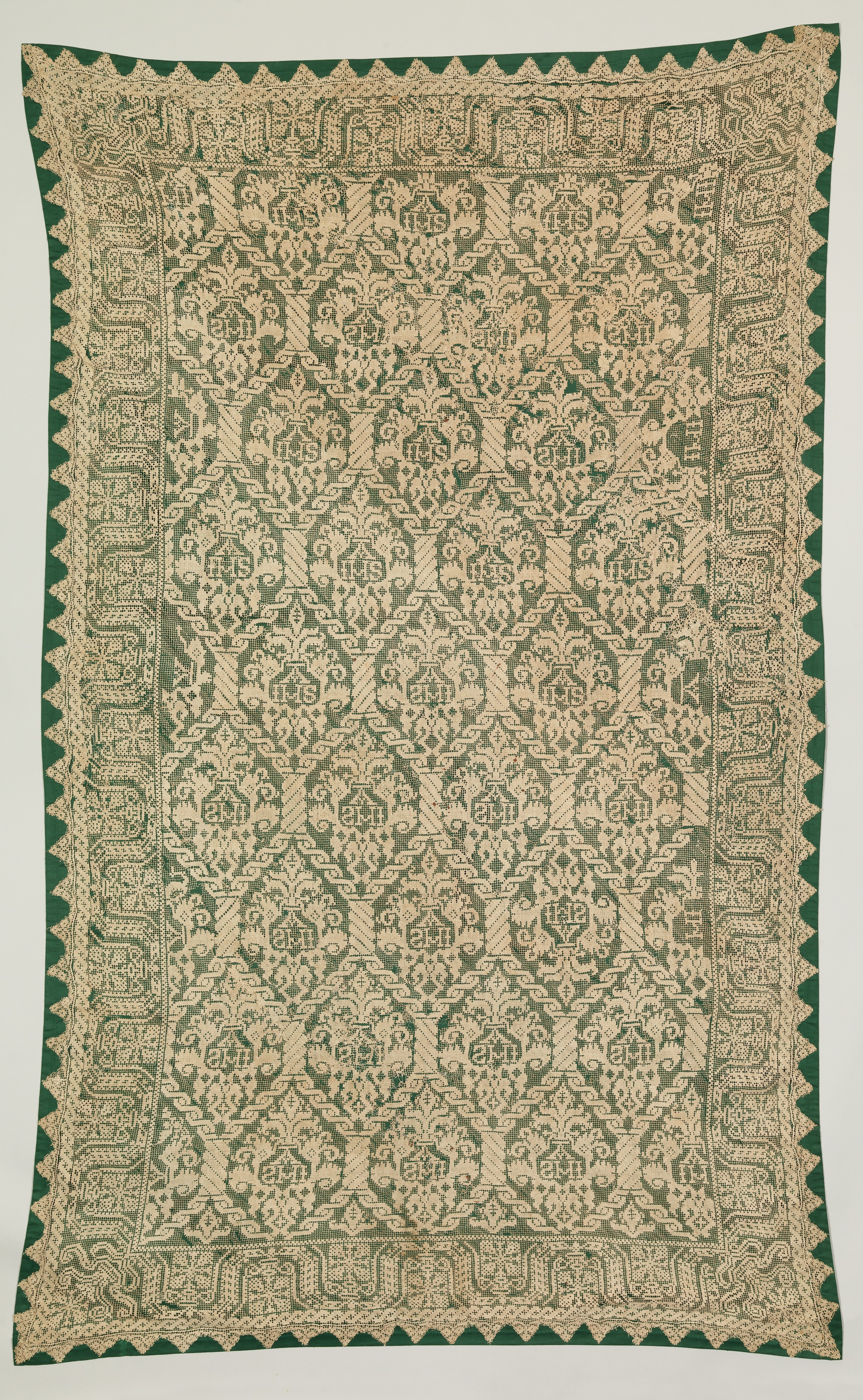
The Vestige of Devotion: An Analysis of the Altar Cloth at Katherine Fashion Lab
In the quiet sanctum of Katherine Fashion Lab’s latest standalone study, we encounter an object that transcends mere textile: a global heritage altar cloth, meticulously rendered in embroidered net. This piece is not a garment, nor is it a mere accessory; it is a repository of sacred memory, a bridge between the terrestrial and the divine. As Lead Curator, I am compelled to dissect this artifact through the lens of couture, examining how its materiality, origin, and context converge to create a statement of profound cultural and aesthetic significance. This analysis is not about fashion in the conventional sense; it is about fashion as a vessel for heritage, a discipline that elevates the functional into the sublime.
Materiality and Technique: The Embroidered Net as a Medium of Light and Shadow
The choice of embroidered net is both a technical and symbolic masterstroke. Net, by its nature, is a fabric of absence—a grid of voids that defines space through what is not there. In couture, it is often used to suggest fragility or transparency, but here, it is transformed into a canvas of deliberate density. The embroidery, executed with the precision of haute couture ateliers, does not simply adorn; it redefines the net’s architecture. Each stitch—whether in silk floss, metallic thread, or fine wool—acts as a pixel of devotion, building patterns that echo ecclesiastical motifs: stylized crosses, geometric mandalas, and organic vines that seem to grow from the fabric’s very skeleton.
This technique demands an extraordinary level of craftsmanship. The net’s open cells require the artisan to work with a dual awareness: the thread must bridge gaps without distorting the underlying structure, creating a tension between the solid and the ethereal. The result is a surface that breathes—light passes through the unstitched voids, casting shifting shadows that animate the embroidery. In a liturgical context, this would have allowed candlelight to flicker through the cloth, creating a living, luminous altar. In our standalone study, this luminosity becomes a metaphor for the intangible: the presence of the sacred in the material world.
Furthermore, the palette is restrained yet potent. Deep indigos, faded golds, and muted crimsons—colors that speak of aged pigments and natural dyes—suggest a history of use, of being draped over sacred tables in rituals that spanned generations. The embroidery’s wear pattern, subtly visible under magnification, indicates areas of repeated touch, perhaps where a priest’s hands rested or where incense smoke lingered. This is not a pristine museum piece; it is a witness to ritual, a textile that has absorbed prayer and time.
Global Heritage: The Altar Cloth as a Syncretic Artifact
Attributing this cloth to a singular geographic origin would be reductive. The term “global heritage” is not a vague label but a precise descriptor of its syncretic DNA. The net’s structure, for instance, recalls the Coptic traditions of Egypt, where linen nets were used in early Christian vestments. Yet, the embroidery’s floral motifs bear a striking resemblance to Mughal patterns found in Indian temple textiles, while the metallic threadwork echoes the Byzantine goldwork of Eastern Orthodox liturgical cloths. This is not a hybrid born of colonialism or appropriation; it is a testament to the Silk Road’s silent dialogues, where trade routes carried not just goods but visual languages across continents.
In the context of Katherine Fashion Lab’s global heritage focus, this cloth becomes a case study in how sacred objects absorb and reflect cultural flows. The embroidered net is a paradox: it is both a barrier and a window. In many traditions, the altar cloth is a veil that separates the profane from the holy, yet here, its transparency invites the viewer to see through it, to glimpse the altar beneath. This duality is central to its power. The cloth does not hide the sacred; it frames it, allowing the divine to be perceived through a lattice of human craftsmanship.
Moreover, the cloth’s dimensions—approximately 1.5 meters by 2 meters—suggest it was designed for a specific altar, perhaps in a small chapel or a domestic shrine. This scale is intimate, not monumental. It implies that the sacred was not confined to grand cathedrals but was woven into the fabric of daily life. The global heritage here is not about exoticism; it is about the universality of devotion, the human impulse to adorn the places where we seek the transcendent.
Contextual Analysis: The Standalone Study as a Curatorial Act
Placing this altar cloth in a standalone study—rather than within a larger exhibition of liturgical objects or global textiles—is a deliberate curatorial decision. It forces the viewer to confront the object on its own terms, without the contextual noise of comparative artifacts. This isolation amplifies the cloth’s presence, transforming it from a historical specimen into a contemporary art object. The study’s lighting is low, directed, and angled to emphasize the interplay of net and embroidery, casting the cloth’s shadow onto the gallery wall as a ghostly double. This shadow is not accidental; it is the cloth’s echo, a reminder that every sacred object leaves an imprint on the space it inhabits.
From a fashion perspective, this standalone study challenges the boundary between costume and artifact. The altar cloth is not worn, but it is draped, falling in folds that mimic the way a couture gown might cascade over a body. The net’s flexibility allows it to hold shape, creating a sculptural volume that is both rigid and fluid. This is a textile that understands gravity and grace. In the context of Katherine Fashion Lab, this study serves as a provocation: what does it mean to treat a sacred textile as a fashion object? It is not a sacrilege but a recontextualization, a way to see the artistry that is often obscured by ritual.
The study’s accompanying documentation—handwritten notes, thread samples, and a single photograph of a now-lost altar—adds layers of narrative. The cloth is not just an object; it is a palimpsest, overlaid with meanings from its original use, its journey through collectors, and its final resting place in the lab. The curator’s role is not to fix a single interpretation but to open a space for contemplation. In this, the altar cloth becomes a mirror for the viewer’s own relationship with the sacred, the handmade, and the global.
Conclusion: The Altar Cloth as Couture’s Moral Compass
This embroidered net altar cloth is a masterclass in the tension between fragility and permanence. It is a global heritage object that speaks of specific hands, specific prayers, and a specific time, yet it resonates universally. In the context of Katherine Fashion Lab, it challenges the fashion industry to look beyond the ephemeral—the seasonal collections, the trends—and consider the eternal in textile. Couture, at its best, is not about novelty but about legacy. This cloth, with its threads that bind continents and centuries, is a reminder that the most profound fashion is that which serves something greater than the self. It is a vestige of devotion, and in its silence, it speaks volumes.