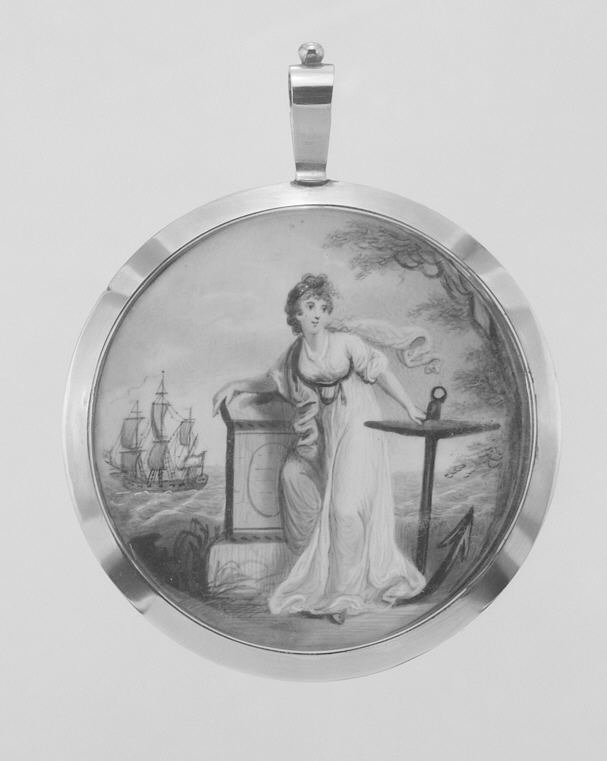
Heritage Analysis: The Symbolic Power of Hope in American Watercolor on Ivory
At Katherine Fashion Lab, the study of heritage artifacts transcends mere aesthetic appreciation, serving as a strategic compass for high-end luxury innovation. This analysis examines a singular object—a watercolor painting on ivory, originating from 19th-century America, with the subject of Hope. Through the lenses of symbolic power, historical adornment, and spiritual meaning, this paper articulates a research framework for a 2026 high-end luxury strategy that leverages intangible cultural heritage to create resonant, enduring brand value.
Symbolic Power: Hope as a Cultural Anchor in American Identity
In American cultural history, the symbol of Hope has been a persistent, mutable force—appearing in colonial religious iconography, Revolutionary War propaganda, and Victorian sentimental art. The watercolor on ivory medium, popular in the 1820s–1870s, was often used for miniature portraits and allegorical scenes, prized for its delicate luminosity and portability. The choice of ivory as a support material is itself symbolically charged: it represents purity, permanence, and a precious surface that demands exceptional skill. The watercolor technique, with its translucent washes, evokes the ephemeral yet resilient nature of hope—a quality that can be both fragile and enduring.
From a strategic perspective, the symbolic power of Hope in this artifact lies in its ability to transcend temporal boundaries. In the American context, Hope has been historically linked to manifest destiny, abolitionist movements, and the promise of renewal. For Katherine Fashion Lab, this symbolic reservoir offers a narrative foundation for a luxury brand that positions itself as a beacon of optimism and cultural stewardship. The 2026 luxury consumer, increasingly disillusioned with fast fashion and transient trends, seeks brands that embody stability, meaning, and moral clarity. By anchoring a collection in the symbol of Hope, the Lab can differentiate itself through emotional resonance and historical depth.
Historical Adornment: The Ivory Miniature as a Precious Object
The watercolor on ivory format belongs to a tradition of intimate adornment—objects worn or carried as talismans, love tokens, or mementos. In 19th-century America, these miniatures were often set in lockets, brooches, or frames, becoming part of personal jewelry that communicated status, sentiment, and spiritual beliefs. The ivory surface required meticulous preparation: it was typically polished with pumice and then coated with a thin layer of gum arabic to accept the watercolor pigment. This labor-intensive process elevated the object from mere painting to a luxury commodity, accessible only to the affluent who could commission such works.
For Katherine Fashion Lab, the historical adornment of Hope on ivory inspires a reimagining of wearable art as a luxury strategy. In 2026, the high-end market is moving toward objects that are not only beautiful but also narratively rich and materially exceptional. The ivory miniature suggests a blueprint for limited-edition collections that combine rare materials (e.g., ethically sourced mother-of-pearl or ceramic composites mimicking ivory’s translucency) with hand-painted motifs. Each piece could become a contemporary talisman, embedding the symbol of Hope in a form that invites personal connection and daily wear. This approach aligns with the growing demand for slow luxury—items that require time, skill, and intention to create, thereby justifying premium pricing and fostering collector loyalty.
Spiritual Meaning: Hope as a Transcendent Virtue
In the American spiritual landscape, Hope has been a cornerstone of both Protestant Christianity and transcendentalist philosophy. The watercolor on ivory, often displayed in domestic spaces or carried as a pocket-sized devotion, served as a visual meditation on divine providence and human resilience. The color palette typical of such works—soft blues, pale pinks, and gold highlights—evokes the dawn, a universal metaphor for hope. The spiritual meaning of Hope in this context is not passive optimism but an active, disciplined faith in the possibility of renewal.
Katherine Fashion Lab can translate this spiritual dimension into a brand ethos of intentional optimism. In the luxury sector, spirituality is increasingly commodified through wellness, meditation, and ritualistic consumption. However, a heritage-informed approach would avoid superficial appropriation. Instead, the Lab could develop a narrative around the ritual of adornment—the act of wearing a piece infused with the symbol of Hope as a daily affirmation. This could be supported by exclusive content: artist interviews, historical essays, and guided reflections that deepen the customer’s relationship with the piece. By framing Hope as a spiritual practice rather than a mere aesthetic, the brand creates an emotional anchor that resists market volatility.
2026 High-End Luxury Strategy: The Katherine Fashion Lab Proposition
Synthesizing the symbolic, historical, and spiritual dimensions of Hope on ivory, Katherine Fashion Lab can execute a strategic vision for 2026 that is both heritage-rooted and forward-looking. The following pillars form the foundation of this strategy:
1. Material Innovation with Ethical Integrity
While historical ivory is no longer viable, the Lab can invest in bio-engineered or sustainably harvested materials that replicate the translucency, weight, and tactile warmth of ivory. For instance, stabilized wood veneers or lab-grown calcium carbonate composites could be used as substrates for watercolor-inspired hand-painting. This positions the brand as a leader in ethical luxury while honoring the material’s historical prestige.
2. Limited-Edition Talisman Collections
Drawing on the miniature tradition, the Lab can release annual or seasonal collections of wearable talismans—pendants, cufflinks, or rings—each featuring a unique watercolor motif of Hope. These pieces would be numbered, accompanied by a certificate of authenticity and a historical essay, and sold through invitation-only trunk shows or private client events. Scarcity and storytelling drive desirability.
3. Experiential Branding through Ritual
The spiritual meaning of Hope can be activated through branded rituals. For example, each purchase could include a handwritten note with a hope-themed meditation, or the Lab could host quarterly “Dawn Salons” where clients gather to discuss heritage, art, and resilience. This transforms the brand from a product vendor into a curator of meaningful experiences.
4. Collaborative Heritage Curation
Partnering with museums, archives, or living artists who specialize in watercolor on ivory techniques (where ethically possible) would lend the Lab academic credibility and access to exclusive imagery. A capsule collection inspired by a specific historical piece—such as this Hope watercolor—could be launched with a documentary short and a pop-up exhibition in flagship stores.
5. Pricing Strategy as a Signal of Value
In the high-end luxury segment, price is a communication tool. Pieces in this line should be positioned at a significant premium—reflecting the hours of handcraft, the rarity of materials, and the depth of cultural narrative. This pricing strategy attracts a discerning clientele who value provenance and artistry over logos.
Conclusion: Hope as a Strategic Imperative
The watercolor on ivory depicting Hope is not merely a historical artifact but a strategic asset for Katherine Fashion Lab. Its symbolic power offers a narrative of resilience; its historical adornment inspires material and design innovation; its spiritual meaning provides a framework for brand ethos. As the luxury market evolves toward authenticity, sustainability, and emotional depth, the Lab can lead by honoring the past while crafting the future. In 2026, Hope will not just be a subject—it will be a competitive advantage.