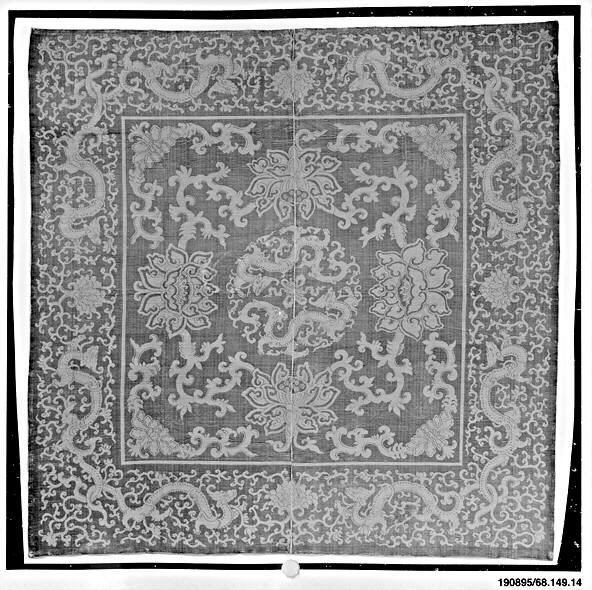
The Art of Concealment: A Couture Analysis of the Silk Velvet Furniture Cover with Lotus and Dragon Scrolls
Introduction: The Object as a Narrative of Power and Permanence
In the realm of haute couture, where fabric is not merely a medium but a manifesto, the Furniture Cover with Lotus and Dragon Scrolls from Katherine Fashion Lab transcends its utilitarian designation. Originating from China and executed in silk velvet with both cut and uncut pile, this piece is a standalone study in the intersection of textile artistry, symbolic language, and the silent dialogue between object and space. While furniture covers are traditionally conceived as protective layers—shielding, preserving, and obscuring—this artifact redefines concealment as revelation. It transforms a functional item into a canvas of imperial aesthetics, where every thread weaves a narrative of cosmic order, dynastic ambition, and the ephemeral nature of beauty.
Material Alchemy: Silk Velvet and the Duality of Pile
The choice of silk velvet as the base material is itself a statement of opulence and technical sophistication. Silk, historically treasured along the Silk Road, represents both economic power and tactile luxury. However, it is the manipulation of cut and uncut pile that elevates this cover from craft to couture. The cut pile—where loops of silk are severed to create a dense, plush surface—offers a velvety depth that absorbs light, imbuing the fabric with a somber richness. In contrast, the uncut pile, left as intact loops, introduces a textural counterpoint: it catches light differently, creating a subtle shimmer and a slightly rougher feel under the hand. This duality is not merely decorative; it is a deliberate tension between softness and structure, shadow and illumination.
From a couture perspective, the interplay of these pile techniques mimics the layering of chiaroscuro in painting. The cut pile areas—often the dragon scrolls and lotus petals—appear to recede into the fabric, while the uncut pile highlights the outlines, giving the motifs a three-dimensional, almost sculptural presence. This technique demands extraordinary skill, as the weaver must precisely control the height and density of each loop to ensure that the design emerges with clarity. The result is a surface that invites touch, yet commands reverence—a paradox central to high-fashion textiles.
Semiotics of the Motif: Lotus and Dragon as Cosmic Twins
The iconography of the lotus and dragon scrolls is rich with meaning, yet their juxtaposition on a furniture cover suggests a specific narrative of balance and transcendence. The lotus, rooted in muddy waters yet blooming untainted, is a universal symbol of purity, rebirth, and spiritual enlightenment in Chinese culture. Its presence on a cover—an object that guards against dust and decay—implies that the furniture beneath is not merely a physical object but a vessel for higher ideals. The lotus petals, rendered in both cut and uncut pile, seem to float across the velvet, their organic curves softening the rigid geometry of the dragon scrolls.
The dragon, by contrast, is a creature of imperial authority and elemental force. In Chinese cosmology, the dragon governs water, rain, and the heavens, representing yang—the masculine, active principle. The scrolls that accompany the dragon are not arbitrary; they evoke the movement of clouds and rivers, suggesting a dynamic, ever-flowing energy. When combined with the lotus (a yin symbol of receptivity and purity), the cover becomes a microcosm of cosmic harmony. The dragons do not dominate; they coil and stretch around the lotus, as if in a perpetual dance. This is not a battle of opposites but a marriage of complements—a theme that resonates deeply with the couture ethos of integrating disparate elements into a cohesive whole.
The Standalone Study: Context and the Redefinition of Function
Placing this furniture cover as a standalone study invites a re-examination of its role. In a traditional setting, such a cover would drape a throne, a ceremonial chair, or a storage chest, its beauty secondary to its protective purpose. However, when isolated as an object of analysis, it demands attention as a piece of wearable architecture. The cover’s dimensions—likely large enough to envelop a substantial piece of furniture—suggest a scale that mimics a garment for a non-human form. This anthropomorphism is deliberate: the cover becomes a dress for the inanimate, imbuing the furniture with a sense of ritual and occasion.
From a curatorial perspective, the standalone context also highlights the craftsmanship over context. Without the distraction of the furniture it once adorned, the viewer can appreciate the precision of the dragon’s claws, the gradation of the lotus’s petals, and the subtle shifts in pile height. This focus aligns with the principles of haute couture, where the garment’s construction—the seams, the draping, the embroidery—is as important as its final silhouette. Here, the cover’s seams are hidden, its edges finished with a silk binding that suggests a garment’s hem. The object is both a functional artifact and a work of art, its purpose suspended between utility and display.
Comparative Analysis: Couture Parallels and Historical Precedents
To fully appreciate this cover, one must consider it within the broader canon of textile couture. The use of cut and uncut pile recalls the velvet techniques of Renaissance Italy, where similar methods were employed to create liturgical vestments and aristocratic garments. However, the Chinese tradition adds a layer of philosophical depth. In Ming and Qing dynasty court textiles, dragons were often embroidered with gold thread, while lotuses were rendered in silk floss. This cover’s reliance on pile alone—without metallic embellishment—is a testament to the purity of its material language. The velvet itself becomes the medium of opulence, not the addition of precious metals.
In contemporary couture, designers like Guo Pei or Iris van Herpen have explored similar territories, using fabric manipulation to create garments that blur the line between sculpture and clothing. This furniture cover prefigures such explorations, demonstrating that the boundary between furniture and fashion is porous. A cover that protects a throne today could inspire a gown tomorrow—its motifs, textures, and symbolic weight are transferable. The lotus and dragon scrolls, when translated into a dress, would speak to the wearer’s own aspirations for purity and power, making the cover a prototype for wearable art.
Conclusion: The Eternal Dialogue of Silk and Symbol
The Furniture Cover with Lotus and Dragon Scrolls is far more than a textile artifact; it is a testament to the enduring power of couture to transform the mundane into the magnificent. Through the masterful use of silk velvet with cut and uncut pile, it achieves a tactile poetry that speaks to both the hand and the eye. Its motifs—the lotus and dragon—are not mere decorations but philosophical anchors, grounding the piece in a worldview that sees harmony in opposites. As a standalone study, it challenges us to reconsider the hierarchy of objects in our lives, elevating a cover from servant to sovereign. In the hands of Katherine Fashion Lab, this Chinese treasure becomes a universal lesson in the art of concealment: that what hides can also reveal, and what protects can also inspire. It is, in every sense, a masterpiece of textile couture.