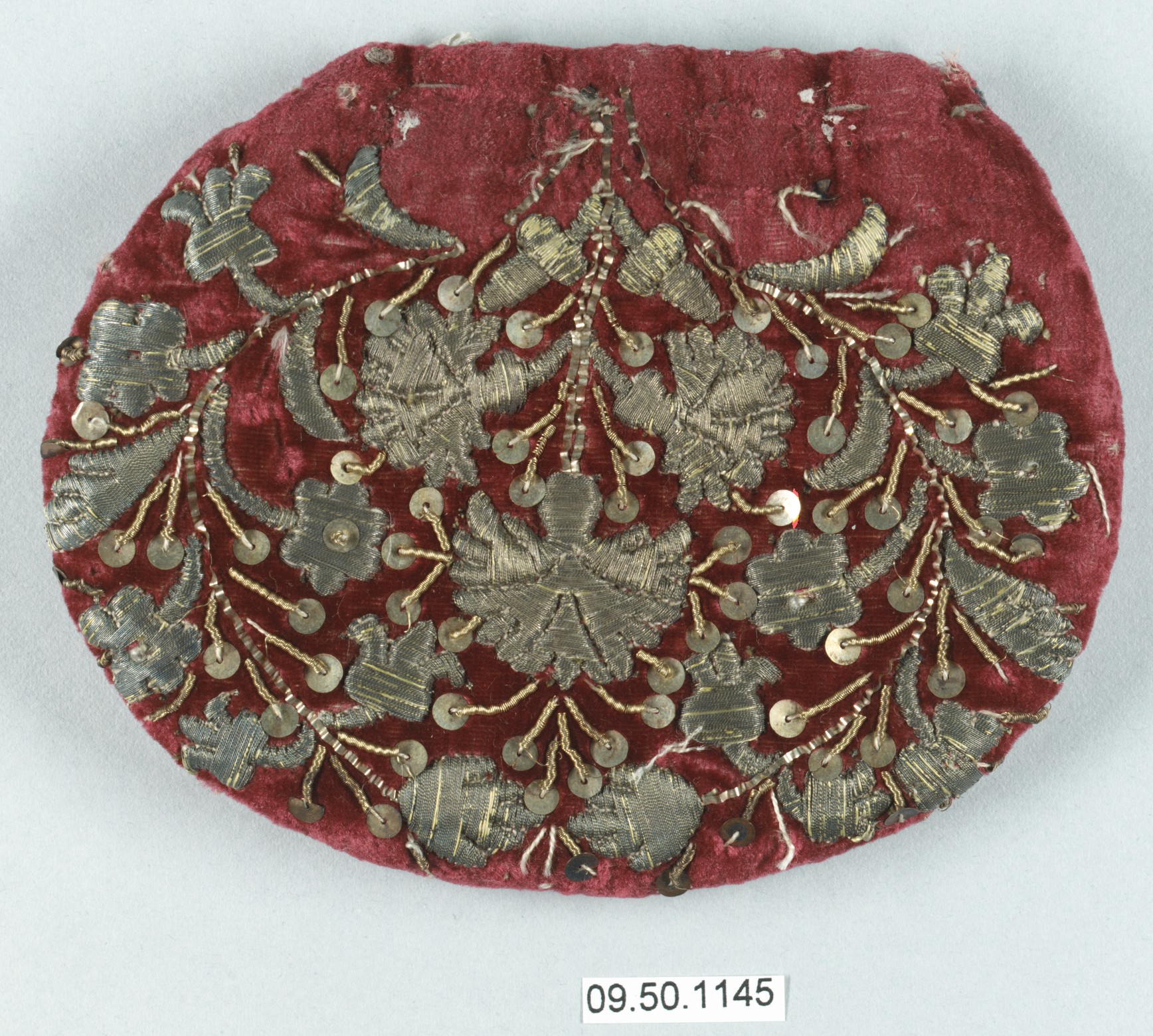
The Cap Crown: A Study in Metal Thread on Velvet
In the lexicon of couture, few elements command the same intersection of structural rigor and ornamental ambition as the cap crown. At Katherine Fashion Lab, our latest standalone study isolates this singular component—a headpiece that transcends its functional origins to become a canvas for narrative, heritage, and material mastery. The subject of this analysis is a cap crown rendered in metal thread on velvet, a pairing that speaks to centuries of global craftsmanship while demanding a contemporary reevaluation of weight, texture, and silhouette. This is not merely an accessory; it is a concentrated treatise on how luxury can distill cultural memory into a wearable artifact.
Heritage as Structural Blueprint
The cap crown, historically, has been a marker of authority and identity across civilizations—from the jeweled kalansuwa of Ottoman sultans to the embroidered skullcaps of Central Asian courts, and the velvet berets of Renaissance nobility. Its form is deceptively simple: a fitted dome that hugs the cranium, often with a brim or band for anchoring. Yet within that simplicity lies a profound dialogue between the head and the heavens, the mundane and the sacred. For Katherine Fashion Lab, the cap crown is not a replication of any single tradition but a synthesis of global heritage, where the motifs of Persian gol-o-bulbul (flower and nightingale) patterns meet the geometric precision of Islamic tessellation, and the lush tactility of Venetian velvet merges with the metallic shimmer of Indian zardozi.
This study deliberately avoids period-specific revivalism. Instead, it treats heritage as a living lexicon—a set of techniques and symbols that can be deconstructed and recombined. The metal thread, for instance, is not merely decorative; it echoes the ceremonial armor of Mongolian headgear and the gilded threadwork of Byzantine court attire. The velvet base, with its deep pile and light-absorbing richness, recalls the opulence of Florentine workshops, yet its weight is calibrated for modern wearability. Each element is a citation, but the final composition is entirely original.
Material Alchemy: Metal Thread on Velvet
The choice of metal thread on velvet is a deliberate provocation, one that challenges the conventional hierarchy of materials in couture. Velvet, with its plush, almost liquid surface, is inherently recessive—it invites touch and absorbs light. Metal thread, by contrast, is assertive and reflective, demanding attention. The tension between these two textures creates a dynamic visual field: the velvet grounds the composition, offering a dark, velvety void; the metal thread rises from it like illuminated calligraphy. This is not a surface treatment but a structural integration. The metal thread is not appliquéd onto the velvet but worked into it, often through techniques such as couching or tambour embroidery, where the thread is laid in parallel rows and secured with fine silk stitches. The result is a crown that feels both weighty and ethereal—a paradox that defines high couture.
From a technical standpoint, the metal thread must be selected with precision. In this study, we employ a blend of silver-gilt and copper-core threads, each with a distinct patina and tensile strength. The silver-gilt offers a whitish, cold gleam, while the copper introduces a warmer, rose-gold undertone. Under varying light—whether the harsh glare of a runway spotlight or the soft diffusion of a gallery—the cap crown shifts in tone, revealing hidden depths. This chameleon quality is intentional: it mirrors the way heritage itself is perceived, never static, always refracting through context.
Silhouette and Proportion: The Architecture of the Crown
The cap crown’s silhouette is a study in restraint. Unlike the towering headdresses of royal courts or the exaggerated brims of avant-garde hats, this piece adheres to the natural curve of the skull. The dome is slightly elongated at the crown, creating a subtle verticality that elongates the wearer’s profile without dominating it. The brim, if present, is narrow—barely a centimeter—and is itself embroidered with a repeating geometric motif that echoes the crown’s radial symmetry. The fit is precise, achieved through a combination of internal structuring (a lightweight buckram base) and external tension from the embroidery itself. The metal thread, when densely packed, adds a surprising rigidity, allowing the crown to hold its shape without additional wiring.
This architectural approach draws from both millinery and sculpture. The cap crown is not merely worn; it is inhabited. It frames the face without obscuring it, drawing the eye upward to the interplay of light and shadow across the velvet’s pile. The metal thread creates a secondary texture—a lattice of lines that guide the gaze in a circular motion, reinforcing the crown’s domed form. In this sense, the cap crown functions as a miniature geodesic, a self-contained universe of pattern and material.
Cultural Resonance and Contemporary Relevance
In an era where fashion often defaults to minimalism or nostalgia, the cap crown with metal thread on velvet offers a third path: one that embraces ornamentation as a form of intellectual and emotional expression. This piece is not a costume; it is a standalone study that asks the wearer to engage with history, technique, and sensory experience. The metal thread evokes the caravans of the Silk Road, the glittering courts of the Mughals, and the ecclesiastical splendor of medieval Europe. The velvet recalls the workshops of Lyon and Lucca, where artisans spent decades perfecting the weave. Yet the cap crown is unmistakably contemporary—its clean lines and proportional discipline align with modern fashion’s preference for sculptural simplicity.
Moreover, the piece challenges the notion of luxury as excess. Here, luxury is precision: the exact spacing of each metal thread, the careful selection of velvet weight, the hand-finishing of every seam. It is a luxury that demands time—hundreds of hours of embroidery—and knowledge, passed down through generations of artisans. In a globalized market, where fast fashion erases regional distinctions, the cap crown reasserts the value of provenance. It is a wearable archive, a testament to the fact that true heritage is not a relic but a living practice.
Conclusion: A Crown for the Modern Curator
As Lead Curator for Katherine Fashion Lab, I view this cap crown as more than a product; it is a pedagogical tool. It teaches us to see the intersections between material and meaning, between a single thread and a global tapestry. The metal thread on velvet is not just a technical choice but a philosophical one—a declaration that couture can be both rooted and forward-looking, both intimate and universal. In a fashion landscape saturated with noise, this cap crown whispers. And in that whisper, it carries the weight of centuries, the skill of hands unknown, and the promise of a future where heritage is not a costume but a crown.