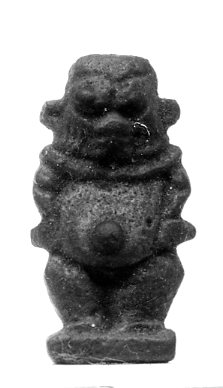
Executive Heritage Analysis: The Bes Amulet in Faience
This report presents a comprehensive heritage analysis of the Bes amulet, a talismanic object from ancient Egyptian civilization, crafted in faience. As a strategic standalone research document for Katherine Fashion Lab, the analysis explores the amulet’s symbolic power, its role in historical adornment, its profound spiritual meaning, and a forward-looking strategy for integration into a 2026 high-end luxury collection. The Bes amulet represents a unique intersection of protective magic, artistic craftsmanship, and intimate personal value—qualities that resonate deeply with contemporary luxury consumers seeking authenticity, narrative depth, and emotional resonance.
Historical and Cultural Context
Origins and Chronology
The god Bes, a dwarf-like deity with a leonine face, protruding tongue, and plumed headdress, emerged prominently during the Middle Kingdom (c. 2055–1650 BCE) and reached peak popularity in the New Kingdom (c. 1550–1069 BCE) and later Ptolemaic period. Unlike the major state gods of Egypt, Bes was a household deity, accessible to all social classes. His amulets were among the most widely produced personal talismans, often made from faience—a self-glazing, silica-based ceramic that imitated precious stones like turquoise and lapis lazuli.
Medium: Faience as a Material of Status and Magic
Faience was not merely a cost-effective substitute for gemstones; it held its own symbolic significance. The brilliant blue-green glaze represented rebirth, fertility, and the life-giving waters of the Nile. For the Bes amulet, faience’s luminous surface evoked the protective, regenerative powers of the sun and the primordial ocean. The material’s durability and ease of mass production allowed these amulets to be worn daily by everyone from royalty to commoners, democratizing access to divine protection.
Symbolic Power and Spiritual Meaning
Protector of the Vulnerable
Bes’s primary role was as a guardian of the household, particularly of women during childbirth, infants, and sleeping individuals. His grotesque, apotropaic appearance—wide eyes, sticking tongue, and lion’s mane—was designed to scare away malevolent spirits, snakes, and scorpions. The amulet’s placement on the body, often around the neck or waist, created a mobile sanctuary. This function aligns with modern luxury’s growing interest in talismanic jewelry that offers psychological comfort and a sense of personal power.
Guardian of Transition and Liminality
Bes was also associated with thresholds, transitions, and liminal states. He guarded doorways, beds, and the moment of birth—points where the boundary between the mundane and the sacred was thin. The amulet thus served as a bridge between the physical and spiritual realms, a concept that resonates with high-net-worth individuals seeking objects that transcend mere aesthetics to embody deeper existential meaning.
Fertility, Joy, and Music
Beyond protection, Bes was a god of music, dance, and joy. He was often depicted playing a drum or a harp, and his amulets were believed to promote fertility, sexual vitality, and happiness within the home. This duality—fearsome protector and joyful companion—makes the Bes amulet a uniquely complex symbol, offering both security and celebration.
Historical Adornment Practices
Wear and Placement
Bes amulets were typically worn as pendants on necklaces, sewn onto garments, or carried in pouches. The faience examples often featured a small loop at the top for threading. They were also incorporated into girdles and belts, placed near the womb to protect during pregnancy. The amulet’s intimate contact with the body was essential to its efficacy—a principle that informs modern luxury’s focus on wearable art that interacts with the wearer’s energy and daily life.
Integration into Funerary Contexts
Although primarily a household god, Bes amulets have been found in burial contexts, placed on the deceased’s body to protect the soul during its journey to the afterlife. This dual function—protecting both the living and the dead—underscores the amulet’s timeless, cross-boundary appeal. For the luxury market, this suggests a product that can be positioned as both a daily talisman and a heirloom object with spiritual legacy.
Strategic Implications for 2026 High-End Luxury
Positioning the Bes Amulet as a Neo-Talisman
The 2026 luxury consumer is increasingly drawn to meaning-driven, narrative-rich objects that offer a counterpoint to digital saturation and mass production. The Bes amulet, with its ancient pedigree and protective symbolism, can be repositioned as a neo-talisman for the modern age. Key strategic pillars include:
- Protection in a Fragile World: Leverage the amulet’s apotropaic history to address contemporary anxieties—from digital privacy to personal well-being. Marketing can frame the Bes amulet as a shield against modern malevolence.
- Joy and Authenticity: Bes’s association with music and dance allows the brand to emphasize celebration, spontaneity, and emotional authenticity—values that resonate with Gen Z and millennial luxury buyers.
- Gender Fluidity: Bes is a deity who defies strict gender norms, often depicted with a beard and pregnant belly. This aligns with 2026’s genderless luxury trend, allowing the amulet to be marketed to all identities.
Material and Design Strategy
While original faience amulets are historical artifacts, a 2026 luxury interpretation should honor the material’s essence while elevating it. Recommendations:
- Reimagined Faience: Collaborate with contemporary ceramic artists to develop a bespoke, high-fire faience in signature Katherine Fashion Lab colors—perhaps a deep indigo or iridescent gold glaze that references the original blue-green but feels ultra-modern.
- Hybrid Materials: Set the faience Bes amulet in 18-karat recycled gold or platinum, with diamond or sapphire accents to signify the deity’s protective eye. This bridges ancient craft and modern luxury.
- Wearable Technology Integration: Embed a micro-engraved QR code or NFC chip in the amulet’s reverse, linking the wearer to a digital archive of Bes mythology, a personalized blessing, or a guided meditation—merging talismanic power with digital intimacy.
Limited Edition and Collectability
Position the Bes amulet as a limited-edition capsule, with each piece numbered and accompanied by a certificate of authenticity that includes the amulet’s specific glaze pattern (no two faience pieces are identical). This creates scarcity and collectability, appealing to the investor-collector segment of the luxury market.
Narrative-Driven Marketing
The 2026 campaign should focus on storytelling over product features. Potential angles:
- “The Guardian of Your Story” – A film series showing the amulet accompanying wearers through pivotal life moments (childbirth, career change, travel).
- “Bes’s Blessing” – A ritual unboxing experience that includes a hand-painted papyrus scroll with a modern translation of an ancient Bes protection spell.
- Collaborations with Egyptologists and spiritual practitioners to host exclusive salons on the intersection of ancient magic and modern mindfulness.
Conclusion
The Bes amulet in faience is far more than a historical curiosity; it is a repository of symbolic power, spiritual meaning, and intimate human experience. For Katherine Fashion Lab, this heritage asset offers a rare opportunity to create a luxury object that is simultaneously protective, joyful, and deeply personal. By respecting the original material and symbolism while innovating through design, technology, and narrative, the brand can position the Bes amulet as a defining piece for 2026—one that bridges the ancient and the avant-garde, the spiritual and the material, the protective and the celebratory. In a luxury landscape increasingly defined by authenticity and emotional resonance, the Bes amulet stands as a timeless talisman for the modern age.