Heritage Analysis: The Nephrite Wheel Amulet in Chinese Cultural Context
Introduction to the Artifact
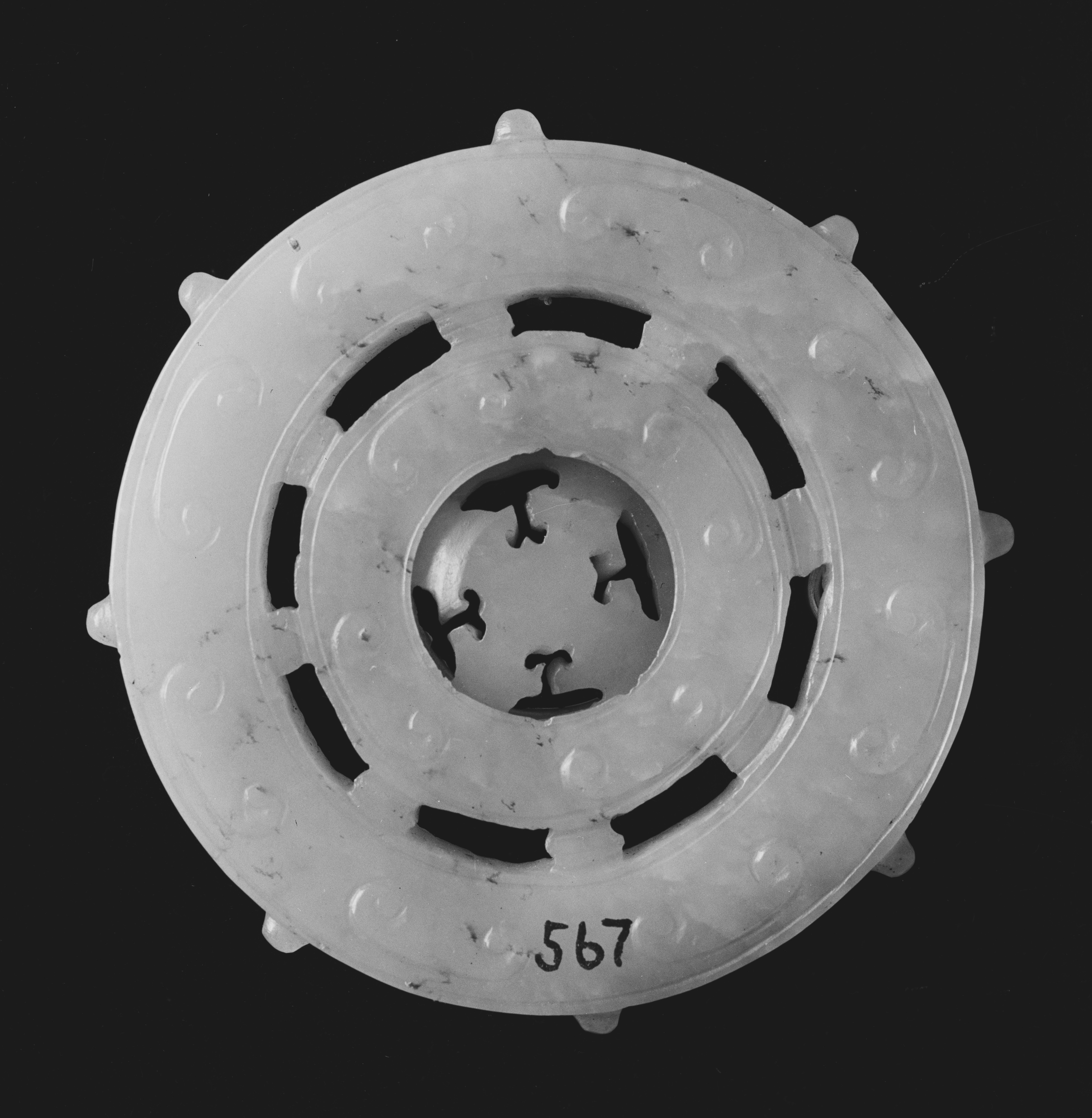
The subject of this analysis is a nephrite wheel amulet, originating from ancient China. Carved from nephrite—a jade variety prized for its translucency, durability, and spiritual resonance—the wheel form embodies a convergence of cosmological, philosophical, and aesthetic traditions. As a standalone research artifact, this amulet offers profound insights into symbolic power, historical adornment, and spiritual meaning, which can be strategically leveraged for a 2026 high-end luxury positioning by Katherine Fashion Lab.
Symbolic Power: The Wheel as Cosmic and Temporal Axis
In Chinese cultural symbolism, the wheel (often associated with the bi disc or the falun—the Wheel of the Law) represents cyclical motion, eternity, and the unbroken flow of cosmic energy (qi). The nephrite wheel amulet, specifically, is not merely a decorative object but a talisman of protection and transformation. Its circular form mirrors the heavens, which in Chinese cosmology are round (tian yuan di fang—heaven round, earth square). This shape signifies wholeness, unity, and the endless cycle of life, death, and rebirth.
Historically, nephrite was considered the “stone of heaven,” imbued with the yang principle—masculine, bright, and generative. The wheel amulet, when worn close to the body, was believed to align the wearer with celestial rhythms, warding off malevolent spirits and inviting harmonious energy. For the elite classes of ancient China—from the Shang dynasty (1600–1046 BCE) through the Qing dynasty (1644–1912)—such amulets were markers of imperial authority and divine favor. The wheel’s spokes, often rendered in intricate carvings, represent the eight directions or the Buddhist Eightfold Path, reinforcing its role as a guide for moral and spiritual conduct.
Historical Adornment: From Ritual Object to Status Symbol
The nephrite wheel amulet was not a casual accessory; it was a ritual object worn during ceremonies, burials, and courtly functions. During the Han dynasty (206 BCE–220 CE), jade amulets were placed on the deceased to preserve the body and soul, reflecting the belief that jade could confer immortality. The wheel form, in particular, was associated with the Sun and the Moon, representing the duality of yin and yang. Carved nephrite wheels were often strung with silk cords or gold chains, worn as pendants on the chest or attached to belts, signifying the wearer’s social rank and spiritual cultivation.
In later periods, the amulet evolved into a luxury adornment for the literati and aristocracy. The Ming (1368–1644) and Qing dynasties saw nephrite wheels integrated into court jewelry, often inlaid with gold, pearls, or other precious materials. The craftsmanship required to carve nephrite—a stone with a Mohs hardness of 6–7—demanded exceptional skill, making each amulet a unique masterpiece. This historical trajectory underscores the amulet’s transition from a purely spiritual artifact to a symbol of refined taste and cultural capital.
Spiritual Meaning: The Amulet as a Conduit for Inner Harmony
Beyond its protective function, the nephrite wheel amulet embodies spiritual alignment. In Taoist and Buddhist traditions, the wheel represents the Dharma—the teachings that lead to enlightenment. Wearing the amulet is an act of mindful intention, reminding the wearer to remain centered amid life’s flux. The nephrite’s cool, smooth texture is believed to calm the spirit and balance emotions, while its green hues—ranging from pale celadon to deep spinach—evoke growth, renewal, and connection to nature.
For the contemporary wearer, the amulet functions as a personal totem. It is not merely an ornament but a tool for meditation and self-reflection. The wheel’s continuous line without beginning or end symbolizes eternal love, unbroken commitment, and karmic cycles. This spiritual depth resonates strongly with modern consumers seeking authenticity and meaning in their luxury purchases—a trend that Katherine Fashion Lab can capitalize on in 2026.
2026 High-End Luxury Strategy: Translating Heritage into Contemporary Desire
To position the nephrite wheel amulet within a 2026 luxury framework, Katherine Fashion Lab must integrate its heritage into a narrative of exclusivity, sustainability, and experiential value. The following strategic pillars are recommended:
1. Heritage-Driven Storytelling
Leverage the amulet’s 3,000-year lineage as a brand asset. Develop a campaign titled “The Wheel of Eternity,” emphasizing its role as a guardian of energy and symbol of imperial refinement. Use archival imagery of Han dynasty tombs and Ming court jewelry to authenticate the narrative. Each amulet should come with a certificate of provenance detailing its nephrite source (e.g., Xinjiang’s Khotan region) and the artisan’s lineage.
2. Limited-Edition Collaborations
Partner with master jade carvers from Suzhou or Yangzhou to create 100 numbered pieces per year. The wheel design can be reimagined with contemporary minimalism—sleek, geometric spokes in white gold or platinum, while retaining the nephrite core. This fusion of ancient and modern appeals to collectors and architectural jewelry enthusiasts.
3. Spiritual Wellness Integration
Position the amulet as a luxury wellness tool. Include a guided meditation card explaining the wheel’s significance for grounding and protection. Offer private consultations with a cultural historian or feng shui expert for clients who purchase the amulet. This aligns with the 2026 trend of conscious luxury, where consumers prioritize objects that enhance mental and spiritual well-being.
4. Sustainable Sourcing and Craftsmanship
Emphasize ethical nephrite mining and artisanal production. Partner with UNESCO-recognized heritage sites to ensure traceability. The high hardness of nephrite means each amulet requires hundreds of hours of hand-carving, justifying a price point of $15,000–$50,000. Market this as slow luxury—an antidote to fast fashion’s disposability.
5. Experiential Retail Activation
Launch the collection in flagship stores with immersive installations. Use projection mapping to display the wheel’s cosmic symbolism—rotating stars, yin-yang flows, and lotus petals. Offer clients a ritual presentation where the amulet is placed in a silk-lined box with a miniature incense burner, evoking ancient temple ceremonies. This creates a memorable unboxing experience that reinforces the amulet’s spiritual prestige.
Conclusion
The nephrite wheel amulet is not merely a historical artifact but a living symbol of protection, cosmic order, and spiritual refinement. By decoding its symbolic power, historical adornment, and spiritual meaning, Katherine Fashion Lab can position this object as a cornerstone of 2026 high-end luxury strategy. Through heritage storytelling, limited-edition craftsmanship, wellness integration, sustainable practices, and experiential retail, the amulet transcends its ancient origins to become a desirable emblem of timeless elegance for the discerning modern consumer. This strategic approach ensures that the wheel continues to turn—not as a relic of the past, but as a beacon of future-oriented luxury.