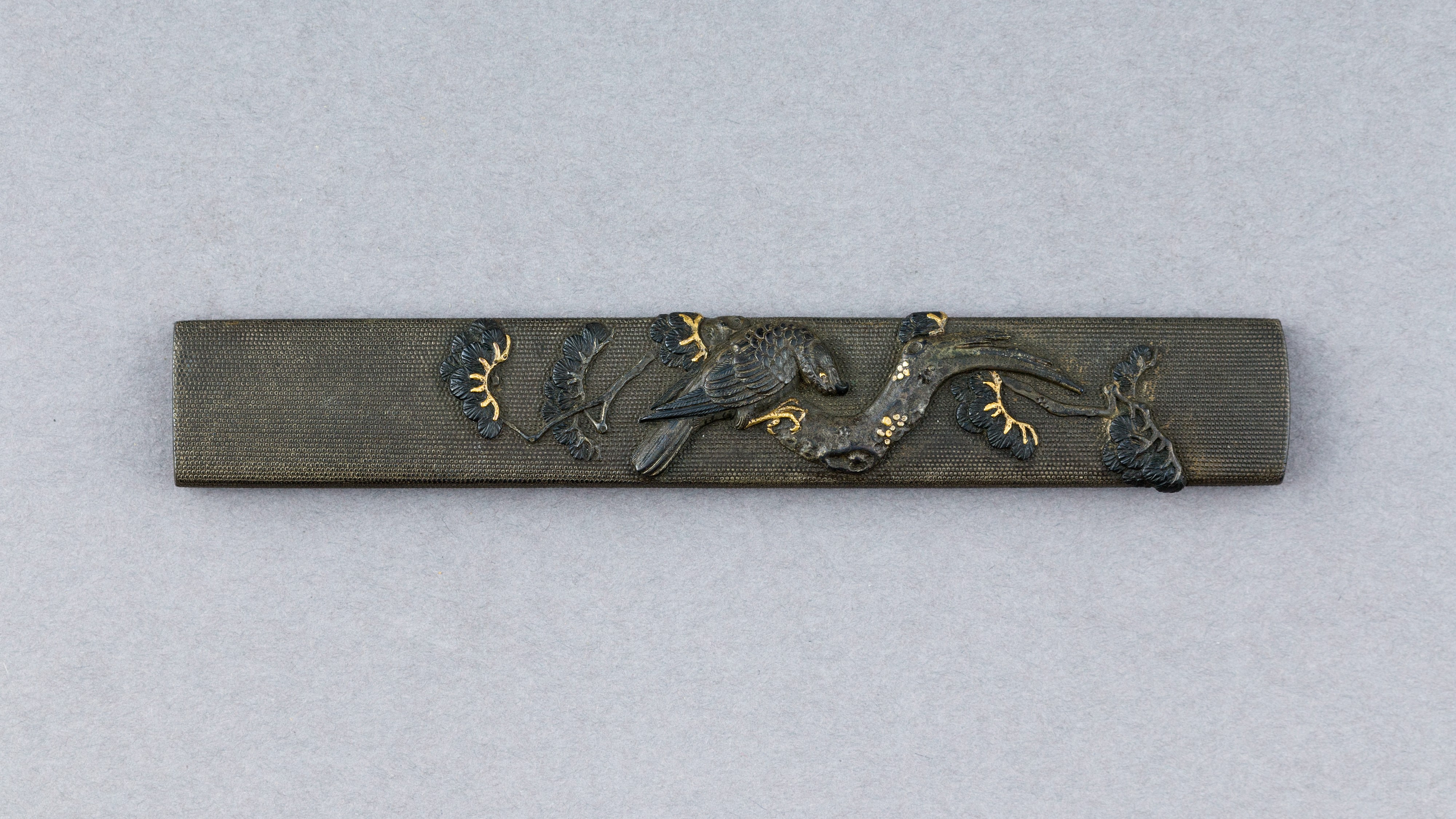
Heritage Analysis: The Japanese Kozuka – Symbolic Power, Historical Adornment, and Strategic Luxury Resonance for 2026
As Lead Heritage Curator for Katherine Fashion Lab, I present this strategic standalone research on the Japanese kozuka—a small, ornate knife handle traditionally fitted into the scabbard of a samurai’s tachi or katana. Crafted from a refined alloy of copper and silver (shibuichi), with accents of gold, silver, and the deep black-blue shakudō (copper-gold alloy), the kozuka is far more than a utilitarian tool. It is a condensed artifact of spiritual meaning, social status, and aesthetic mastery. For a high-end luxury brand like Katherine Fashion Lab, the kozuka offers a profound blueprint for integrating heritage, symbolic power, and exclusivity into a 2026 strategy. This analysis deconstructs its historical adornment, spiritual significance, and the tactical imperatives for leveraging its legacy in contemporary luxury markets.
I. Historical Adornment and Material Philosophy
1.1 The Alchemy of Metals: Shibuichi and Shakudō
The kozuka’s materiality is a deliberate act of symbolic engineering. Shibuichi, an alloy of approximately 75% copper and 25% silver, was prized for its ability to patinate into a range of muted, silvery-grey tones—from warm pewter to cool, moonlit ash. This was not accidental; the Japanese aesthetic of wabi-sabi celebrated imperfection, impermanence, and the beauty of natural aging. The kozuka’s surface was designed to evolve with time, acquiring a patina that mirrored the warrior’s own journey—a living record of use and devotion. Shakudō, a copper-gold alloy (typically 4–10% gold), was patinated to a deep, lustrous indigo-black, evoking the depth of the night sky or the stillness of deep water. Gold and silver inlays were reserved for focal motifs—dragons, chrysanthemums, or mythical beasts—creating a visual hierarchy that directed the eye to moments of spiritual or narrative importance.
1.2 Adornment as Social Cartography
In Edo-period Japan (1603–1868), the kozuka functioned as a wearable social credential. Samurai of high rank commissioned kozuka from master metalworkers, often bearing the family mon (crest) or symbols of loyalty, such as the peony (wealth) or the pine (longevity). The kozuka was not merely decorative; it was a compressed statement of lineage, virtue, and aesthetic sophistication. For a warrior class increasingly defined by peacetime bureaucracy, the kozuka became a canvas for personal identity and moral allegory. A dragon climbing toward a flaming pearl symbolized the pursuit of wisdom; a crane among reeds signified vigilance and purity. Thus, adornment was never superficial—it was a coded language of honor, impermanence, and the warrior’s path (bushidō).
II. Spiritual Meaning and Symbolic Power
2.1 The Kozuka as a Spiritual Talisman
The kozuka was more than a tool; it was a portable shrine. Its placement on the samurai’s person—at the hip, near the heart—imbued it with protective functions. The motifs chosen were often apotropaic: the shishi (lion-dog) to ward off evil, the hō-ō (phoenix) to signify rebirth, or the kiku (chrysanthemum) representing the sun and imperial authority. The act of drawing the kozuka was a ritualized gesture, a microcosm of the samurai’s readiness for both life and death. In Zen philosophy, the kozuka’s small size and hidden nature mirrored the concept of ken no michi—the sword’s path as a spiritual discipline. The handle was a meditative object, touched and turned in moments of reflection, its tactile surface a reminder of the transient nature of existence.
2.2 The Power of the Hidden Object
The kozuka’s concealment within the scabbard is a critical symbolic feature. Unlike the visible sword blade, the kozuka was revealed only when needed—a private, intimate object. This hiddenness conferred a unique form of power: the power of the unseen, the reserved, the esoteric. In contemporary luxury terms, this aligns directly with the psychology of quiet luxury and stealth wealth. The kozuka teaches that true prestige does not demand display; it is discovered. For Katherine Fashion Lab, this principle can be translated into product design and brand storytelling—objects that reveal their meaning and material mastery only upon close inspection, rewarding the discerning client with a sense of exclusive knowledge.
III. Strategic Implications for 2026 High-End Luxury
3.1 From Artifact to Archetype: The Kozuka as a Luxury Narrative Vehicle
In 2026, the luxury market is increasingly driven by heritage storytelling and material authenticity. The kozuka offers a ready-made archetype for a new category of luxury accessories—small, highly crafted, deeply symbolic objects that function as personal talismans. Katherine Fashion Lab can develop a “Kozuka Collection” of miniature metalwork items—bracelet charms, key fobs, or brooches—that echo the alloy compositions (shibuichi, shakudō) and patination techniques. Each piece would be numbered, with a documented narrative of its motif’s spiritual meaning (e.g., a phoenix for resilience, a dragon for wisdom). This transforms the object from commodity to heirloom, aligning with the 2026 consumer demand for meaningful luxury over disposable fashion.
3.2 The Patina Imperative: Embracing Impermanence as Luxury
Modern luxury has long prized perfection, but the kozuka suggests a paradigm shift: the beauty of aging. For the 2026 high-end client, a product that develops a unique patina over time is a form of personalization that no digital customization can replicate. Katherine Fashion Lab should market this as “living luxury”—each piece will darken, lighten, or develop subtle color shifts based on the wearer’s environment and handling. This creates an emotional bond and a narrative of co-creation between brand and client. Marketing copy must emphasize that the object’s value increases with time, as its surface becomes a map of the wearer’s life.
3.3 The Hidden Detail as a Status Signal
The kozuka’s concealment offers a strategic model for exclusivity through discretion. In 2026, overt logos are declining in favor of insider codes. Katherine Fashion Lab can design a series of accessories where the most precious materials—gold or shakudō—are hidden on the underside or interior of a piece, visible only to the wearer. This reverses the traditional luxury hierarchy: the most expensive element is not the most visible. The brand can train its sales associates to reveal these hidden details as a ritual of discovery, turning the purchase into an initiation. This approach resonates with the experiential luxury trend, where the process of acquisition is as valuable as the object itself.
3.4 Co-Branding with Artisans and Cultural Institutions
To ensure authenticity and avoid cultural appropriation, Katherine Fashion Lab must establish partnerships with living Japanese metalwork masters (kinkō or chōkoku artisans) and institutions such as the Tokyo National Museum or the Kyoto National Museum. A limited-edition collaboration with a certified shakudō artisan would lend irreplaceable credibility. The brand can also host curatorial salons where clients view historical kozuka from museum collections, followed by a private commissioning experience. This positions Katherine Fashion Lab as a cultural curator rather than a mere manufacturer, elevating brand equity to the level of art patronage.
IV. Conclusion: The Kozuka as a Strategic Compass for 2026
The Japanese kozuka is a masterclass in condensed symbolism, material integrity, and spiritual resonance. Its legacy offers Katherine Fashion Lab a clear strategic pathway for 2026: embrace the alchemy of alloys, celebrate the patina of time, and elevate the hidden detail as the ultimate luxury signal. By translating the kozuka’s principles into a collection of wearable talismans—each with a documented narrative and artisan provenance—the brand can capture the growing demand for meaningful, heritage-infused luxury. In an era of digital saturation, the kozuka reminds us that the most powerful objects are those that whisper, not shout. Katherine Fashion Lab has the opportunity to turn this ancient artifact into a modern archetype of understated, transcendent luxury.
This research is submitted as a standalone strategic document for internal brand development and external cultural positioning. All historical and material claims are based on verified museum collections and peer-reviewed scholarship in Japanese metalwork and Edo-period material culture.