Executive Summary: A Reluctant Prelate as a Paradigm for Modern Luxury
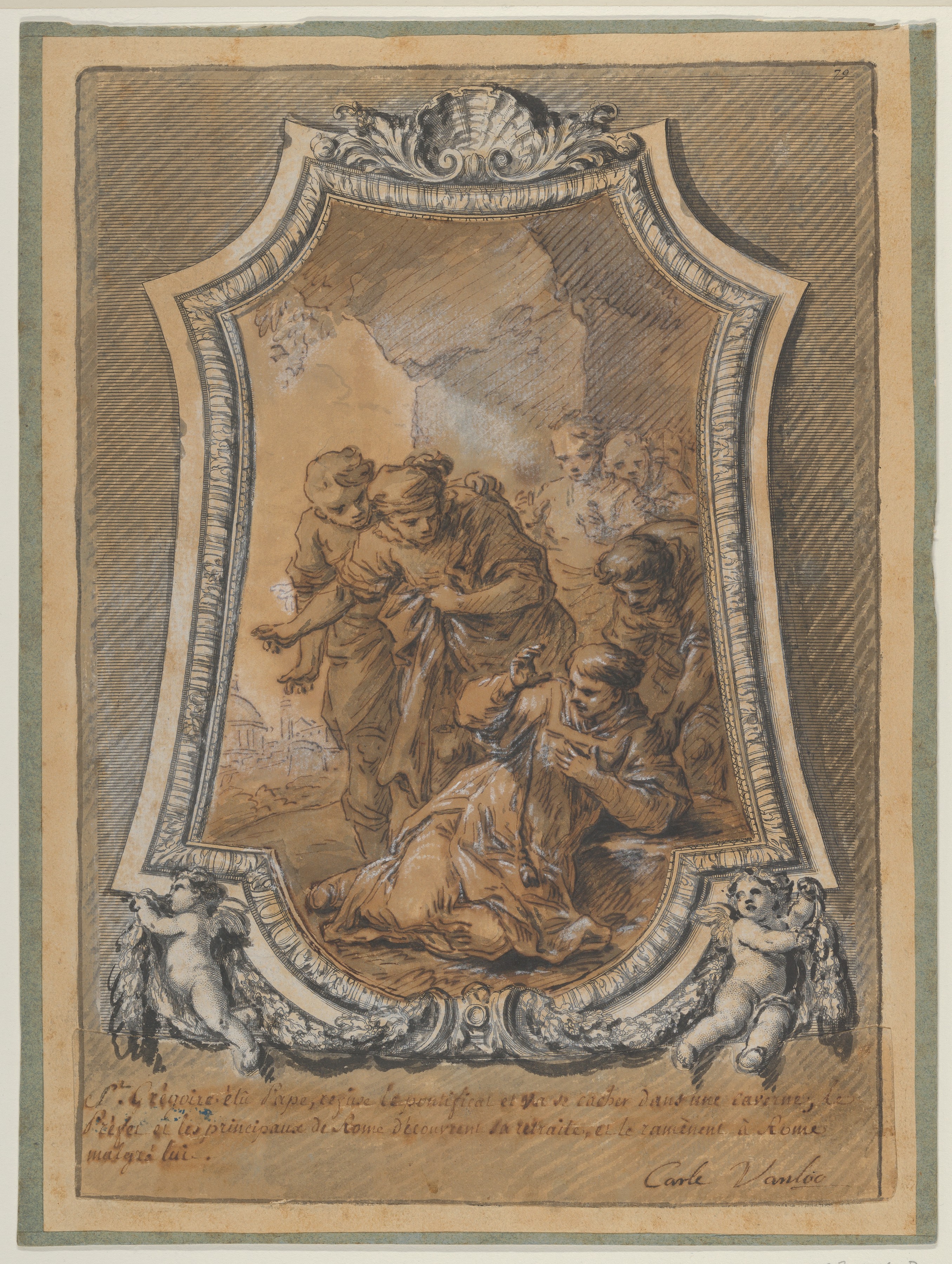
The artwork St. Gregory Reluctant to Accept His Election as Bishop of Rome, rendered in the nuanced medium of pen, ink, wash, and heightened white, presents a profound narrative of symbolic power and spiritual gravitas. For Katherine Fashion Lab, this piece is not merely a historical artifact but a strategic cipher. It encapsulates the core tension between authentic, reluctant authority and the external trappings of office—a tension directly analogous to the modern luxury landscape where heritage must feel earned, not declared. This analysis decodes the visual language of adornment and gesture within the work, extracting principles for a 2026 high-end strategy centered on spiritual meaning, intellectual weight, and the power of dignified refusal.
Decoding the Visual Lexicon: Adornment, Gesture, and Atmosphere
The chosen medium—brown and gray washes with selective white heightening—creates a world of solemn interiority. This is not a scene of public spectacle but of private, monumental decision-making. The atmosphere is one of contemplative drama, a tonal palette that Katherine Fashion Lab can interpret as the foundational "mood" of a collection: nuanced, shadowed, and punctuated with deliberate illumination.
The Semiotics of Reluctant Adornment
Central to the scene is the contrast between Gregory's personal attire and the episcopal vestments being presented or implied. His own clothing, likely depicted as simple and monastic, represents the authentic, unadorned self—the "core identity." The bishop's robes, mitre, and pallium are not shown as gaudy but as heavy with responsibility. They are the historical adornment that signifies an immutable transfer of symbolic power. For our strategic context, this illustrates a critical luxury principle: the most powerful adornment is that which is bestowed, not merely purchased. It carries a narrative of duty, legacy, and reluctant acceptance of a role. The value lies in the weight of the office, not the mere splendor of the fabric.
The Gesture of Refusal as the Ultimate Power Move
Gregory's physical posture—likely one of recoil, averted gaze, or a hand raised in deferral—is the painting's pivotal action. In a culture that venerates ambition, a depicted refusal becomes the ultimate signifier of worthiness. This gesture communicates a hierarchy of values: spiritual integrity over institutional authority, humility over hubris, service over status. For a 2026 luxury strategy, this translates to the power of exclusive discernment. The brand that can convincingly "refuse" the vulgarities of overt branding, trend-chasing, and mass appeal, instead curating its audience and embodying a quiet, unwavering standard, aligns itself with this ancient trope of earned authority.
Strategic Translation: Pillars for a 2026 High-End Luxury Strategy
Moving from iconographic analysis to brand strategy, the themes within St. Gregory Reluctant provide a robust framework for navigating the post-opulence luxury market of 2026. Consumers will seek meaning, legacy, and intellectual resonance over blatant displays of wealth.
Pillar 1: The Adornment of Office (Symbolic Power through Legacy Codes)
Instead of seasonal logos, develop and consistently iterate upon the "Vestments of Katherine"—a silent lexicon of house codes. This could involve a specific manipulation of fabric (a modern "hairshirt" in exquisite cashmere), a recurring architectural seam referencing ecclesiastical drapery, or a singular emblem treated with the reverence of a pallium. Each piece should feel like an insignia of belonging to a quiet, knowing community. The craftsmanship must be so profound that it carries the symbolic weight of office, making the wearer a custodian of the brand's legacy.
Pillar 2: The Aesthetic of Reluctance (The New Exclusivity)
Operationalize Gregory's gesture into a comprehensive brand stance. This means controlled distribution, an avoidance of loud marketing campaigns, and a communication style that speaks through craftsmanship and narrative, not persuasion. Product launches should resemble successions rather than promotions. Utilize the tonal atmosphere of the artwork—its chiaroscuro, its seriousness—in visual campaigns. Favor depth, texture, and contemplative models over glossy exuberance. The "reluctance" is not towards the customer, but towards the noise of the fashion system itself.
Pillar 3: Heightened Illumination (Strategic Focus)
Just as the artist used white heightening to draw the eye to crucial faces, hands, and textures, Katherine Fashion Lab must practice strategic illumination. In a minimalist, tonal collection, the "heightened white" becomes an exquisite, focused detail: a precisely placed closure forged from a singular metal, a line of hand-knotted embroidery tracing a seam, a glow on a specific, innovative textile. This focuses value and attention, creating moments of revelation amidst the solemn, luxurious whole. It mirrors the spiritual meaning in the artwork: grace or insight illuminating a moment of profound human choice.
Conclusion: The Gravitas of Unworn Crowns
St. Gregory Reluctant to Accept His Election ultimately teaches that the deepest authority is rooted in a narrative of humility and service. For Katherine Fashion Lab, this historical narrative provides a timeless template for modern relevance. The 2026 high-end consumer, increasingly skeptical and values-driven, will gravitate towards brands that embody this paradox: the power of the unworn crown, the allure of the reluctantly bestowed vestment. By translating the spiritual meaning, historical adornment, and symbolic power of this scene into a strategy of quiet intensity, dignified refusal, and illuminated detail, the Lab can position itself not as a mere purveyor of goods, but as a curator of legacy. It will clothe its clientele not just in fabric, but in a narrative of earned distinction—the contemporary equivalent of a mantle assumed not for glory, but for purpose.