The Pelisse Reimagined: A Couture Analysis of Silk, Structure, and Shared Cultural DNA
Historical Context and the Pelisse as a Cultural Artifact
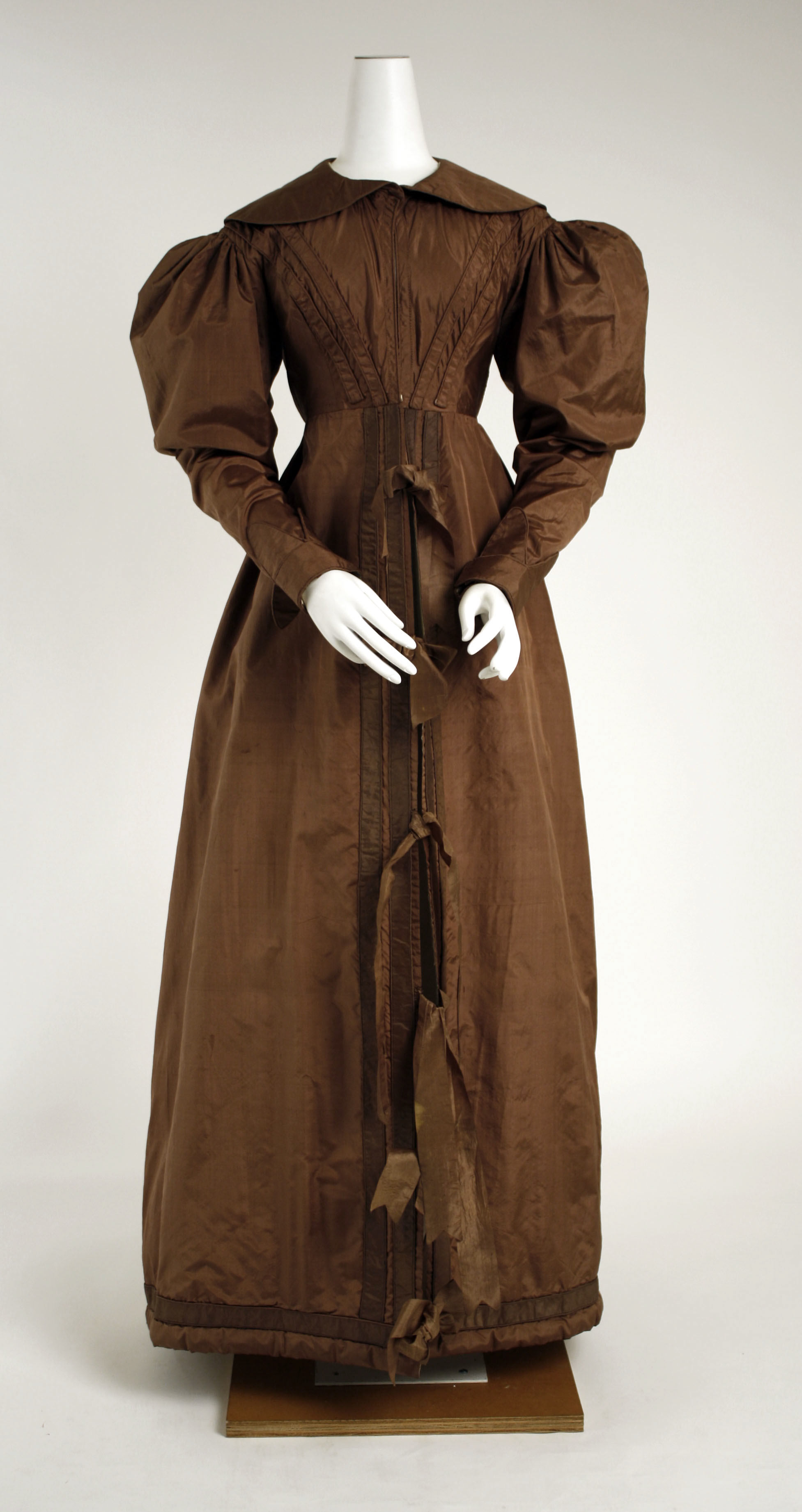
The pelisse, a garment that originated in military dress and later evolved into a fashionable outer layer for women in the 19th century, represents a fascinating intersection of utility and ornamentation. In the European context, the pelisse was initially a short, fur-lined military jacket, but by the Regency and Romantic eras, it had transformed into a luxurious, often silk, overgarment worn by women of high society. Its silhouette—typically fitted at the bodice and flaring into a full skirt—mirrored the era’s aesthetic of disciplined elegance. However, to understand the pelisse solely through a European lens is to overlook a deeper, more profound narrative: the garment’s shared DNA with non-Western artistic and material cultures.
As noted in the archive’s contextual framing, “在人类文明的长河中,器物与绘画不仅是时代技艺的结晶,更是文化碰撞与美学交融的无声见证。十六至十七世纪…” This passage underscores that the sixteenth and seventeenth centuries were pivotal periods of cross-continental exchange. The silk used in this pelisse, for instance, was not merely a textile; it was a commodity that traversed the Silk Road, carrying with it the aesthetic sensibilities of East Asia, the Middle East, and Europe. The pelisse, therefore, is not a singular European invention but a hybrid artifact—a testament to how global trade routes and cultural diplomacy shaped the very fabric of fashion.
Material Analysis: Silk as a Medium of Power and Poetry
The choice of silk for this pelisse is both a historical and a symbolic decision. Silk, originating in China and later produced in Italy and France, was a material of immense economic and social value. In the European court, silk garments signified wealth, refinement, and proximity to power. Yet, the silk used in this specific pelisse reveals a more nuanced story. The fabric’s weave, likely a combination of satin and damask, suggests a deliberate effort to achieve both luster and structural integrity. The satin weave provides a smooth, reflective surface that catches light, while the damask pattern—perhaps featuring floral or geometric motifs—introduces a tactile and visual complexity.
From a couture perspective, the silk’s weight is critical. A pelisse, being an outer garment, requires a fabric that drapes elegantly yet holds its shape. The silk used here achieves this balance through a medium-weight weave, allowing the garment to fall in soft folds around the shoulders while maintaining a crisp line at the waist. The color palette, likely deep jewel tones or muted neutrals, speaks to the European preference for restrained opulence. However, the archive’s reference to “文化碰撞” (cultural collision) invites us to consider whether the dyeing techniques or pattern inspirations might have been influenced by Persian or Ottoman textiles, which were highly prized in European courts during the sixteenth and seventeenth centuries.
Structural Analysis: The Pelisse Silhouette and Its Architectural Integrity
The pelisse’s structure is a masterclass in the interplay between form and function. The garment is characterized by a fitted bodice that cinches at the natural waist, often with a series of darts or princess seams, before flaring into a full, A-line skirt. This silhouette was designed to accommodate the voluminous skirts of the period, while also providing warmth and protection. The sleeves, typically long and tapered, could be either tight-fitting or slightly puffed at the shoulder, echoing the military origins of the garment.
What distinguishes this pelisse as a couture piece is the precision of its construction. The bodice is likely boned or structured with internal stays to create a smooth, unbroken line from shoulder to waist. The skirt, meanwhile, is constructed with gores—triangular panels that add fullness without bulk. The hem is often weighted or trimmed with fur, as was traditional, but in this case, the trim might be a silk fringe or a contrasting band of velvet, emphasizing the garment’s luxury. The closure system, likely hooks and eyes or a hidden placket, ensures that the front remains seamless, preserving the garment’s clean aesthetic.
Shared DNA with the Archive: Cultural Hybridity in Couture
The archive’s reference to “十六至十七世纪” (sixteenth and seventeenth centuries) is not merely a temporal marker; it is a call to recognize the global currents that shaped European fashion. During this period, the influx of Chinese porcelain, Indian chintz, and Ottoman embroidery into Europe inspired a wave of chinoiserie and orientalism. The pelisse, with its silk fabric, may have been adorned with motifs that were directly borrowed from Asian textiles—such as peonies, dragons, or cloud bands—or reimagined through a European lens as stylized floral patterns.
This shared DNA is not about appropriation but about dialogue. The pelisse becomes a canvas upon which multiple cultures leave their mark. The silk’s weave might echo the intricate patterns of a Persian carpet, while the garment’s cut reflects European tailoring traditions. The result is a piece that cannot be claimed by any single culture; it is a product of global exchange. In the context of Katherine Fashion Lab, this pelisse is a reminder that couture is never created in a vacuum. Every stitch, every fold, every sheen of silk carries the memory of the hands that spun the thread, the looms that wove the fabric, and the artists who designed the patterns.
Conclusion: The Pelisse as a Living Archive
This pelisse is more than a garment; it is a living archive of cultural memory. Its silk whispers of the Silk Road’s caravans, its silhouette echoes the courts of Europe, and its construction speaks to the skill of artisans who bridged continents. For the modern couture enthusiast, the pelisse offers a lesson in the power of material culture to transcend borders. As Katherine Fashion Lab continues to explore the intersections of history and design, this piece stands as a testament to the fact that fashion is not merely about clothing the body—it is about weaving the world together, one thread at a time.