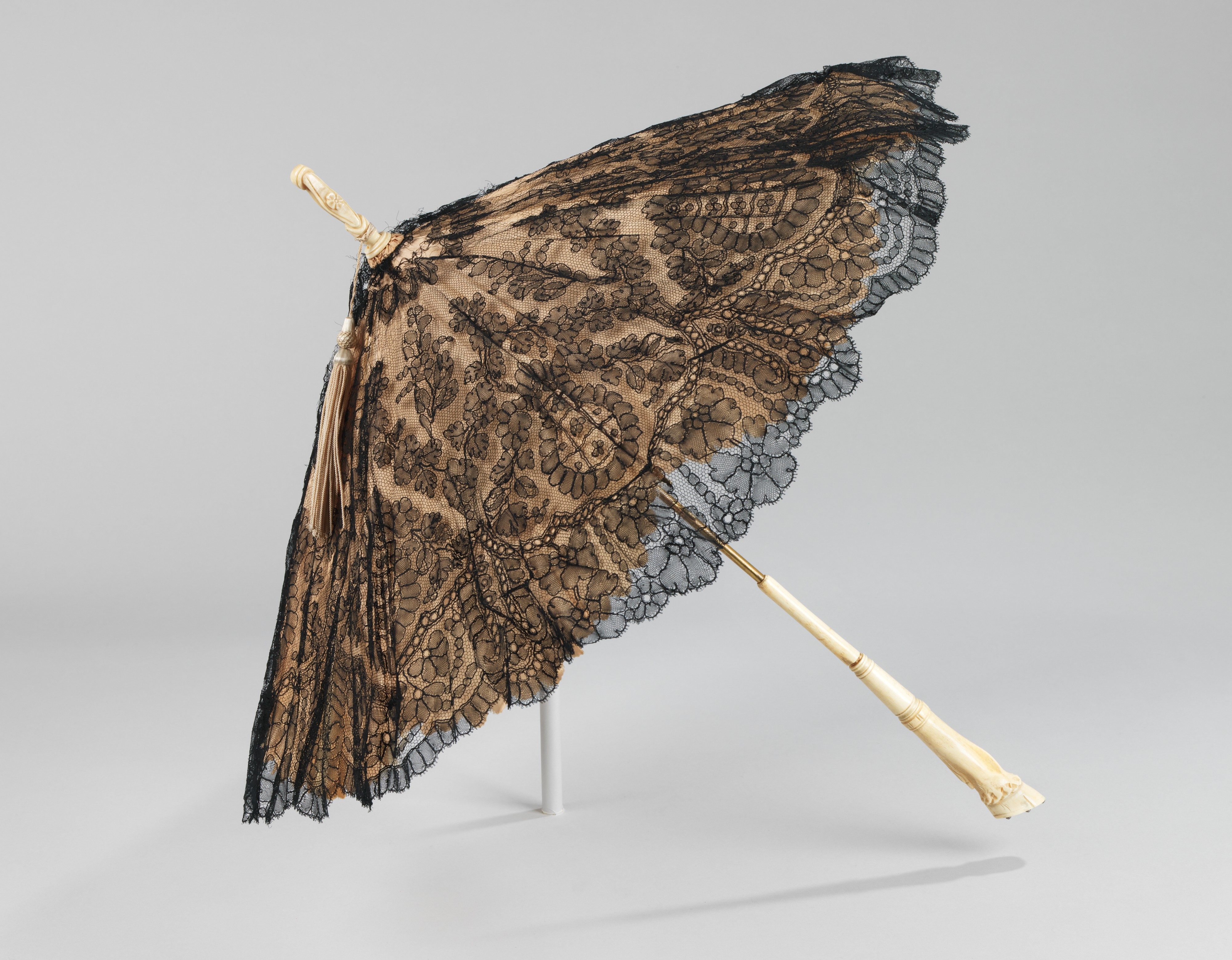
Heritage Analysis: The American Parasol
As Lead Heritage Curator for Katherine Fashion Lab, I present this strategic standalone research on the parasol—an object of profound symbolic power, historical adornment, and spiritual meaning within the American cultural context. Crafted from silk, ivory, and metal, this artifact transcends its utilitarian function to embody a complex lexicon of status, femininity, and protection. For the 2026 high-end luxury strategy, the parasol offers a compelling narrative of exclusivity and reclamation, positioning Katherine Fashion Lab at the vanguard of heritage-driven innovation.
Symbolic Power: Protection, Status, and the American Feminine Ideal
The American parasol, particularly during the 19th and early 20th centuries, was a potent symbol of social stratification and feminine virtue. Unlike its European counterparts, which often signified royal or aristocratic lineage, the American parasol evolved within a rapidly industrializing society where new money sought to emulate old-world refinement. The choice of materials—silk for its sheen, ivory for its rarity, and metal for structural integrity—communicated not only wealth but also a deliberate investment in conspicuous leisure. A woman carrying a parasol was shielded from the sun, a marker of indoor, privileged labor, contrasting sharply with the sun-exposed skin of working-class women. This symbolic power was deeply intertwined with racial and class hierarchies, as pale skin was idealized as the epitome of beauty and moral purity.
However, the parasol also served as a tool of subtle agency. The act of opening or closing the parasol, angling it to block a gaze, or using it to signal interest during courtship rituals transformed it into a semaphore of social negotiation. For the modern luxury consumer, this duality—protection and empowerment, visibility and concealment—resonates with contemporary desires for controlled exposure and personal sovereignty. In the 2026 strategy, Katherine Fashion Lab can reinterpret this symbolic power by offering parasols that shield not only from the sun but from the digital gaze, merging heritage with modern anxieties about privacy and authenticity.
Historical Adornment: Craftsmanship and the Art of the Object
The construction of the parasol—silk stretched over a metal frame, with an ivory handle—represents a pinnacle of artisanal collaboration. In American history, parasol production was concentrated in urban centers like New York and Boston, where specialized workshops employed silk weavers, metalworkers, and ivory carvers. The silk, often imported from Lyon or China, was hand-painted or embroidered with floral motifs, birds, or geometric patterns, transforming the parasol into a mobile canvas. The ivory handle, carved into shapes such as bird heads, floral buds, or abstract curves, provided a tactile connection to the natural world, while the metal ribs, typically made of steel or brass, ensured durability and elegant closure.
This historical adornment was not merely decorative but deeply ritualistic. The parasol was an essential accessory for afternoon promenades, garden parties, and seaside excursions—events that structured the social calendar of the American elite. Its presence signaled adherence to etiquette and a cultivated aesthetic sensibility. For the 2026 high-end luxury strategy, Katherine Fashion Lab can draw on this heritage of bespoke craftsmanship by partnering with contemporary artisans to create limited-edition parasols. Each piece would be numbered, with a certificate of authenticity detailing the provenance of materials and the hands that crafted it. This approach aligns with the luxury market's shift toward artisanal storytelling and the valuation of objects as heirlooms rather than commodities.
Spiritual Meaning: Shade, Shelter, and the Feminine Divine
Beyond its social and aesthetic functions, the parasol carries deep spiritual resonance in American cultural history. Rooted in Judeo-Christian and indigenous traditions, the parasol symbolizes divine protection and maternal shelter. The canopy of the parasol mirrors the vault of heaven, offering shade from the harshness of the sun—a metaphor for spiritual grace. In African American spiritual practices, the parasol was used in processions and ceremonies as a symbol of honor and sanctity, often held over elders or brides to signify their elevated status. Similarly, in Native American cultures, the parasol-like structure of the tipi and the use of sunshades in rituals connected the object to earthly and celestial harmony.
The combination of silk, ivory, and metal further amplifies this spiritual dimension. Silk, a fabric derived from the labor of silkworms, evokes themes of transformation and resurrection. Ivory, sourced from elephants or walruses, represents wisdom and longevity. Metal, forged through fire, symbolizes strength and endurance. Together, these materials create an object that is both sacred and secular, a tangible link between the mundane and the transcendent. For the 2026 luxury strategy, Katherine Fashion Lab can emphasize this spiritual meaning by positioning the parasol as a protective talisman for the modern woman. Marketing narratives could explore themes of sanctuary, self-care, and the creation of personal sacred spaces, appealing to consumers seeking meaning beyond material wealth.
2026 High-End Luxury Strategy: Reclaiming the Parasol for a New Era
To integrate the parasol into Katherine Fashion Lab’s 2026 high-end luxury strategy, I propose a three-pronged approach: heritage revival, material innovation, and experiential storytelling. First, heritage revival involves reissuing archival parasol designs with modern modifications—such as UV-protective silk and lightweight titanium frames—while retaining the iconic ivory handles (sourced ethically from reclaimed or synthetic ivory). This respects tradition while addressing contemporary concerns about sustainability and animal welfare.
Second, material innovation should focus on bespoke customization. Clients would commission parasols with personalized embroidery, hand-painted motifs, or gemstone accents on the handle. This aligns with the luxury market’s demand for ultra-exclusivity and the emotional value of co-creation. Each parasol would require a 12-week production timeline, reinforcing its status as a rare and deliberate acquisition.
Third, experiential storytelling should position the parasol as a narrative anchor for Katherine Fashion Lab’s brand identity. Collaborations with contemporary artists, historians, and spiritual leaders could produce a limited series of parasols tied to specific American landscapes—the Southern gardens, the New England coast, the Southwestern desert. Each parasol would come with a digital archive of its cultural and spiritual significance, accessible via a private app. This transforms the object from a mere accessory into a portal to heritage, a conversation piece that bridges past and future.
In conclusion, the American parasol, with its layers of symbolic power, historical adornment, and spiritual meaning, offers Katherine Fashion Lab a unique opportunity to lead the 2026 luxury market. By honoring its heritage while innovating for modern sensibilities, we can create objects that are not only beautiful but profoundly resonant—true heirlooms for a discerning clientele.