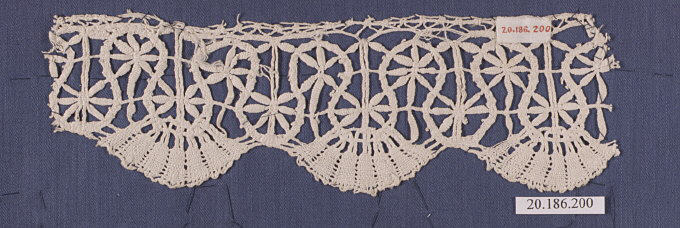
The Art of the Edge: Bobbin Lace as a Couture Statement
In the rarefied world of haute couture, the periphery often defines the whole. Edging, far from being a mere functional finish, is a declarative boundary—a liminal space where fabric meets air, structure meets fluidity, and heritage meets innovation. At Katherine Fashion Lab, our latest standalone study elevates a singular, centuries-old technique to the forefront of contemporary design: bobbin lace. This analysis dissects how this global heritage craft, traditionally relegated to trims and handkerchiefs, is reimagined as a primary architectural element in couture edging, transforming garments into wearable artifacts of cultural memory and precision engineering.
Global Heritage, Local Threads: The Cultural DNA of Bobbin Lace
Bobbin lace, with its origins spanning from 16th-century Flanders to the convents of Italy and the villages of Slovakia, is a testament to human patience and geometric genius. Unlike needle lace, which is built stitch by stitch, bobbin lace is woven through the systematic crossing and twisting of multiple threads wound on elongated bobbins. Each region—from the dense, floral patterns of Bruges to the airy, geometric filigree of Chantilly—imprints a distinct visual vocabulary. For Katherine Fashion Lab, this global heritage is not a museum piece but a living lexicon. Our study draws upon the point de Paris grid of French lace, the Torchon stitch of Scandinavian tradition, and the intricate Milanese motifs to create an edging that speaks a polyglot language of craftsmanship.
The materiality of bobbin lace—its reliance on fine linen, silk, or even metallic threads—demands a reverence for slowness. In an era of fast fashion, choosing bobbin lace for edging is a deliberate act of resistance. It asserts that the edge is not an afterthought but a narrative center. The tension between the lace’s delicate appearance and its structural integrity is precisely what makes it a compelling subject for couture. When applied as edging, it creates a negative space—a void that frames the garment’s silhouette, inviting the eye to trace the intricate pathways of thread.
Material as Method: Bobbin Lace in Standalone Couture Construction
Engineering the Liminal Zone
In this standalone study, bobbin lace is not merely appliquéd onto a base fabric; it is the primary structural edge. Our design process begins with the deconstruction of traditional lace motifs into modular units. Each unit—a scallop, a picot, a grid—is engineered to bear tension, stretch, and drape. The lace edge is hand-stitched onto a fine silk organza substrate, but the lace itself dictates the garment’s hemline, neckline, and sleeve openings. This approach transforms the edge from a passive border into an active participant in the garment’s architecture.
The choice of linen thread (sourced from a family-run mill in Normandy) and silk thread (from Kyoto) introduces a dialogue between opacity and transparency. The linen provides a matte, grounded stability, while the silk adds a luminous, almost liquid quality to the edge. The result is a gradated density: the lace becomes denser at the outermost edge, creating a crisp, defined line, and gradually opens into airy patterns as it moves inward. This gradient mimics the natural tension of a wave breaking—a visual metaphor for the edge as a threshold.
Pattern as Performance: The Geometry of Movement
Bobbin lace’s inherent geometry—its diamonds, hexagons, and spirals—is not static. When used as edging, it interacts dynamically with the wearer’s movement. A scalloped edge of Torchon lace, for instance, ripples with each step, catching light and shadow. A triangular point of Milanese lace creates a sharp, angular terminus that contrasts with soft draping. In our study, we developed a proprietary pattern called the “Heritage Wave,” which interlaces a continuous spiral motif with a straight grid. This pattern allows the edge to expand and contract, accommodating the body’s biomechanics without losing its shape.
The technical challenge lies in tension control. Bobbin lace is notoriously sensitive to pull; a single uneven twist can distort the entire piece. Our artisans use a custom-made tension board, calibrated to the specific thread weight and humidity, to ensure uniformity. The edging is then blocked—a process of wetting and pinning the lace into its final shape—over a period of 48 hours. This meticulous step ensures that the edge maintains its integrity through repeated wear and cleaning.
Contextualizing the Edge: Standalone Study vs. Application
This study is labeled as “standalone” deliberately. Unlike traditional couture where lace edging is integrated into a larger garment, here the edge is the singular focus. We created a series of “edge garments”—pieces where the entire design is built around the perimeter. For example, a collarless coat features a 12-inch band of bobbin lace edging that extends from the shoulder seam to the hem, acting as both closure and ornament. A sheer tunic uses a continuous strip of bobbin lace as the hemline, with the fabric above left deliberately raw and unfinished, creating a tension between the refined edge and the unbound body.
This approach challenges the conventional hierarchy of garment construction. In standard practice, the edge is subordinate to the seam, the silhouette, the fabric. Here, the edge is the primary design driver. The bobbin lace dictates the garment’s scale, its movement, and its emotional tone. The negative space within the lace—the gaps between threads—becomes a visual echo of the body beneath, suggesting presence through absence.
Cultural Resonance and Future Directions
The global heritage of bobbin lace is not merely decorative; it carries the weight of women’s labor, regional identity, and pre-industrial ingenuity. By isolating the edge as a standalone subject, Katherine Fashion Lab honors this heritage while pushing it into new conceptual territory. The edging becomes a document—a record of the artisan’s hand, the thread’s journey, and the culture’s aesthetic code. In a world of digital prints and machine-made trims, this handcrafted edge is a radical assertion of material truth.
Future iterations of this study will explore metallic threads (gold and silver from India) and recycled silk from vintage saris, expanding the palette while maintaining the technique’s core. We also envision modular edging systems—interchangeable lace borders that allow a single garment to transform its silhouette, from a sharp, architectural edge to a soft, romantic scallop. This would democratize couture’s exclusivity while preserving its craftsmanship.
Conclusion: The Edge as Ethos
In the final analysis, bobbin lace edging at Katherine Fashion Lab is not a trim but a philosophical statement. It asserts that the boundary is where meaning resides. By elevating a global heritage technique to a standalone couture study, we redefine what an edge can be: a structural element, a cultural archive, a kinetic performer. The bobbin lace edge does not merely finish a garment; it initiates a conversation between the body and the void, the past and the present, the thread and the hand. In this context, edging is not peripheral—it is everything.