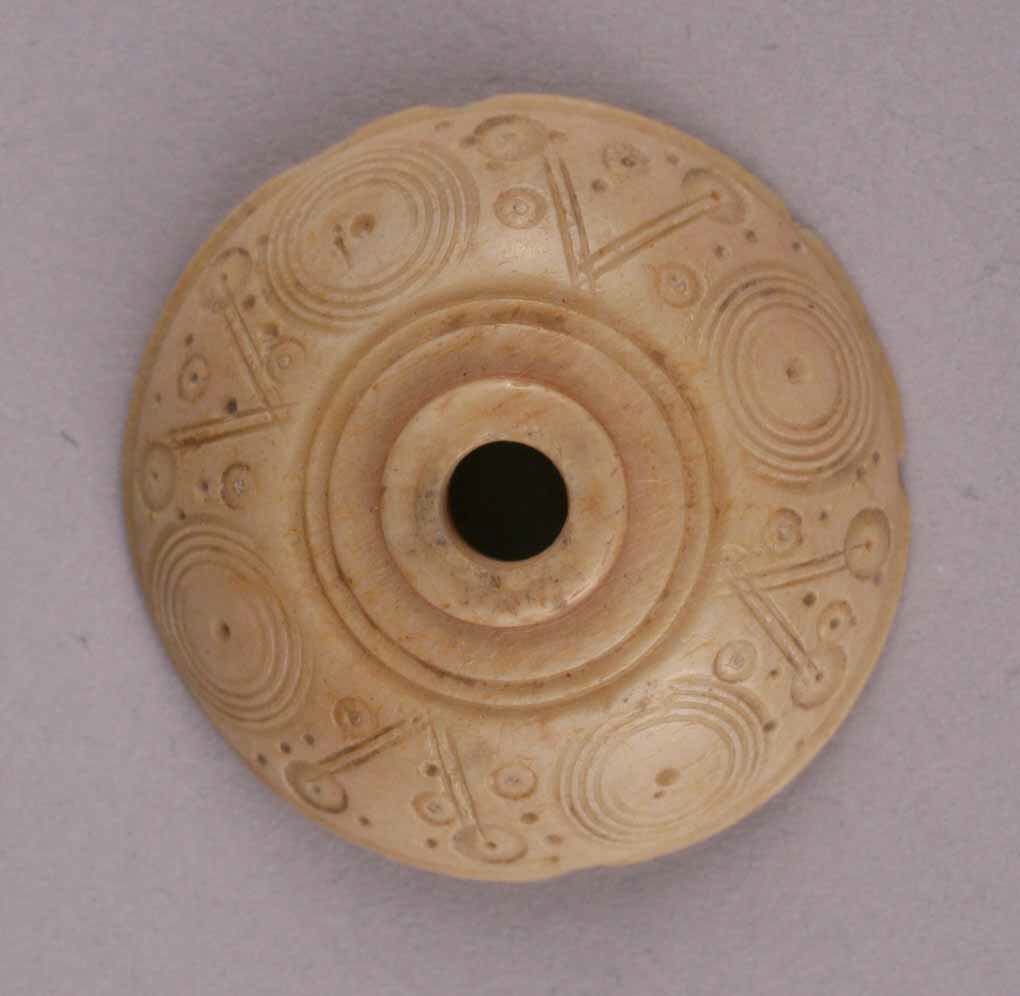
Heritage Analysis: The Spindle Whorl as a Symbol of Power, Adornment, and Spiritual Meaning
At Katherine Fashion Lab, we recognize that the most compelling luxury narratives are rooted in the forgotten artifacts of human civilization. The spindle whorl—a small, often unassuming object used in textile production—represents a profound intersection of labor, power, and sacred symbolism. This analysis examines a specific spindle whorl from an ancient civilization, crafted from bone, incised with intricate patterns, and inlaid with paint. Through the lens of symbolic power, historical adornment, and spiritual meaning, we will extract strategic insights for a 2026 high-end luxury strategy that redefines heritage as a source of transformative brand authority.
Symbolic Power: The Whorl as an Instrument of Creation and Control
The spindle whorl was not merely a utilitarian tool; it was a symbol of creative agency and economic dominion. In ancient civilizations—from the Indus Valley to pre-Columbian Mesoamerica—the act of spinning thread was intimately tied to the female domain, yet its products held immense communal and ritualistic power. The whorl’s rotation, transforming raw fibers into ordered thread, mirrored the cosmic cycle of creation, destruction, and rebirth. To possess a finely crafted whorl was to signal mastery over the very fabric of life—both literally and metaphorically.
For Katherine Fashion Lab, this symbolic power translates into a luxury narrative that elevates craft as control. The incised lines and painted inlays on this bone whorl are not decorative whims; they are deliberate acts of authority. Each geometric motif—spirals, chevrons, or celestial patterns—anchored the spinner within a lineage of ancestral knowledge. In the 2026 luxury landscape, where consumers seek brands that embody sovereignty over chaos, the spindle whorl offers a blueprint for positioning the house as a curator of timeless, deliberate creation. The whorl teaches us that true power lies not in ostentation, but in the quiet, rhythmic assertion of control over one’s medium.
Historical Adornment: The Bone Medium and the Aesthetics of Prestige
The choice of bone as a medium for this spindle whorl is itself a statement of adornment as identity. Bone, sourced from revered animals—deer, cattle, or even sacred species—carried connotations of vitality, mortality, and continuity. The incising and inlaying process transformed a perishable material into an object of enduring beauty. The paint, likely derived from mineral pigments such as ochre or cinnabar, added a dimension of chromatic prestige. Red, in particular, was associated with lifeblood, royalty, and the divine in many ancient cultures.
From a historical adornment perspective, the spindle whorl was often worn as a pendant or sewn into garments, making it a portable talisman of status. Its small size belied its symbolic weight. For Katherine Fashion Lab, this informs a 2026 strategy centered on intimate luxury—objects that are not merely displayed but lived with. The bone whorl suggests a material language of raw elegance: unpolished yet refined, organic yet intentional. In an era of digital saturation, the tactile, earthy quality of bone offers a counter-narrative of authentic rarity. The incised patterns, when translated into modern jewelry or hardware details, become signatures of a house that values hidden narratives over overt branding.
Spiritual Meaning: The Whorl as a Bridge Between Worlds
The spindle whorl was deeply embedded in cosmological frameworks. In many ancient traditions, spinning was associated with the Fates—goddesses who wove the threads of human destiny. The whorl’s rotation symbolized the turning of the heavens, the passage of time, and the connection between the earthly and the celestial. The incised designs often represented sacred geometry: labyrinths, sunbursts, or serpentine lines that guided the soul in ritual contexts. The paint, often applied in ritualized ceremonies, imbued the whorl with protective and generative energy.
For Katherine Fashion Lab, this spiritual dimension offers a powerful brand mythology. The whorl becomes a metaphor for the house’s role as a weaver of destinies—connecting the wearer to a lineage of craftsmanship, intention, and transcendence. In 2026, luxury consumers are increasingly drawn to brands that offer meaning beyond materialism. The spindle whorl’s spiritual resonance suggests that Katherine Fashion Lab should position itself not just as a purveyor of goods, but as a guardian of sacred knowledge. Limited collections inspired by the whorl’s motifs could be presented as ritual objects, accompanied by narratives of their symbolic origins. This strategy transforms a purchase into a personal initiation into an ancient lineage of power and beauty.
Strategic Implications for 2026 High-End Luxury
From Artifact to Archetype: Redefining Heritage as a Competitive Advantage
The spindle whorl’s heritage is not a static relic but a living archetype. For Katherine Fashion Lab, the strategic imperative is to de-commodify heritage by treating it as a source of exclusive intellectual property. The incised patterns and bone medium can be licensed, reinterpreted, and patented as signature design elements. This creates a moat against fast-fashion imitation, as the symbolic depth cannot be easily replicated.
In 2026, the luxury market will be defined by narrative scarcity. The spindle whorl offers a unique story that cannot be found in any other house. Katherine Fashion Lab should invest in heritage research partnerships with museums and anthropologists, ensuring that each collection is grounded in verified historical accuracy. This authenticity becomes a premium pricing lever, as consumers will pay for the privilege of owning a piece of a story that is both ancient and exclusive.
Material Innovation: Bone as a Signature Medium for High-End Adornment
Bone, when ethically sourced and sustainably harvested, aligns with the regenerative luxury trend of 2026. It is a byproduct of the food industry, reducing waste while offering a unique textural and tonal palette. Katherine Fashion Lab can pioneer a line of bone-inlaid accessories—cuffs, rings, and brooches—that echo the whorl’s incised geometry. The paint inlay technique, using modern, non-toxic pigments, can be revived as a house signature. This material strategy differentiates the brand from competitors reliant on precious metals and gemstones, appealing to a clientele that values intellectual materiality over conventional opulence.
Ritualized Consumption: Building a Community of Initiates
The spindle whorl’s spiritual meaning suggests a membership model for Katherine Fashion Lab’s highest-tier clients. A “Spinner’s Circle” could offer exclusive access to collections, private ceremonies, and digital content that explores the whorl’s symbolic power. This transforms luxury consumption from a transaction into a transformative experience. In 2026, where experiential luxury dominates, the spindle whorl provides a ready-made framework for ritualized engagement—from unboxing ceremonies that mirror ancient spinning rituals to limited-edition pieces that require a codex to decode their symbols.
Conclusion: The Whorl as a Strategic Compass
The bone spindle whorl, with its incised lines and painted inlays, is far more than a historical curiosity. It is a strategic artifact that illuminates the path forward for Katherine Fashion Lab. By embracing its symbolic power, historical adornment, and spiritual meaning, the house can craft a 2026 luxury strategy that is rooted in authenticity, elevated by exclusivity, and animated by purpose. The whorl reminds us that the most enduring luxury is not about possession, but about connection—to craft, to culture, and to the cosmic threads that bind us all. Katherine Fashion Lab will not merely sell objects; it will spin destinies.