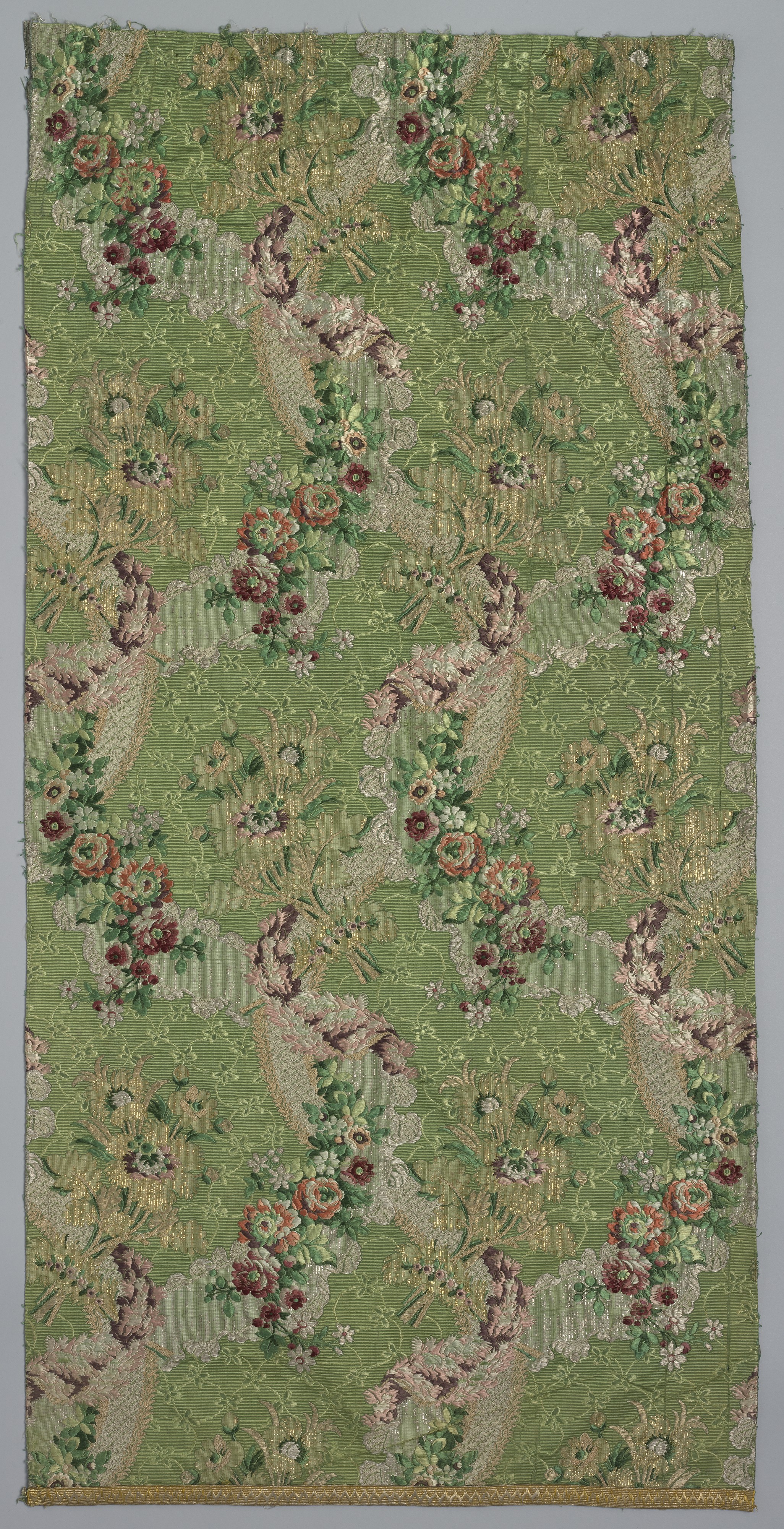
The Dialectic of Drape and Structure: A Couture Analysis of Length in Silk and Metal Thread
In the rarefied sphere of haute couture, length is never merely a measurement. It is a narrative device, a sculptural parameter, and a profound negotiation between the body’s movement and the fabric’s will. For Katherine Fashion Lab’s standalone study—titled “The Unfurled Line”—the subject of length becomes the primary protagonist, explored through the singular pairing of silk and metal thread. This analysis deconstructs how the collection leverages global heritage techniques to transform length from a passive attribute into an active agent of architectural expression, redefining the relationship between garment and gesture.
The Material Dialectic: Silk’s Fluidity vs. Metal’s Armature
At the heart of this study lies a deliberate material tension. Silk, with its inherent luminosity and liquid drape, suggests endless verticality—a fabric that yearns to pool, to cascade, to elongate. Conversely, metal thread—whether woven as Lurex, embroidered as bullion, or structured as fine chain mail—introduces weight, rigidity, and a memory of form. The genius of Katherine Fashion Lab’s approach is the refusal to resolve this tension. Instead, length is explored as the field of conflict between these two forces.
The collection’s signature silhouette is a floor-grazing column that appears to be in a state of constant, frozen motion. In one garment, a bias-cut silk charmeuse skirt extends to a 140-centimeter hem, its surface interrupted by spiral-embroidered metal threads that act as internal corsetry. The metal does not restrain the silk; it redirects its flow. As the wearer moves, the metal threads catch light and create a secondary, geometric shadow, effectively doubling the visual length of the garment. Length here is not a single line but a composite of primary and secondary trajectories—the physical hem and the optical illusion of its extension.
Global Heritage as a Grammar of Elongation
The study draws explicitly from three distinct heritage traditions, each reinterpreting length through its own cultural lens. The first is the Japanese obi-jime—the silk cords used to secure a kimono’s obi. Katherine Fashion Lab translates this into a series of long, detachable sashes woven from silk and silver thread. These sashes, worn asymmetrically from shoulder to ankle, introduce a diagonal length that fractures the vertical axis of the Western evening gown. The effect is a garment that measures differently from every angle: full length from the front, truncated from the side, and endlessly extended when the sash trails behind.
The second heritage reference is the Mughal patka, a ceremonial waist sash from 16th-century India, often woven with gold zari thread. The lab’s interpretation is a 200-centimeter train attached to a cropped silk bodice. What distinguishes this train is its gradated density: the metal thread concentration increases from 10% at the waist to 60% at the hem. This creates a weighted elongation that pulls the fabric downward with increasing force, transforming the train into a pendulum. The length is not static; it is a kinetic accumulation of gravity, heritage, and material mass.
The third influence is Russian kokoshnik embroidery, traditionally used to frame the face. Here, the technique is inverted: metal-thread embroidery—in patterns of stylized vines and geometric motifs—runs vertically along the entire length of a silk sheath dress. The embroidery does not end at the hem; it continues onto a detachable floor piece that mirrors the dress’s pattern. This creates a visual continuity that extends the garment’s length beyond the physical body, suggesting an infinite, unbroken line. The effect is both regal and unsettling, as if the dress is growing out of the floor itself.
Architectural Length: The Standalone Study as a Spatial Proposition
As a standalone study, “The Unfurled Line” is not burdened by the commercial constraints of a full collection. This freedom allows Katherine Fashion Lab to treat length as a spatial proposition rather than a wearable convention. One of the most radical pieces is a “negative-length” garment: a silk and metal-thread cage that hovers 30 centimeters above the floor, suspended from the shoulders. The cage’s structure is woven from metal-thread cords, while silk panels hang loosely inside it, never touching the ground. The absence of a hem becomes the definitive length statement. The garment measures not by its termination but by the void it encloses—a deliberate inversion of the traditional floor-length gown.
In another piece, length is modular and mutable. A silk tunic is connected to a series of metal-thread rings that can be adjusted to shorten or lengthen the garment by up to 50 centimeters. The rings, inspired by medieval chain mail, allow the wearer to recalibrate the silhouette in real time. This transforms length from a fixed design decision into a participatory, performative element. The garment becomes an instrument of temporal and spatial negotiation, where the wearer decides how much floor they wish to claim.
The Economics of Excess: Length as a Luxury Signal
From an MBA-level perspective, the study also interrogates the economics of length. In couture, longer garments inherently require more fabric, more labor, and more precision. Silk, particularly when hand-embroidered with metal thread, can cost upwards of $500 per meter. A train of 200 centimeters represents a significant investment in material and craftsmanship. Katherine Fashion Lab’s study deliberately amplifies this cost signal, using length as a marker of exclusivity and scarcity. The metal thread, often sourced from Kyoto and Varanasi, adds a layer of geopolitical luxury—each thread carries the weight of ancient trade routes and artisanal knowledge.
Yet the study also challenges the assumption that longer is always more luxurious. The negative-length cage piece, with its deliberate truncation, suggests that the absence of length can be equally prestigious. The cost here is not in the fabric but in the engineering—the structural integrity required to suspend a cage without visible support. This redefines luxury as a function of technical innovation rather than material volume, a subtle but critical distinction for the modern couture client.
Conclusion: Length as a Living Line
“The Unfurled Line” ultimately positions length not as a static attribute but as a dynamic, relational field where silk and metal thread engage in a perpetual dialogue. Through the lens of global heritage, Katherine Fashion Lab demonstrates that length can be diagonal, weighted, infinite, negative, or modular—each iteration a distinct proposition for how the body occupies space. In an industry often obsessed with the hemline’s rise and fall, this standalone study reminds us that true couture measures not in centimeters, but in the tension between what is revealed and what is withheld. The metal thread pulls; the silk yields. And in that yielding, length becomes a living line, forever in motion.