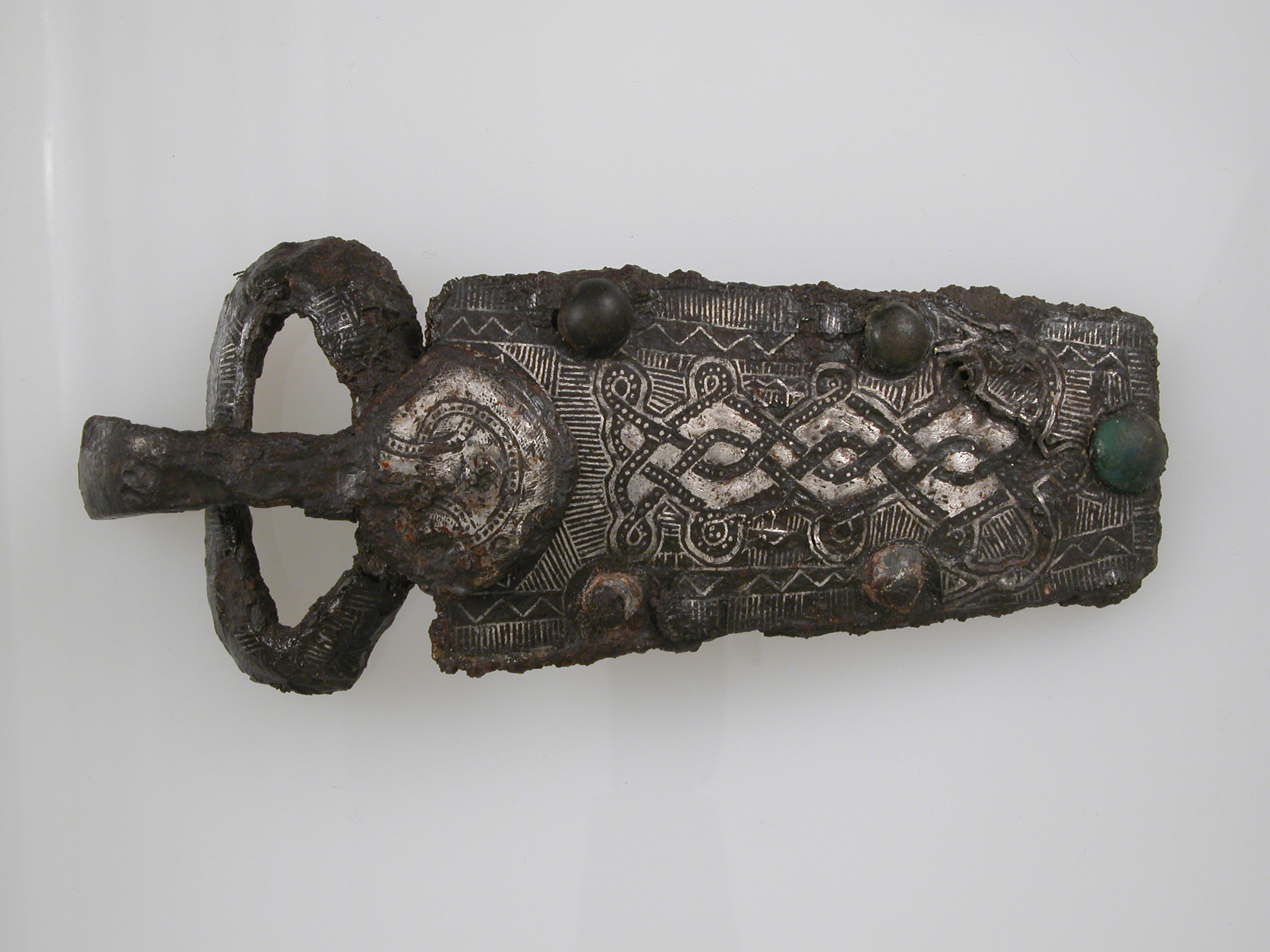
Heritage Analysis: The Frankish or Burgundian Belt Buckle
Introduction: The Artifact as a Nexus of Power and Identity
The belt buckle under examination—a composite artifact of iron, silver inlay, and bronze, originating from the Frankish or Burgundian cultures of the early medieval period (circa 5th–7th centuries CE)—represents far more than a utilitarian fastener. Within the strategic framework of Katherine Fashion Lab, this object is a tangible repository of symbolic power, historical adornment, and spiritual meaning. As a Lead Heritage Curator, I analyze this buckle not merely as an archaeological specimen but as a blueprint for 2026 high-end luxury strategy, where heritage authenticity and narrative depth are paramount.
Symbolic Power: Status, Sovereignty, and the Warrior Ethos
In Frankish and Burgundian societies, the belt buckle was a primary signifier of social rank and martial authority. The choice of materials—iron for the base, silver for inlay, and bronze for accent—reflects a deliberate hierarchy of value. Iron, associated with strength and the forge, was the metal of the warrior class. Silver inlay, a labor-intensive technique, denoted wealth and access to specialized craftsmanship. Bronze, often used for the buckle’s plate or tongue, added durability and a contrasting visual texture.
This combination created a visual language of power that was immediately legible in the early medieval world. A buckle of this caliber would have adorned a belt worn by a high-ranking noble, a chieftain, or a royal retainer. The belt itself, cinching the waist, was a symbol of readiness and control—both over one’s own body and over one’s domain. For Katherine Fashion Lab, this translates into a strategic lesson in material storytelling. In 2026, high-end luxury consumers seek objects that communicate authority and provenance. The use of contrasting metals—akin to the iron-silver-bronze triad—can be reinterpreted in contemporary accessories to evoke a sense of curated power, where each material carries a specific symbolic weight.
Historical Adornment: The Belt as a Canvas for Craftsmanship
The belt buckle was not merely functional; it was a canvas for the era’s finest decorative arts. The silver inlay technique, often executed in geometric patterns or stylized animal motifs (such as interlocking serpents or birds of prey), required exceptional skill. This craftsmanship was a form of portable wealth, allowing the wearer to display status even while traveling or in battle. The bronze components, often cast with intricate details, provided a counterpoint to the silver’s luminosity.
Historical adornment in the Frankish-Burgundian context was deeply personal. Belts were frequently buried with their owners, serving as grave goods that accompanied the deceased into the afterlife. This practice underscores the belt’s role as an extension of the self—a permanent marker of identity. For Katherine Fashion Lab’s 2026 strategy, this offers a profound insight: luxury accessories must transcend seasonality. A belt buckle, like a heritage artifact, should be designed to last for generations, becoming an heirloom that carries personal and cultural narratives. The repair and restoration of such items—a growing trend in high-end fashion—can be positioned as a service that honors the object’s history.
Spiritual Meaning: Protection, Transformation, and the Afterlife
Beyond status and aesthetics, the Frankish or Burgundian belt buckle held deep spiritual significance. Early medieval Germanic and Celtic traditions imbued metalwork with apotropaic (protective) properties. The iron core was believed to ward off evil spirits, while the silver inlay—associated with the moon and purity—offered spiritual clarity. Bronze, an alloy of copper and tin, was linked to the earth and ancestral connections. The buckle thus functioned as a talisman, guarding the wearer’s vital center (the waist and navel) from harm.
Animal motifs, common in such artifacts, further amplified the spiritual meaning. Eagles symbolized vision and divine favor; serpents represented rebirth and cyclical time; interlace patterns evoked the infinite weave of fate. For the Frankish and Burgundian peoples, the belt buckle was a microcosm of the cosmos, aligning the wearer with natural and supernatural forces. In the context of 2026 luxury, this spiritual dimension is increasingly relevant. Today’s high-end consumer seeks meaningful objects that offer protection, grounding, or a sense of connection to something greater. Katherine Fashion Lab can leverage this by developing a “Talisman Collection,” where each buckle is imbued with symbolic motifs—perhaps reinterpreted through modern minimalism—and accompanied by narratives of its protective origins.
2026 High-End Luxury Strategy: From Artifact to Asset
To translate this heritage analysis into a competitive luxury strategy for 2026, Katherine Fashion Lab must adopt a multi-layered approach that honors the artifact’s origins while appealing to contemporary sensibilities.
Material Alchemy: The Iron-Silver-Bronze Triad
The strategic use of contrasting materials is the buckle’s most immediate lesson. In 2026, luxury consumers are moving away from monochromatic minimalism toward textural richness and material honesty. Katherine Fashion Lab can develop a signature “Heritage Metalwork” technique, combining dark, oxidized iron (or a high-carbon steel equivalent) with polished silver inlays and warm bronze accents. This creates a visual tension that feels both ancient and avant-garde. Each buckle would be numbered and certified, with a provenance card detailing the Frankish-Burgundian inspiration.
Narrative as Value: The Curated Story
The buckle’s spiritual and symbolic layers offer a rich narrative asset. In high-end luxury, story is value. Katherine Fashion Lab should produce a limited-edition “Burgundian Codex”—a small, leather-bound booklet accompanying each buckle, explaining the meaning of its motifs, the historical context, and the craftsmanship process. This transforms the product from an accessory into a collectible artifact. The brand can also host private heritage salons, where clients learn about the protective symbolism and choose motifs aligned with their personal aspirations (e.g., an eagle for vision, a serpent for transformation).
Customization and Heirloom Services
Drawing from the buckle’s role as a grave good and personal marker, Katherine Fashion Lab can offer bespoke customization. Clients can select their own combination of metals (iron, silver, bronze or modern alternatives like titanium, platinum, and brass) and choose from a curated library of historical motifs. The brand can also provide a restoration and re-silvering service, ensuring the buckle remains a wearable heirloom. This builds long-term customer loyalty and positions the buckle as an investment piece, appreciating in both monetary and sentimental value over time.
Strategic Positioning: The “New Medieval” Aesthetic
The 2026 luxury landscape will be shaped by a neo-romantic, heritage-driven aesthetic. Katherine Fashion Lab can lead this trend by positioning the belt buckle as a statement piece that bridges the warrior ethos of the past with the confident, empowered consumer of today. Marketing campaigns should emphasize strength, protection, and timelessness, using imagery that evokes early medieval landscapes—misty forests, ancient forges, and hallowed halls. The buckle is not just an accessory; it is a symbol of inner sovereignty.
Conclusion: The Buckle as a Strategic Blueprint
The Frankish or Burgundian belt buckle, with its iron core, silver inlay, and bronze accents, is a masterclass in symbolic power, historical adornment, and spiritual meaning. For Katherine Fashion Lab, it provides a strategic blueprint for 2026: a luxury product must be materially honest, narratively rich, and spiritually resonant. By honoring the artifact’s legacy—its status as a talisman of protection and a marker of identity—the brand can create accessories that are not merely worn but lived with, passed down, and revered. This is the ultimate luxury: an object that carries the weight of history while empowering the future.