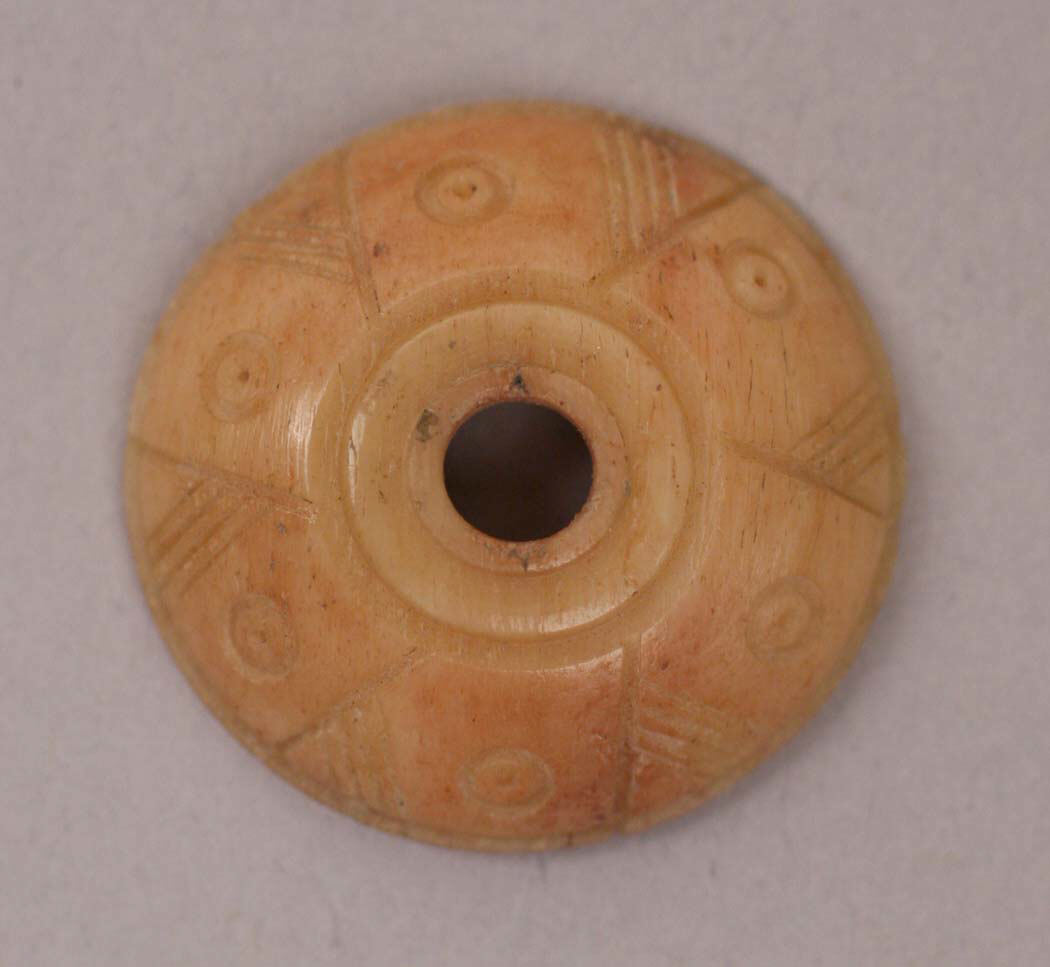
Heritage Analysis: The Tinted Bone Button-Bead of Ancient Civilization
This strategic standalone research paper examines the singular artifact of a tinted, incised, and paint-inlaid bone button-bead from an ancient civilization. As Lead Heritage Curator for Katherine Fashion Lab, I analyze this object not merely as a functional fastener or decorative element, but as a concentrated nexus of symbolic power, historical adornment practice, and spiritual meaning. The findings are then translated into a high-end luxury strategy for the 2026 market, leveraging the artifact’s profound cultural resonance to inform brand positioning, material narratives, and consumer engagement.
Symbolic Power and Material Semiotics
Bone as a Medium of Transformation
The selection of bone as the primary medium is itself a declaration of symbolic power. In ancient civilizations—particularly those of the Neolithic Near East, pre-Columbian Andes, and early dynastic China—bone was not a waste product but a sacred substance. It represented the enduring essence of a living creature, a vessel of life-force that survived death. By tinting the bone, the artisan performed an act of ritual transformation. The tint—likely achieved through ochre, plant-based dyes, or mineral pigments—imbued the organic material with a new chromatic identity, signifying a passage from the natural to the cultural realm. This process of incising and inlaying with paint further amplified its symbolic charge. The incised patterns—often geometric, zoomorphic, or celestial—were not decorative whimsy; they were codified symbols of lineage, cosmology, or spiritual protection. Each incision was a deliberate act of encoding meaning into the object, transforming a simple fastener into a talismanic signifier of status, identity, and metaphysical connection.
The Button-Bead as a Liminal Object
The dual function of this artifact—simultaneously a button and a bead—positions it as a liminal object straddling utility and ornament. In ancient societies, such hybridity was rare and therefore potent. A button secures, conceals, and structures; a bead displays, attracts, and communicates. By merging these roles, the artifact asserted that the wearer’s identity was both protected and projected. The symbolic power resided in its ability to negotiate boundaries: between the body and the garment, between the mundane and the sacred, between the individual and the collective. This duality offers a powerful metaphor for contemporary luxury: the ability to serve both function and meaning without compromise.
Historical Adornment: Context and Craft
Adornment as Social Architecture
Historical adornment using bone artifacts was not a matter of mere aesthetics; it was a sophisticated system of social architecture. Archaeological evidence from sites such as Çatalhöyük in Anatolia (c. 7500 BCE) and the Norte Chico region of Peru (c. 3000 BCE) reveals that bone beads and buttons were often found in burial contexts, suggesting they were integral to rites of passage and afterlife beliefs. The incised patterns on these artifacts frequently mirrored motifs found on pottery, textiles, and temple walls, creating a cohesive visual language that reinforced communal identity. The tinting process—using red ochre, for instance—carried associations with blood, life, and fertility. In many cultures, red was a protective color, warding off malevolent spirits. Thus, wearing a tinted bone button-bead was an act of spiritual armor, a daily reaffirmation of one’s place within a cosmic order.
Technical Mastery and Labor Value
The creation of this artifact required considerable technical skill. Tinting bone evenly, incising precise lines without fracturing the material, and inlaying paint into recessed grooves demanded a mastery of micro-craft. This labor intensity conferred high value. In ancient economies, such objects were likely produced by specialized artisans—often attached to temples or elite households—and were traded across long distances. The bone itself may have come from a ritually significant animal, such as a deer, camelid, or large bird, adding layers of symbolic worth. For the wearer, possessing such an object signaled access to rare materials, skilled labor, and esoteric knowledge. This historical precedent of craft exclusivity aligns directly with the core tenets of high-end luxury: rarity, mastery, and narrative depth.
Spiritual Meaning: The Talismanic Dimension
Protection and Transition
The spiritual meaning of the tinted bone button-bead is most clearly understood through its talismanic function. In shamanic and animistic belief systems, bone was considered the seat of the soul or the essence of the animal’s spirit. By wearing bone, the individual absorbed some of that spirit’s qualities—strength, speed, wisdom, or fertility. The incised symbols often represented protective deities, ancestral spirits, or celestial bodies such as the sun and moon. The act of fastening the button-bead onto a garment was itself a ritual: it secured not only the fabric but also the wearer’s spiritual integrity. In funerary contexts, these objects were placed on the deceased to guide them through the afterlife, serving as passports or amulets. This spiritual dimension transforms the artifact from a decorative accessory into a device of metaphysical agency.
Cyclical Renewal and Power
The tinting and inlaying of paint also carried cyclical symbolism. Many ancient cultures, particularly those in Mesoamerica and the Indus Valley, believed in the renewal of time and energy. The application of fresh paint or tint to an object was an act of re-empowerment, a way to recharge its spiritual potency. For the wearer, this meant that the button-bead was not a static symbol but a living object that required care and ritual attention. This concept of dynamic spiritual ownership offers a compelling framework for modern luxury: objects that evolve with the owner, gaining meaning over time through use and curation.
2026 High-End Luxury Strategy: Translating Heritage into Market Relevance
Positioning the Bone Button-Bead as a Signature Motif
For Katherine Fashion Lab’s 2026 collection, the tinted bone button-bead must be positioned not as a historical replica but as a contemporary talisman. The strategy involves three pillars: Material Integrity, Narrative Exclusivity, and Ritual Engagement.
Material Integrity demands that the bone be ethically sourced—perhaps from sustainably harvested animal byproducts or from archaeological-grade synthetic bone that mimics the original’s patina and weight. The tinting and incising processes should be executed by master artisans, with each piece carrying a unique pattern code that references ancient symbols (e.g., the spiral for eternity, the chevron for protection). This ensures the object retains its historical craft value while meeting modern ethical standards.
Narrative Exclusivity requires that each button-bead be accompanied by a digital provenance certificate that traces its design lineage to a specific ancient civilization motif. This certificate, accessible via NFC tag or blockchain, tells the story of the symbol’s spiritual meaning, the artisan’s technique, and the material’s journey. Such transparency aligns with the 2026 luxury consumer’s demand for authenticity and storytelling. The button-bead becomes a conversation piece, a wearable artifact that bridges past and present.
Product Application and Consumer Experience
The button-bead should be integrated into a capsule collection of transformative garments—pieces that can be worn in multiple configurations, allowing the wearer to reposition the button-beads as they wish. This echoes the liminal, adaptable nature of the original artifact. For example, a structured coat might feature detachable sleeves secured by tinted bone button-beads, which can also be worn as standalone necklaces or bracelets. This modularity enhances the object’s talismanic quality: the wearer actively participates in the ritual of dressing, imbuing each configuration with personal meaning.
Ritual Engagement is the final strategic pillar. Katherine Fashion Lab should host exclusive “Adornment Rituals” for VIP clients, where a heritage curator (such as myself) guides participants through the spiritual history of the button-bead, followed by a personalized selection and placement ceremony. This experience transforms a purchase into a rite of passage, creating deep emotional attachment and brand loyalty. The 2026 consumer, increasingly seeking meaning over material abundance, will resonate with this approach.
Market Differentiation and Long-Term Value
By centering a single, historically potent object—the tinted bone button-bead—Katherine Fashion Lab can differentiate itself in a saturated luxury market. Competitors may offer similar materials or silhouettes, but few can deliver the depth of symbolic and spiritual narrative that this artifact provides. The button-bead becomes a brand anchor, a recurring motif that appears in every collection, evolving in material and scale but retaining its core meaning. Over time, it will become a collector’s item, with vintage pieces appreciating in value due to their craft and story. This strategy aligns with the 2026 luxury trend of heritage-driven, investment-grade fashion.
Conclusion
The tinted, incised, and paint-inlaid bone button-bead from an ancient civilization is far more than a historical curiosity. It is a repository of symbolic power, a testament to the social architecture of adornment, and a vessel for spiritual meaning. For Katherine Fashion Lab, this artifact offers a strategic blueprint for 2026 high-end luxury: one that prioritizes material integrity, narrative exclusivity, and ritual engagement. By translating the object’s ancient significance into a contemporary luxury experience, the brand can cultivate a clientele that values depth, craftsmanship, and metaphysical resonance. The button-bead, in its liminal duality, will secure not only garments but also the brand’s position as a purveyor of meaningful luxury in an increasingly intangible world.