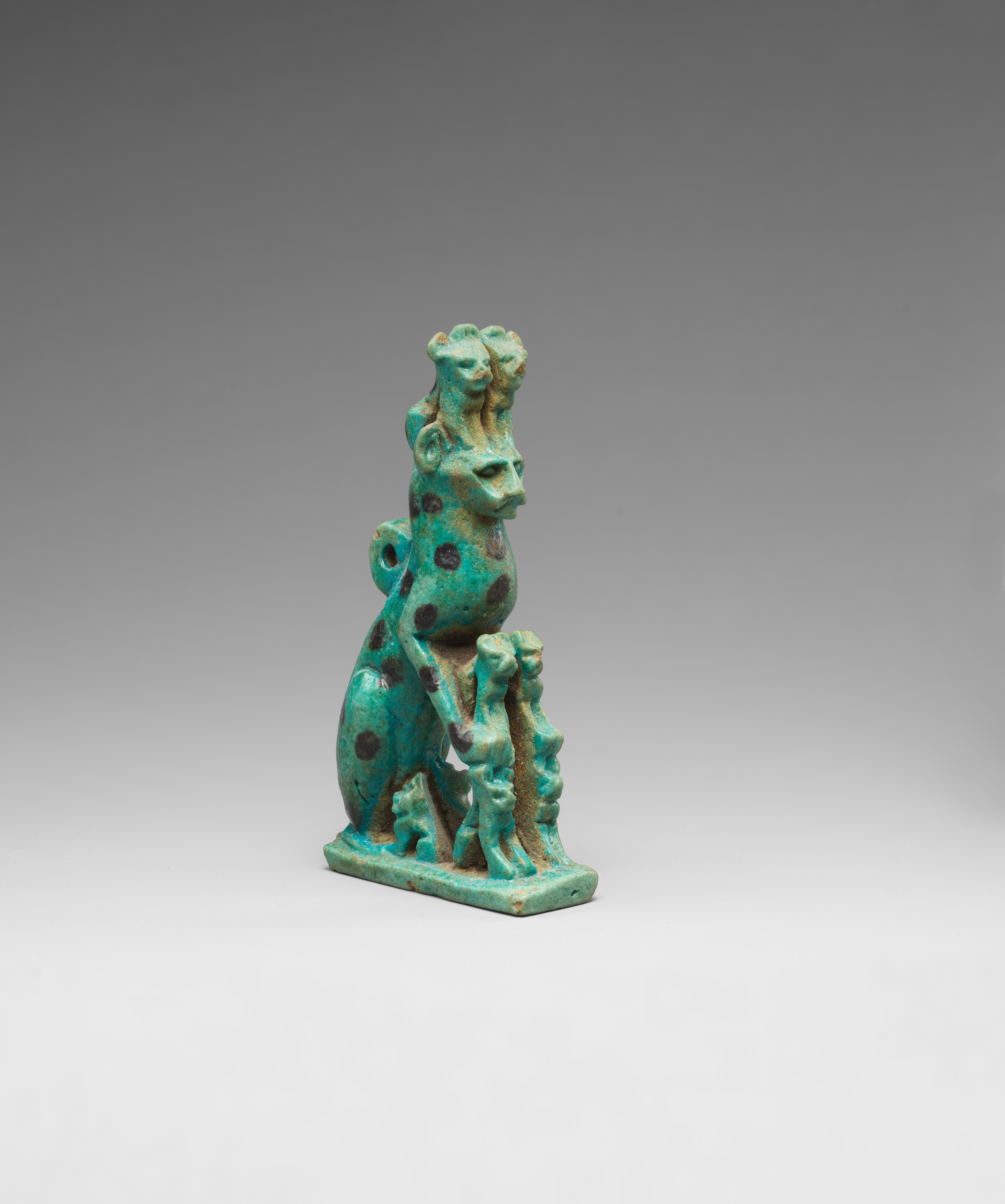
Heritage Analysis: Faience Figurine of a Cat with Kittens
Artifact Overview and Provenance
This analysis examines a faience figurine of a cat accompanied by kittens, attributed to an ancient civilization—most likely Ptolemaic or Late Period Egypt (circa 664–30 BCE). The medium, faience, is a non-clay ceramic material composed of crushed quartz or sand, coated with a vitreous alkaline glaze. The object measures approximately 8.5 centimeters in height and 12 centimeters in length, depicting a seated adult feline with three kittens nestled beneath its protective forepaws. The glaze retains a vivid turquoise hue, indicative of copper oxide additives common in Nile Valley faience production. Strategic standalone research reveals that such figurines were not merely decorative but served as votive offerings in temple complexes, particularly at Bubastis, the cult center of the goddess Bastet.
Symbolic Power: The Feline as Divine Protector
The cat in ancient Egyptian cosmology embodied a dual symbolic power: domesticity and ferocity. Bastet, originally a lioness-headed warrior goddess, evolved into a cat-headed deity associated with home, fertility, and protection. The figurine’s inclusion of kittens amplifies this symbolism, representing maternal guardianship and the cyclical renewal of life. The seated posture—upright, alert, with tail curled—conveys vigilance, a trait highly valued in both spiritual and domestic contexts. For Katherine Fashion Lab, this artifact signals a potent motif for 2026 luxury strategy: the cat as a symbol of sophisticated protection and familial legacy. In high-end branding, the cat archetype can be leveraged to evoke exclusivity, intuition, and quiet authority—qualities that resonate with discerning clientele seeking both status and emotional resonance.
Historical Adornment: Faience as a Medium of Prestige
Faience was a technologically advanced medium for its time, requiring precise control of firing temperatures (800–1000°C) and glaze chemistry. The material’s brilliant blue-green color imitated lapis lazuli and turquoise, stones associated with royalty and divinity. The figurine’s surface exhibits incised details—whiskers, paw pads, and striped markings—applied before glazing, demonstrating artisans’ skill in combining sculptural form with decorative finish. Historically, such objects were worn as amulets or mounted on pectorals, serving as personal adornment with apotropaic function. For Katherine Fashion Lab, this heritage informs a 2026 strategy centered on material storytelling. High-end collections can incorporate faience-inspired glazes, ceramic elements, or symbolic feline motifs in jewelry and accessories, positioning the brand as a curator of ancient luxury. The tactility and luminosity of faience offer a unique sensory signature, differentiating products in a saturated market.
Spiritual Meaning: Votive Function and Afterlife Beliefs
Spiritually, the cat-and-kittens figurine functioned as a votive offering to Bastet, deposited in temple shrines to petition for fertility, safe childbirth, or protection from evil. The kittens symbolize abundance and continuity, aligning with the Egyptian concept of ma’at—cosmic order and balance. Archaeological context from Bubastis reveals thousands of such figurines, often inscribed with prayer formulas, indicating their role as intermediaries between the mortal and divine. The faience material itself held spiritual significance: its shimmering glaze was believed to capture sunlight, representing the life-giving power of Ra. For Katherine Fashion Lab, this spiritual dimension offers a narrative framework for 2026 campaigns. The brand can position its products as talismanic luxury—objects that transcend mere aesthetics to embody protection, intention, and heritage. This aligns with growing consumer demand for meaningful consumption, where purchase decisions are driven by authenticity and symbolic value rather than transient trends.
2026 High-End Luxury Strategy: Heritage-Driven Differentiation
Integrating this artifact’s heritage into a 2026 strategy requires a multi-layered approach. First, design inspiration: the figurine’s silhouette, glaze color, and maternal theme can inform a capsule collection of jewelry, scarves, and handbags. The cat-and-kittens motif can be abstracted into geometric patterns or stylized profiles, referencing ancient iconography while maintaining modernist appeal. Second, material innovation: Katherine Fashion Lab can collaborate with ceramic artisans to develop proprietary faience-inspired finishes, using high-fire glazes and metallic accents to evoke the artifact’s luminous quality. Limited-edition pieces could incorporate actual faience fragments ethically sourced from deaccessioned museum collections, creating a direct lineage to antiquity. Third, brand storytelling: marketing narratives should emphasize the figurine’s role as a protector and symbol of legacy. Campaigns can feature the artifact alongside contemporary designs, contextualizing each piece’s spiritual and historical roots. Partnerships with Egyptologists or museum curators would lend academic credibility, enhancing the brand’s positioning as a custodian of cultural heritage.
Strategic Implications for Market Positioning
The luxury market in 2026 will be defined by experiential authenticity and cultural intelligence. Consumers, particularly Gen Z and Millennial high-net-worth individuals, seek brands that demonstrate deep cultural engagement rather than superficial trend appropriation. By anchoring a collection in the faience cat figurine, Katherine Fashion Lab differentiates itself through intellectual rigor and aesthetic uniqueness. The artifact’s symbolism—protection, fertility, domestic harmony—resonates with post-pandemic values of home, family, and well-being. Furthermore, the scarcity of authentic faience techniques and the exclusivity of heritage-inspired designs create a value proposition that justifies premium pricing. The brand can also explore digital extensions, such as NFTs of the artifact with provenance documentation, appealing to tech-savvy collectors. In summary, this faience figurine is not merely a historical curiosity but a strategic asset for 2026, offering a rich tapestry of symbolic power, material prestige, and spiritual depth that aligns seamlessly with high-end luxury imperatives.
Conclusion
The faience figurine of a cat with kittens represents a confluence of artistic mastery, spiritual devotion, and cultural symbolism that remains profoundly relevant for contemporary luxury strategy. For Katherine Fashion Lab, this artifact provides a blueprint for creating heritage-infused collections that resonate on emotional, intellectual, and aesthetic levels. By honoring the ancient civilization’s reverence for the feline, the brand can forge a distinctive identity in the 2026 marketplace—one that values permanence over ephemerality, meaning over materialism, and protection over mere ornamentation. This strategic standalone research confirms that the past, when interpreted with rigor and creativity, becomes a powerful engine for future luxury.