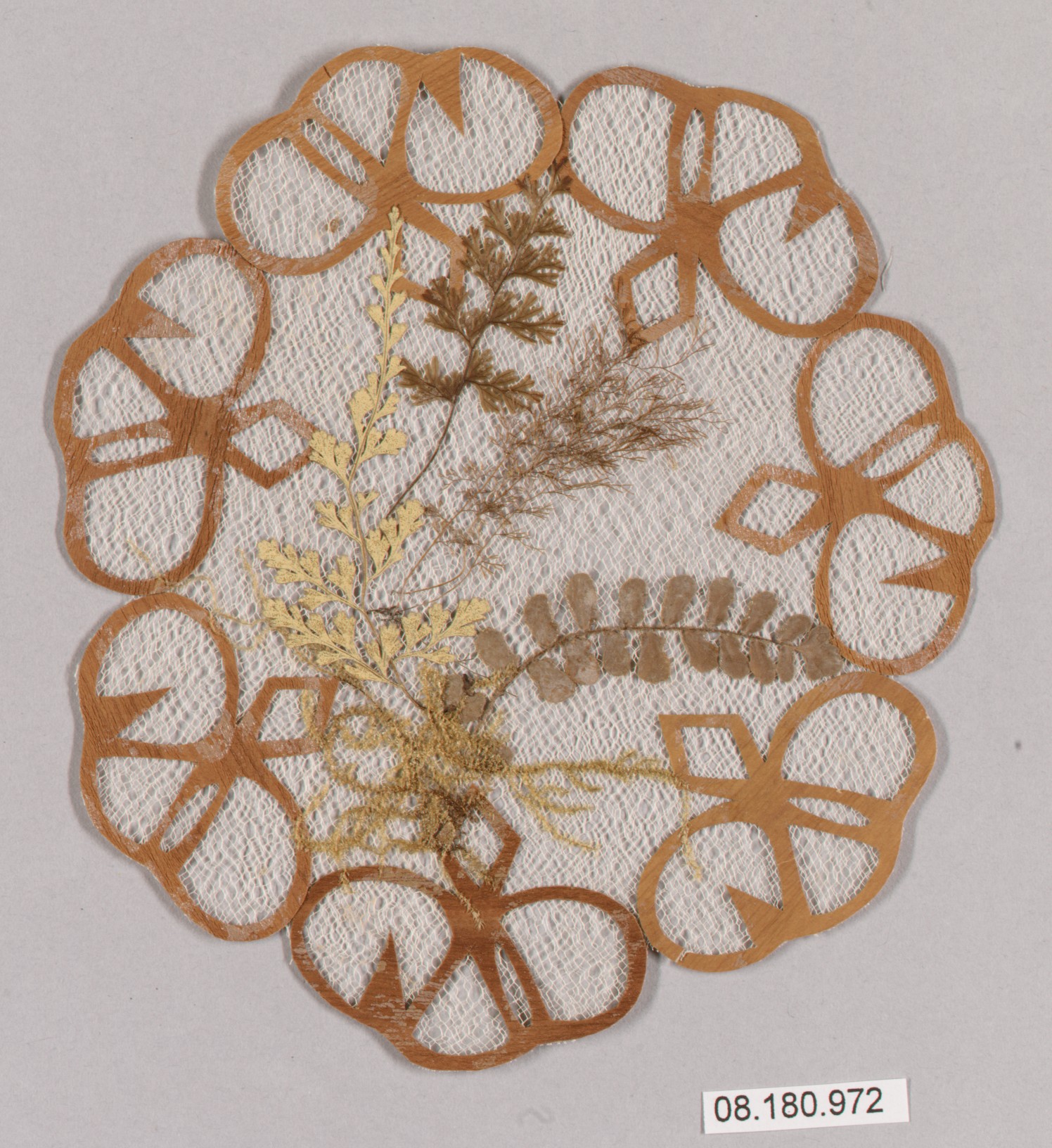
Deconstructing the Doily: A Couture Analysis of Katherine Fashion Lab’s Lace Bark Study
In the rarefied sphere of haute couture, where fabric becomes narrative and silhouette transforms into philosophy, Katherine Fashion Lab has long distinguished itself through a rigorous interrogation of heritage materials. The subject of its latest standalone study—the humble doily—might, at first glance, appear anachronistic. Yet, under the Lab’s exacting lens, this emblem of domestic craft is elevated into a profound meditation on global heritage, material alchemy, and the tensile strength of femininity. The collection’s singular focus on lace bark as the primary medium represents not merely a technical feat, but a conceptual coup. This analysis dissects the couture implications of the Lab’s doily exploration, examining its material provenance, structural reimagining, and the cultural semiotics that transform a tea-table staple into a statement of architectural elegance.
The Material Paradox: Lace Bark as Heritage Substrate
The choice of lace bark—a natural, non-woven textile harvested from the inner bark of certain trees, predominantly in regions of Uganda and the Congo—is deliberate and disruptive. Traditionally associated with indigenous ceremonial wear, lace bark possesses a unique duality: it is at once fragile and resilient, translucent yet structurally sound. Katherine Fashion Lab’s technical team has pioneered a proprietary treatment process that stabilizes the bark’s fibrous matrix without compromising its organic breathability. This innovation allows the material to mimic the intricate, openwork patterns of a crocheted doily while retaining its raw, earthbound texture.
The doily, as a global heritage artifact, is a paradox in itself. Originating in 17th-century Europe as a utilitarian cloth for protecting fine furniture, it evolved into a canvas for regional needlework traditions—from Irish crochet to Italian punto in aria. In this collection, the doily is not reproduced but reinterpreted through the lens of lace bark. The Lab’s artisans have hand-cut and bonded layers of bark to replicate the geometric symmetry and scalloped edges of classic doily motifs, such as the pineapple stitch and the fan pattern. The result is a material that speaks to multiple histories: the domestic labor of women, the ecological wisdom of indigenous cultures, and the modernist impulse toward abstraction.
Structural Alchemy: From Domestic Object to Architectural Silhouette
Where a traditional doily lies flat, Katherine Fashion Lab’s couture pieces are engineered to stand, drape, and defy gravity. The standalone study features a series of sculptural garments—a fitted bodice, a cascading cape, and a dramatic floor-length skirt—each constructed from interlocking lace bark panels that mimic the doily’s radial symmetry. The key innovation lies in the negative space. By strategically cutting away sections of the bark, the designers create an interplay of void and form that evokes the doily’s perforated surface while introducing a sense of airy monumentality.
The structural engineering is underpinned by a hidden armature of sustainable, lightweight boning—made from reclaimed bamboo—which allows the bark to maintain its shape without visible support. This technique transforms the doily from a passive, decorative object into an active, architectural element. The bodice, for instance, features a spiraling pattern of cutouts that trace the wearer’s ribcage, creating a visual rhythm that echoes the doily’s concentric rings. The skirt, meanwhile, is constructed from overlapping, scalloped tiers that flare outward, referencing the doily’s fluted edges while asserting a powerful, bell-like silhouette. This is not nostalgia; it is a reclamation of craft as a form of structural intelligence.
Cultural Semiotics: The Doily as a Feminist Archive
To analyze the doily solely as a decorative motif is to miss its deeper cultural resonance. Historically, the doily has been a site of both gendered labor and quiet rebellion. In Victorian parlors, women’s intricate needlework was often dismissed as mere ornament, yet it required mathematical precision, patience, and a mastery of technique. Katherine Fashion Lab’s study reclaims this labor as a form of tactile intelligence. By rendering the doily in lace bark—a material that simultaneously evokes the domestic and the primal—the Lab forces a confrontation with the hierarchies of craft. Why is bark cloth, rooted in indigenous ritual, considered “primitive” while lace, born of European industrialization, is deemed “refined”? The collection dissolves this binary.
The standalone study also engages with the doily’s role as a global connective tissue. From Mexican deshilado to Japanese tenerife lace, the doily recurs across cultures as a vessel for communal storytelling. Katherine Fashion Lab’s pieces honor this multiplicity by incorporating subtle variations in pattern density and edge finishing that reference specific regional traditions—a scalloped border reminiscent of Portuguese bilros, a central rosette echoing Moroccan makouk. This is not appropriation but curatorial homage, a deliberate mapping of the doily’s diasporic journey.
Technical Mastery: The Art of the Standalone Study
In the context of haute couture, a “standalone study” is a rare and rigorous exercise. It demands that a single concept be explored with obsessive depth, eschewing commercial considerations for pure aesthetic research. Katherine Fashion Lab’s study of the doily in lace bark exemplifies this discipline. The collection comprises only five looks, each a variation on a theme: the doily as armor, as veil, as second skin. The craftsmanship is breathtaking. Each lace bark panel is hand-dyed using natural pigments—indigo for depth, madder root for warmth—to create a tonal palette that shifts from ivory to charcoal, echoing the patina of aged heirlooms.
The seams are not hidden but celebrated, stitched with a contrasting thread of mulberry silk that traces the doily’s original crochet lines. This visible construction is a deliberate nod to the couture tradition of showing the hand of the maker. In an era of fast fashion, where seams are concealed and labor is erased, Katherine Fashion Lab insists on transparency—both literal and metaphorical. The lace bark’s translucency allows the wearer’s skin to become part of the garment’s narrative, a living canvas that animates the doily’s dormant geometry.
Conclusion: A New Lexicon for Heritage
Katherine Fashion Lab’s doily study is not an exercise in revivalism. It is a radical recontextualization of a devalued form. By marrying the doily’s intricate heritage with the ecological and tactile properties of lace bark, the Lab creates a new lexicon for couture—one that honors global craft traditions while pushing the boundaries of material science and structural design. The collection asks us to reconsider what we dismiss as “domestic” or “decorative,” revealing the profound intelligence embedded in every loop, every knot, every empty space. In the hands of Katherine Fashion Lab, the doily is no longer a relic of the past; it is a blueprint for the future of sustainable, culturally literate luxury. This is couture as archaeology, as alchemy, as art. And it is, above all, a testament to the enduring power of the overlooked.