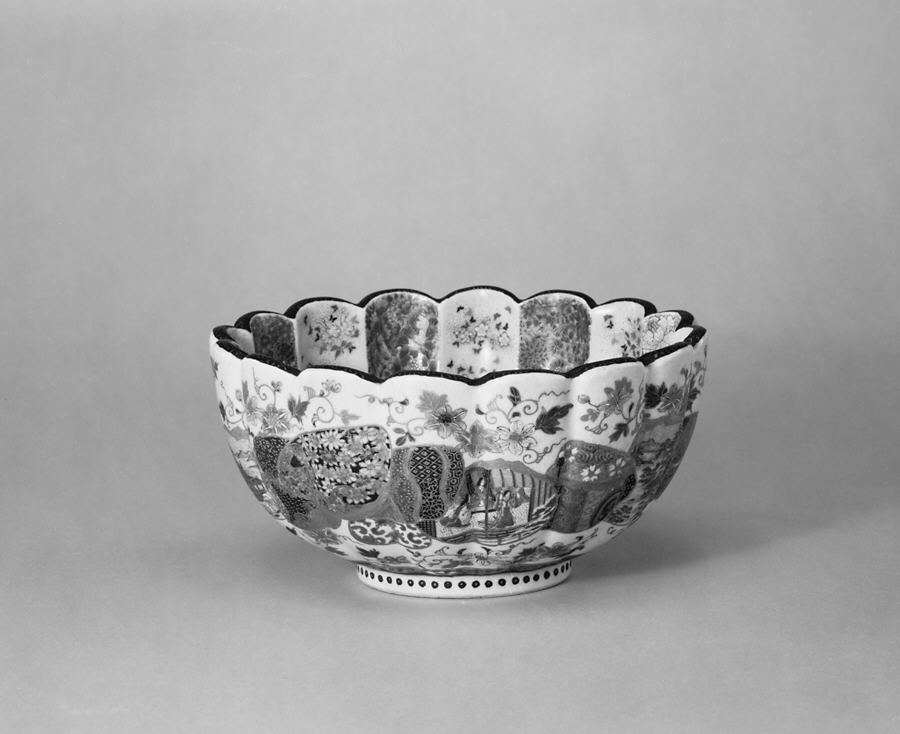
Heritage Analysis: Small Scalloped-Shape Bowl with Vertical Floral Bands and Chinese Children Motif
Introduction: The Object as a Cultural Artifact
This small scalloped-shape bowl, a specimen of late-19th-century Japanese Satsuma ware, embodies a convergence of symbolic power, historical adornment, and spiritual meaning that transcends its utilitarian form. Crafted from earthenware and embellished with polychrome and gold overglaze enamels, the object features vertical floral bands encircling its exterior and a depiction of Chinese children on the interior base. As a strategic standalone research piece for Katherine Fashion Lab, this analysis decodes the bowl’s layered significance and translates its heritage into actionable insights for a 2026 high-end luxury strategy. The bowl is not merely a decorative vessel; it is a narrative of cross-cultural exchange, spiritual aspiration, and the commodification of tradition—a lexicon that luxury brands must master to resonate with discerning, heritage-conscious consumers.
Symbolic Power: The Language of Motifs and Materials
The bowl’s iconography operates on multiple symbolic registers. The vertical floral bands—likely chrysanthemums, peonies, or cherry blossoms—are not arbitrary decorative elements. In Japanese culture, the chrysanthemum (kiku) symbolizes the imperial family, longevity, and rejuvenation, while the peony represents wealth and honor. The cherry blossom (sakura) evokes the ephemeral beauty of life, aligning with Buddhist impermanence (mujo). The vertical orientation of these bands suggests a structural ordering of nature, a microcosm of cosmic harmony. The gold overglaze (kinrande) amplifies this symbolism: gold is associated with divine light, purity, and the sun goddess Amaterasu, conferring a sacred aura upon the object. For Katherine Fashion Lab, this symbolic density offers a blueprint for brand storytelling. In 2026, high-end luxury consumers seek products that are not merely status markers but talismans of meaning. A strategy that embeds such layered symbolism—using floral motifs to signify renewal, wealth, or transience—can differentiate a collection in a saturated market. The bowl’s gold accents also suggest a path for material innovation: incorporating precious metals or gilding into ready-to-wear or accessories as a signifier of exclusivity and spiritual protection.
Historical Adornment: Satsuma Ware as a Cross-Cultural Commodity
The bowl’s provenance as Satsuma ware situates it within a complex history of trade and adaptation. Originating in the Satsuma domain (modern-day Kagoshima Prefecture), this earthenware was initially produced for the domestic tea ceremony and Buddhist ritual use. However, following Japan’s opening to the West in the mid-19th century, Satsuma ware was aggressively marketed to European and American collectors as an exotic luxury. The depiction of Chinese children—a motif borrowed from Chinese genre painting—reflects a deliberate syncretism that appealed to Western Orientalist fantasies. The children, often shown playing in gardens, symbolize innocence, prosperity, and the Confucian ideal of familial harmony. This historical adornment strategy—adapting local craftsmanship to global tastes—parallels the challenges facing luxury brands today. For Katherine Fashion Lab, the lesson is twofold. First, authenticity must be balanced with accessibility: the bowl’s Japanese makers retained traditional techniques (e.g., crackled glaze, hand-painted enamels) while incorporating foreign motifs. A 2026 luxury strategy should similarly honor craft heritage while embracing cross-cultural dialogue. Second, the bowl’s commercial success depended on its narrative packaging—as a “treasure from the East.” Brands must control their own narratives, positioning heritage as a source of authority rather than nostalgia. For instance, a capsule collection inspired by Satsuma ware could use earthenware textures, scalloped edges, and gold-thread embroidery to evoke the object’s historical adornment, while marketing it as a “global luxury artifact.”
Spiritual Meaning: The Interior as a Sacred Space
The placement of Chinese children on the bottom of the interior is a deliberate spiritual and functional choice. In Japanese aesthetics, the interior of a vessel is often treated as a hidden, intimate space—a yūgen (mysterious depth) that rewards the attentive viewer. The children, visible only when the bowl is emptied or held close, create a moment of revelation. This aligns with Shinto and Buddhist concepts of hidden divinity: the sacred is not overt but discovered through ritual engagement. The children also evoke kodomo no tame ni (for the sake of children), a phrase tied to ancestral veneration and the hope that future generations will inherit prosperity. Spiritually, the bowl serves as a protective talisman, ensuring abundance within the household. For Katherine Fashion Lab, this interior-exterior dynamic offers a powerful metaphor for luxury branding. In 2026, exclusivity is no longer about overt logos but about hidden details that reward the connoisseur—a secret lining, an embedded gem, a pattern revealed only upon close inspection. A luxury garment might feature a scalloped hem referencing the bowl’s rim, with an internal embroidered motif of children or floral bands, visible only to the wearer. This aligns with the rising trend of “quiet luxury,” where value is intrinsic, not broadcast. The spiritual dimension also invites a strategy of ritualization: brands can create unboxing experiences or care rituals that mimic the bowl’s function as a vessel for daily contemplation, fostering emotional attachment.
2026 High-End Luxury Strategy: Translating Heritage into Contemporary Relevance
To operationalize these insights, Katherine Fashion Lab must adopt a three-pillar strategy informed by the Satsuma bowl’s heritage. First, Symbolic Materiality: The bowl’s earthenware and gold overglaze suggest a tactile, multi-sensorial approach. For 2026, luxury products should prioritize material narratives—using raw clays, recycled metals, or hand-applied finishes that tell a story of origin. A handbag might feature a scalloped silhouette in matte ceramic-inspired leather, with gold-plated hardware echoing the overglaze. Second, Narrative Layering: The bowl’s floral bands and children motifs operate on multiple cultural registers. A luxury collection should embed similar layers—perhaps a pattern of chrysanthemums (imperial power) combined with childlike silhouettes (innocence) to appeal to both historical purists and modern minimalists. Marketing materials should deconstruct these symbols, offering consumers a “heritage codex” that deepens their engagement. Third, Ritualized Exclusivity: The bowl’s interior revelation mirrors the luxury consumer’s desire for discovery. Brands can create limited-edition “vessel” pieces—such as jewelry boxes or clutches—with hidden compartments or motifs that require a ritual of opening. This aligns with the 2026 trend toward experiential luxury, where ownership is tied to a narrative of personal revelation.
Conclusion: The Bowl as a Strategic Compass
This small scalloped-shape bowl, with its vertical floral bands and Chinese children, is a microcosm of strategic luxury. Its symbolic power derives from a fusion of imperial, Buddhist, and folkloric meanings; its historical adornment reflects a mastery of cross-cultural adaptation; and its spiritual meaning hinges on the intimate, hidden detail. For Katherine Fashion Lab, the bowl is not a curio but a compass for 2026. By embracing symbolic materiality, narrative layering, and ritualized exclusivity, the brand can transform heritage into a contemporary luxury language. The consumer of 2026 will not simply buy a product; they will acquire a vessel of meaning—one that, like this Satsuma bowl, rewards those who take the time to look inside.