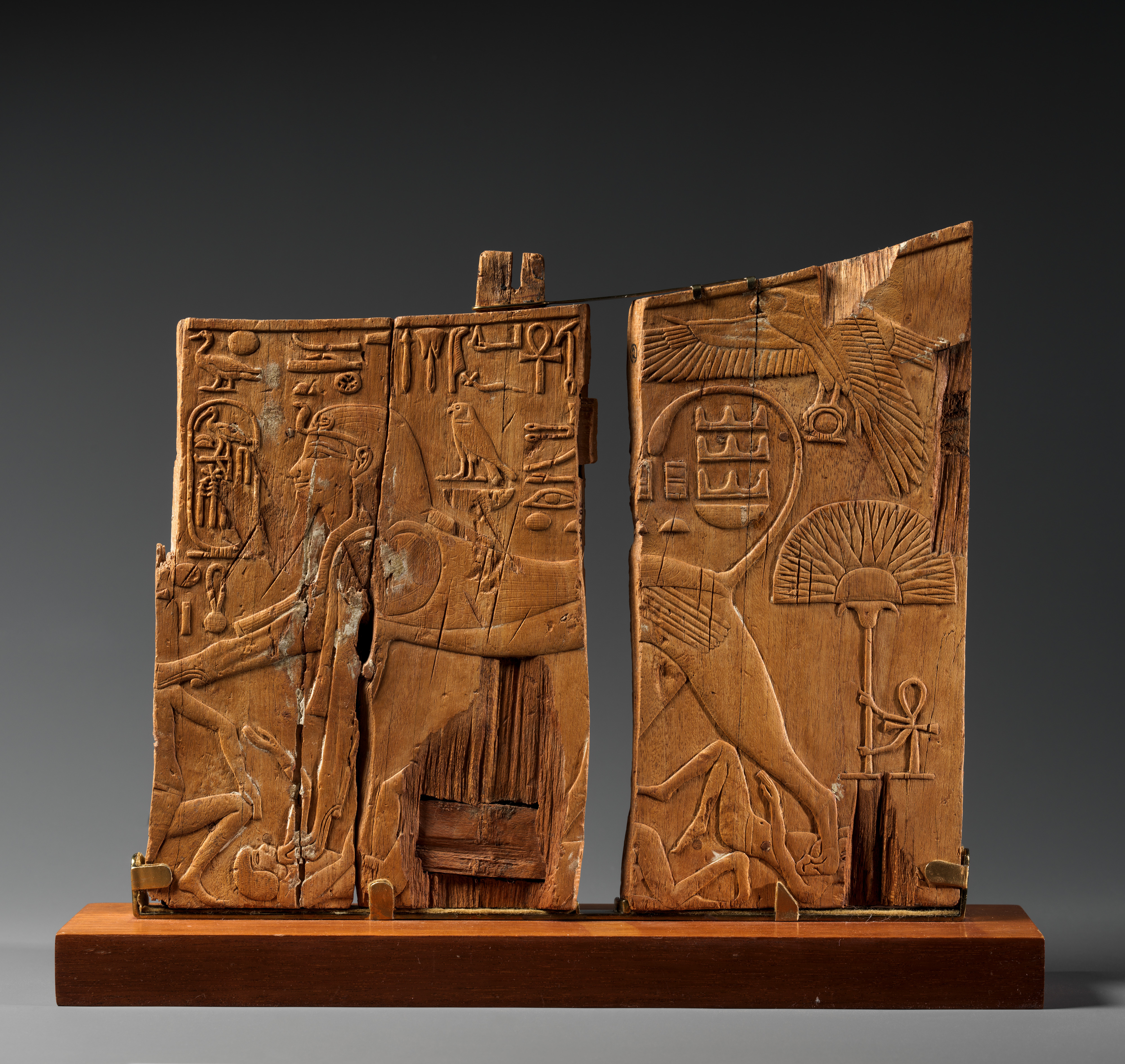
Heritage Analysis: Arm Panel From a Ceremonial Chair of Thutmose IV
Executive Summary
This research paper presents a strategic heritage analysis of the Arm Panel From a Ceremonial Chair of Thutmose IV, a carved wooden artifact attributed to the 18th Dynasty of Ancient Egypt (circa 1400–1390 BCE). Crafted from Ficus sycomorus—a wood species revered for its durability and symbolic association with the goddess Hathor—this object embodies the intersection of symbolic power, historical adornment, and spiritual meaning. For Katherine Fashion Lab, this analysis serves as a foundational study for a 2026 high-end luxury strategy, translating ancient regal aesthetics into contemporary brand narratives that resonate with discerning, culturally literate consumers.
Symbolic Power: The Chair as a Throne of Divine Authority
The arm panel is not merely a functional support; it is a microcosm of pharaonic kingship. In Ancient Egyptian cosmology, the throne was the axis mundi—the point where earthly rule met celestial order. Thutmose IV, known for his restoration of the Sphinx and his Dream Stela, positioned himself as both a military victor and a divine intermediary. The arm panel’s carved motifs—likely featuring the sema-tawy (unification of Upper and Lower Egypt), protective uraei, or the king’s cartouche—communicate absolute sovereignty.
For luxury strategy, this translates into the concept of “throne-like authority” in product design. Katherine Fashion Lab can adopt motifs that evoke verticality, symmetry, and containment—shapes that suggest power without aggression. The arm panel’s original function as a barrier between the ruler and the ruled becomes a metaphor for exclusive access and controlled intimacy in high-end retail experiences. In 2026, brands that embody quiet dominance—authority expressed through refinement rather than overt display—will command premium positioning.
Historical Adornment: Craftsmanship as Status Marker
The choice of Ficus sycomorus is historically significant. While not as rare as ebony or cedar, sycomore wood was sacred to Hathor, the goddess of joy, motherhood, and foreign lands. Its use in a ceremonial chair suggests a deliberate theological statement: the king’s rule was nurtured by divine feminine forces. The panel’s surface, originally gilded or inlaid with faience, would have shimmered in temple light—a precursor to modern luxury finishes.
From a heritage perspective, the arm panel exemplifies adornment through material hierarchy. Every carved line, every pigment residue (likely red ochre, malachite green, or Egyptian blue) was a coded message of wealth, access, and ritual purity. For Katherine Fashion Lab, this suggests a 2026 strategy of “material storytelling”—where the choice of wood, metal, or textile is not arbitrary but laden with historical and emotional weight. Collections should highlight visible craftsmanship: hand-carving, patination, and joinery that reveal the maker’s hand. In an era of mass production, such tactile authenticity becomes the ultimate luxury marker.
Spiritual Meaning: The Threshold Between Worlds
The ceremonial chair was not merely for sitting; it was a ritual object used in coronations, sed-festivals (jubilees), and funerary rites. The arm panel functioned as a liminal boundary—separating the king’s sacred body from the profane world. Its carvings often included protective deities like Bes or Taweret, warding off chaos (Isfet). The act of gripping the armrest was a physical connection to the divine, grounding the ruler in Ma’at (cosmic order).
For contemporary luxury, this spiritual dimension offers a narrative of protection and transcendence. The 2026 consumer increasingly seeks objects that carry meaning beyond aesthetics—pieces that serve as talismans or anchors in a fragmented world. Katherine Fashion Lab can integrate symbolic iconography (e.g., stylized ankhs, scarabs, or lotus motifs) into hardware, linings, or packaging. The arm panel’s function as a threshold inspires the concept of “transitional luxury”—designs that ease the wearer from one state (daily life) to another (ritual or celebration). This aligns with the growing trend of “mindful materialism” in high-end markets.
2026 High-End Luxury Strategy: Translating Ancient Regality
Based on this analysis, Katherine Fashion Lab’s 2026 strategy should center on three pillars: Heritage Code, Material Integrity, and Experiential Authority.
Heritage Code: The Thutmose IV Lexicon
Develop a design vocabulary derived from the arm panel’s geometry: the curve of the armrest, the depth of the relief carving, the negative space between figures. This lexicon can be applied to jewelry clasps, bag handles, shoe heels, and eyewear temples. The goal is not reproduction but evocation—a modern consumer should feel the weight of history without literal replication. For example, a handbag’s closure could mimic the sema-tawy knot, symbolizing unity and balance.
Material Integrity: Sycomore and Its Echoes
Source sustainable, heritage-grade materials that echo Ficus sycomorus. Consider reclaimed sycomore fig wood from Egyptian restoration projects (with ethical certification), or partner with artisans in Luxor who preserve traditional carving techniques. For non-wood items (silk, leather, metal), use finishes that mimic the panel’s original gilding and inlay—matte gold, oxidized silver, and deep indigo. Each piece should come with a “material provenance card” detailing its symbolic and historical lineage, appealing to collectors who value transparent luxury.
Experiential Authority: The Ceremonial Chair as Retail Theater
Translate the arm panel’s liminal function into retail environments. Design “threshold spaces” in flagship stores where clients pass through a carved wooden archway (inspired by the panel’s relief) before entering the main salon. Seating areas should feature throne-like chairs with arm panels referencing Thutmose IV, inviting clients to “take the seat of power” during fittings. This creates a ritualized purchase experience—each transaction becomes a coronation of personal style. In 2026, experiential luxury will be defined by narrative immersion, not just product display.
Conclusion: The Arm Panel as a Blueprint for Timeless Luxury
The Arm Panel From a Ceremonial Chair of Thutmose IV is far more than an archaeological fragment. It is a masterclass in symbolic communication, material discernment, and spiritual resonance. For Katherine Fashion Lab, this artifact offers a strategic blueprint for creating luxury that endures—not through trend cycles, but through deep cultural anchoring. By channeling the authority, adornment, and transcendence of this ancient throne, the brand can position itself as a steward of heritage in the 2026 high-end market, appealing to clients who seek not just objects, but legacies.