The Cravat: A Study in Global Heritage and Couture Lace
The cravat, a garment of profound historical and stylistic significance, has long been a symbol of refined masculinity and aristocratic elegance. In the hands of Katherine Fashion Lab, this accessory transcends its traditional role, becoming a canvas for technical mastery and cultural narrative. This standalone study examines the cravat through the lens of global heritage, focusing on two specific lace techniques—bobbin lace and Milanese lace—that redefine its materiality and conceptual depth. By deconstructing the cravat’s origins, construction, and contemporary relevance, we uncover how Katherine Fashion Lab elevates this piece from mere neckwear to a wearable artifact of artisanal excellence.
Historical Context: The Cravat as a Global Artifact
The cravat’s lineage is a tapestry of cross-cultural exchange. Originating in 17th-century Croatia, where mercenaries wore knotted scarves as part of their uniform, the cravat was adopted by French aristocracy under Louis XIV, evolving into a symbol of status and sartorial sophistication. Its journey did not end in Europe; the cravat was reinterpreted across Asia, Africa, and the Americas, absorbing local textile traditions and aesthetic sensibilities. In this study, Katherine Fashion Lab honors this global heritage by selecting lace—a medium that itself embodies a transnational history. Lace-making, from the needlepoint of Venice to the bobbin techniques of Flanders, represents a convergence of skill, trade, and cultural identity. The cravat becomes a microcosm of this narrative, a thread connecting centuries of craftsmanship.
Material Analysis: Bobbin Lace and Milanese Lace
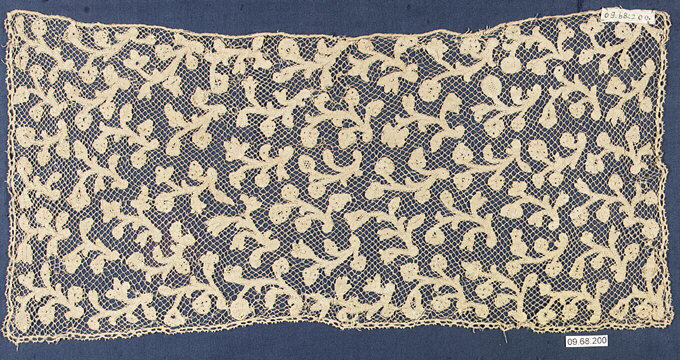
The choice of bobbin lace and Milanese lace is deliberate, each offering distinct structural and aesthetic properties that challenge conventional perceptions of the cravat. Bobbin lace, also known as pillow lace, is created by braiding and twisting threads wound on bobbins, producing intricate, openwork patterns. Its hallmark is a delicate interplay of positive and negative space, where the threads form geometric or floral motifs suspended in a lattice of air. For the cravat, this technique lends a sense of ethereal lightness, transforming the garment into a translucent veil that drapes with an almost architectural precision. The labor-intensive process—often requiring hours per square inch—imbues the cravat with a rarity that aligns with haute couture’s ethos of exclusivity.
Milanese lace, in contrast, originates from the Lombardy region of Italy, distinguished by its use of a continuous thread looped into a fine, mesh-like foundation. Unlike bobbin lace’s openwork, Milanese lace is characterized by its denser, more uniform texture, often featuring stylized floral or arabesque patterns. This technique offers a tactile contrast: where bobbin lace is airy, Milanese lace provides structural integrity and a subtle sheen, making it ideal for the cravat’s need to hold its shape while remaining pliable. Together, these laces create a dialogue between fragility and resilience, transparency and opacity. Katherine Fashion Lab’s artisans juxtapose these materials, weaving bobbin lace into the cravat’s central panel and Milanese lace along its edges, creating a visual rhythm that echoes the cravat’s historical duality as both a practical accessory and a decorative flourish.
Design Philosophy: The Standalone Study
This analysis positions the cravat as a standalone study—a focused examination of its form, function, and symbolism, divorced from the context of a full ensemble. In doing so, Katherine Fashion Lab invites a reconsideration of the cravat as an autonomous object of art. The design eschews extraneous embellishments, allowing the lace to speak for itself. The cravat is cut in a classic, elongated shape, approximately 120 centimeters in length, with tapered ends that facilitate multiple tying styles—from the simple four-in-hand to the more elaborate Ascot knot. This versatility underscores the cravat’s adaptability, a nod to its global journey across cultures and eras.
The color palette is intentionally restrained: a single hue of ivory ecru, derived from natural silk threads, chosen to highlight the lace’s textural nuances. This monochrome approach aligns with the study’s focus on materiality, stripping away color’s potential distractions to emphasize the interplay of light and shadow within the lace. The result is a cravat that functions as a sculptural object, its patterns shifting with movement and angle, inviting the wearer and observer into a contemplative dialogue with craft.
Technical Mastery: Construction and Artisanal Process
The creation of this cravat demands a convergence of traditional lace-making techniques and modern couture precision. The bobbin lace component is handcrafted using a pillow and pins, with threads of fine silk twisted into patterns reminiscent of 18th-century Flemish designs. Each bobbin is manipulated with a dexterity that requires years of training, resulting in a lattice of hexagons and floral medallions that vary in density along the cravat’s length. The Milanese lace, meanwhile, is produced on a specialized machine that replicates the hand-looping process, but with a consistency that ensures the cravat’s edges remain crisp and even. Katherine Fashion Lab’s artisans then hand-stitch the two laces together using a point de raccord—a nearly invisible seam that allows the materials to merge seamlessly.
This hybrid approach—combining handcraft and mechanical precision—reflects the lab’s commitment to preserving heritage while embracing innovation. The cravat is lined with a whisper-thin layer of silk organza, providing stability without compromising the lace’s transparency. The final piece weighs less than 30 grams, a testament to the lightness achieved through meticulous material selection. Every stitch, every thread, is a record of the maker’s intent, turning the cravat into a tactile archive of global lace traditions.
Cultural and Symbolic Resonance
Beyond its technical achievements, this cravat carries profound symbolic weight. Bobbin lace has historically been associated with European courts, where it signified wealth and leisure. Milanese lace, conversely, was a staple of Italian ecclesiastical vestments, embodying spiritual reverence. By uniting these traditions, Katherine Fashion Lab creates a cravat that speaks to cultural synthesis—a garment that honors its European roots while acknowledging the global flows of trade and migration that shaped lace-making. The ivory hue further evokes notions of purity and timelessness, aligning with the cravat’s historical role as a marker of civility and refinement.
In a contemporary context, this cravat challenges fast fashion’s disposability. It demands a slow, deliberate engagement, both in its creation and its wearing. The wearer is not merely adorning themselves with an accessory; they are participating in a lineage of craftsmanship that spans continents and centuries. This is a garment that reclaims the cravat from the margins of menswear, positioning it as a central piece in the discourse on heritage and sustainability. Katherine Fashion Lab’s standalone study thus becomes a manifesto for the value of artisanal knowledge in an age of mass production.
Conclusion: The Cravat as Couture Legacy
In this analysis, the cravat emerges as a nexus of global heritage, material innovation, and couture philosophy. Through the deliberate selection of bobbin lace and Milanese lace, Katherine Fashion Lab transforms a historical accessory into a living artifact—one that respects tradition while pushing boundaries. This standalone study not only dissects the cravat’s technical and cultural dimensions but also affirms its relevance as a subject of serious sartorial inquiry. For the connoisseur, this cravat is an investment in artistry; for the scholar, a case study in the enduring power of textile heritage. Katherine Fashion Lab has, with this piece, woven a narrative that is both personal and universal, proving that the cravat—in its most refined form—remains a timeless emblem of elegance and identity.