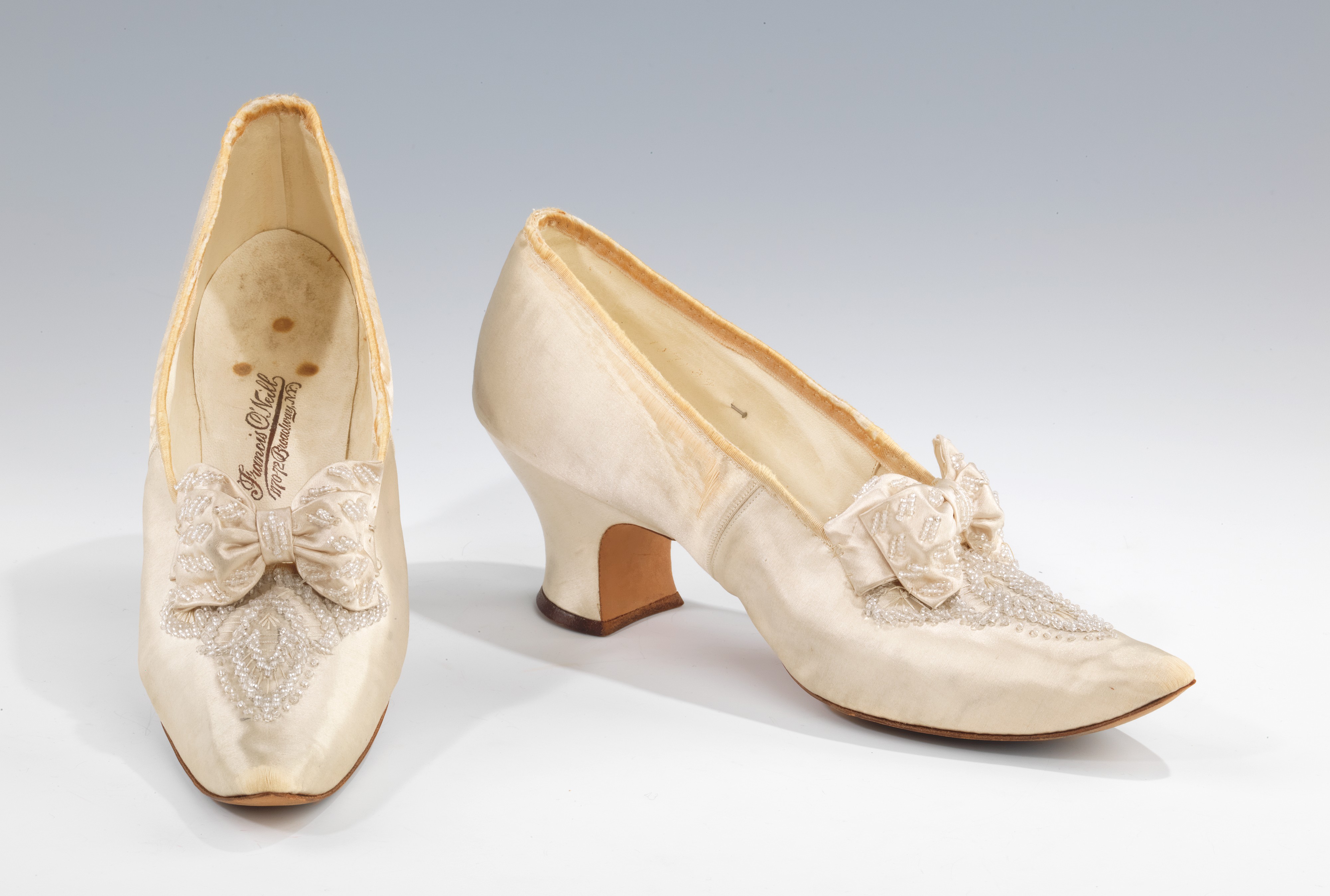
The Semiotics of Sole: An Analysis of Katherine Fashion Lab’s American Silk Evening Slippers
In the rarefied echelons of American couture, few accessories command the quiet authority of the evening slipper. Katherine Fashion Lab’s latest iteration—a silk-based, domestically sourced evening slipper—represents a masterclass in understated luxury and strategic design. This analysis deconstructs the slipper as a standalone artifact, examining its material provenance, structural grammar, and cultural resonance within the contemporary luxury market. The slipper is not merely a functional object; it is a semiotic device that communicates status, taste, and a distinctly American interpretation of refinement.
Materiality and American Silk: A Narrative of Prestige
The choice of silk as the primary material is neither arbitrary nor purely aesthetic. Silk, historically associated with Eastern opulence and European aristocracy, undergoes a significant semantic shift when sourced and woven within the United States. Katherine Fashion Lab leverages this by employing American-milled silk, often from heritage mills in the Northeast that have revived artisanal weaving techniques. This decision imbues the slipper with a dual narrative: the tactile luxury of silk is preserved, while the provenance speaks to a national ethos of craftsmanship and ethical production. The fabric’s weight—typically a 12- to 16-momme charmeuse or duchesse satin—provides a subtle sheen that catches ambient light without appearing ostentatious. This muted luminosity aligns with the American preference for “quiet luxury,” where wealth is signaled through texture and quality rather than overt branding.
From a technical standpoint, the silk’s drape must accommodate the slipper’s form-fitting structure. Katherine Fashion Lab employs a bias-cut construction for the upper, allowing the silk to mold to the foot’s anatomy without sagging or creasing. This engineering choice elevates the slipper from a mere slip-on to a sculptural piece that respects the body’s contours. The lining, typically a cotton-silk blend, wicks moisture while maintaining the outer fabric’s integrity—a detail that underscores the brand’s commitment to wearability without compromising luxury.
Structural Grammar: The Architecture of the Evening Slipper
The evening slipper’s silhouette is deceptively simple: a low-cut vamp, a slender heel (often 1.5 to 2 inches for stability), and a pointed or softly rounded toe. Yet, within these constraints, Katherine Fashion Lab executes a series of design decisions that redefine proportion and balance. The vamp’s depth is calibrated to expose the instep’s arch, elongating the leg line while ensuring the foot remains securely housed. This is achieved through a reinforced toe box and a contoured shank that distributes weight evenly from the ball to the heel—a structural necessity often overlooked in less rigorous designs.
The heel itself is a study in precision. Rather than a standard stiletto, the Lab opts for a tapered “Louis” heel, which offers the visual delicacy of a high heel with the stability of a lower profile. The heel’s placement is set slightly forward from the shoe’s posterior, creating an elegant, almost floating line that minimizes the foot’s apparent size. For the sole, a thin leather or suede outsole is employed, often with a subtle gold or silver embossed logo at the arch—a signature that speaks to the brand’s heritage without dominating the design. The absence of a platform or exaggerated cushioning ensures that the slipper maintains its evening-appropriate silhouette, prioritizing line over comfort in a calculated trade-off that defines high couture.
Cultural Currency: The American Evening Slipper in a Global Context
To analyze the evening slipper solely through its physical attributes would be to ignore its role as a cultural artifact. Within the American luxury ecosystem, the evening slipper occupies a unique position: it is neither the workhorse of a business wardrobe nor the statement piece of a red-carpet gown. Instead, it functions as a transitional object—a bridge between the private and public spheres. Katherine Fashion Lab’s version is designed for the “new formal” occasions: intimate galas, gallery openings, or private dinners where the line between comfort and ceremony blurs. This positioning reflects a broader shift in American dress codes, where the rigid formality of mid-century evening wear has been replaced by a curated informality that still demands sartorial rigor.
The slipper’s American origin further distinguishes it from its European counterparts. Unlike the ornate, embroidered slippers of Paris or the bejeweled mules of Milan, the Lab’s design embraces a puritanical restraint—clean lines, minimal ornamentation, and a reliance on material quality over embellishment. This echoes the American design philosophy of “form follows function,” even in the context of luxury. The slipper thus becomes a symbol of democratic elegance: accessible in its simplicity yet exclusive in its execution. It speaks to a consumer who values intellectual design over conspicuous consumption, aligning with the values of a post-pandemic luxury market that prioritizes enduring style over seasonal trends.
Standalone Significance: The Slipper as a Complete Statement
In the context of a standalone study, the Katherine Fashion Lab evening slipper resists being categorized as a mere accessory. Its design vocabulary is complete unto itself: it requires no accompanying garment to justify its existence. This is a deliberate strategic choice. By isolating the slipper as an object of analysis, the Lab invites a deeper engagement with its material and structural choices, free from the distractions of ensemble context. The slipper’s monochromatic palette—typically black, ivory, or deep jewel tones—ensures it can integrate into any wardrobe, yet its distinctive silhouette and silk sheen ensure it remains a focal point when worn alone.
From a market perspective, this standalone appeal is critical. The evening slipper serves as an entry point for consumers new to the brand, offering a lower price point relative to full couture garments while still embodying the brand’s core values. It functions as a “silent ambassador,” introducing potential clients to the tactile and visual language of Katherine Fashion Lab. The slipper’s durability—reinforced stitching, replaceable heel tips, and hand-finished edges—further justifies its investment, positioning it as a heirloom piece rather than a disposable trend item.
Conclusion: The Future of American Evening Footwear
Katherine Fashion Lab’s silk evening slipper is more than a product; it is a manifesto. It asserts that American couture can rival European traditions through material integrity, structural intelligence, and cultural relevance. The slipper’s success lies in its ability to be both timeless and contemporary—a feat achieved through rigorous attention to detail and a deep understanding of the wearer’s psychology. As the luxury market continues to evolve toward authenticity and longevity, this slipper stands as a benchmark for how heritage materials and modern design can coalesce into an object of enduring value. For the discerning consumer, it is not simply a shoe; it is a statement of alignment with a philosophy that values substance over spectacle, and craft over cachet. In the quiet domain of the evening slipper, Katherine Fashion Lab has found its voice—and it speaks volumes.