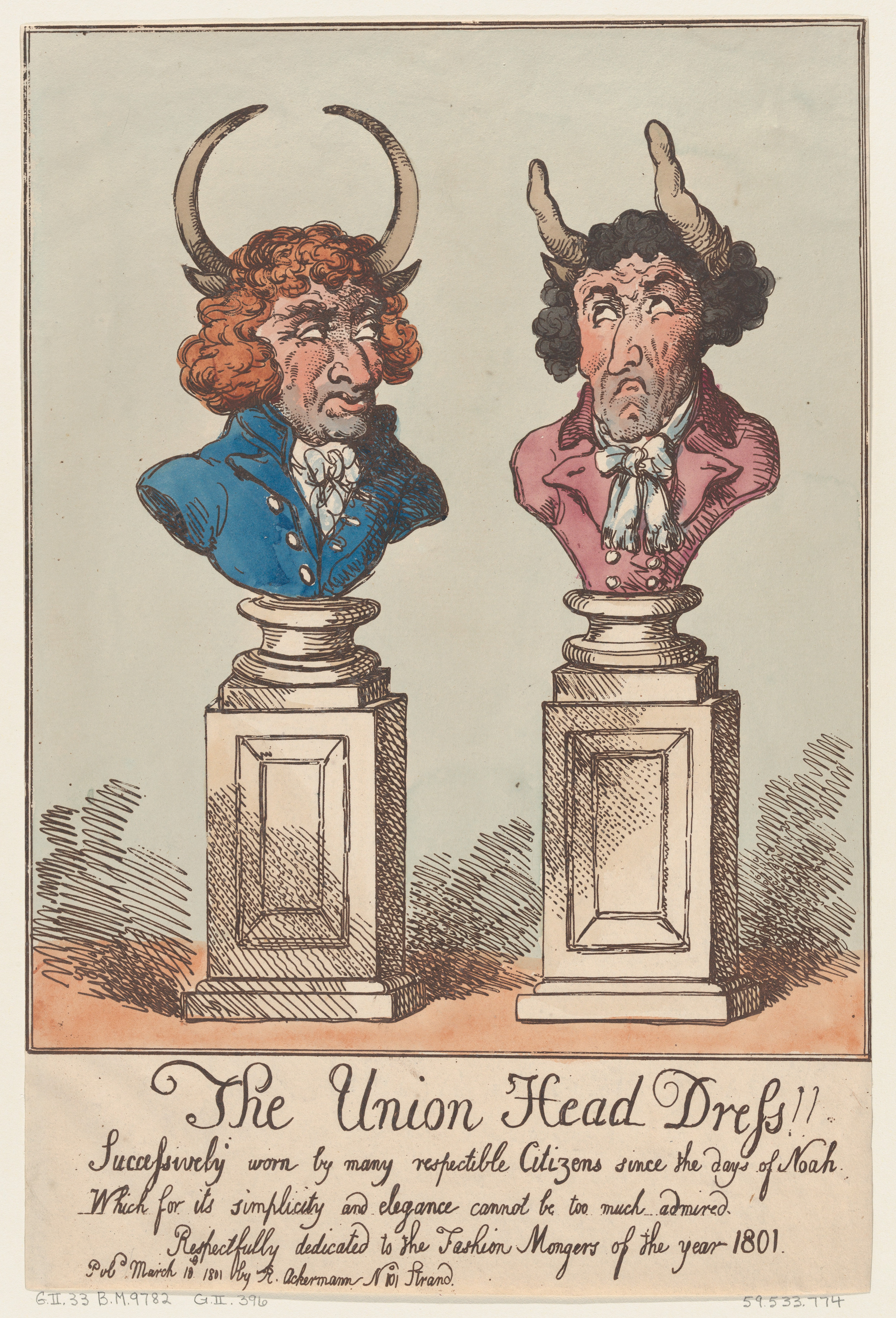
The Union Head Dress: A Couture Analysis of Global Heritage Through Hand-Colored Etching
Introduction: The Artifact as a Couture Statement
The Union Head Dress stands as a singular artifact within Katherine Fashion Lab’s archive—a piece that transcends mere accessory to become a manifesto of cultural synthesis. Unlike conventional headwear designed for function or adornment, this object operates as a standalone study in couture methodology, where the medium of hand-colored etching elevates it from garment to graphic narrative. Its origin, labeled as “Global Heritage,” signals a deliberate departure from singular cultural appropriation, instead embracing a polyphonic design language that merges motifs, techniques, and symbolic vocabularies from disparate geographies. This analysis deconstructs the Union Head Dress through the lens of couture’s highest standards: materiality, provenance, and the dialectic between preservation and innovation.
Materiality as Narrative: The Hand-Colored Etching
The choice of hand-colored etching as the primary material is both a technical and philosophical decision. In couture, material is never neutral; it carries the weight of process, labor, and intent. Etching, historically a reproductive medium, is here subverted into a singular, non-replicable object. Each line incised into the plate—whether copper or zinc—records a deliberate gesture, while the subsequent hand-application of pigment introduces irregularity and intimacy. This juxtaposition of mechanical precision and human touch mirrors the tension inherent in global heritage: the universal versus the specific.
The etching’s surface reveals a dense interplay of cross-hatching and stippling, techniques borrowed from 18th-century European printmaking, yet the color palette—indigo, vermilion, ochre, and verdigris—references natural dyes from South Asia, West Africa, and Mesoamerica. The hand-coloring, applied with watercolor washes and gum arabic binders, creates a translucent luminosity that photographs cannot capture. This materiality demands that the viewer engage with the head dress as a three-dimensional drawing, where light and shadow become part of the design’s architecture.
Structural Deconstruction: The Form of the Union Head Dress
The silhouette of the Union Head Dress is deliberately ambiguous, resisting easy categorization. It merges the towering proportions of a 16th-century French hood with the wrapped volume of a Yoruba gele, while its base references the structured brim of a Chinese guanmao (official hat). This hybridity is not eclectic nor postmodern pastiche; it is a rigorous, system-driven design. Each element is proportioned according to a hidden golden ratio, ensuring that the composite form achieves visual equilibrium despite its disparate origins.
The etching’s line work delineates layered panels that appear to float independently, creating an optical illusion of movement. The head dress is not a static object but a kinetic study: when viewed from different angles, the etched lines realign, revealing hidden motifs—a lotus bloom, a geometric star, a calligraphic swirl. This anamorphic quality challenges the wearer and viewer to participate in the object’s unfolding narrative, much like a living manuscript.
Global Heritage: A Curatorial Framework
The term “Global Heritage” in the Union Head Dress’s provenance is not a vague marketing label but a curatorial methodology. Katherine Fashion Lab’s research traces each design element to specific historical artifacts: the fluted edges echo the silver filigree of Ottoman kavuk headgear; the central medallion mimics the embroidered mirrors of Gujarati abha; the asymmetrical draping references the draped linen of ancient Egyptian nemes headdresses. Yet, these references are not directly copied; they are abstracted through the etching process, reduced to their essential lines and then recombined.
This approach avoids the pitfalls of cultural appropriation by foregrounding the act of translation. The etching medium serves as a universal translator—a language of line that can convey a Persian arabesque, a Maori moko pattern, or a Celtic interlace without losing their distinct identities. The hand-coloring further localizes the global: each pigment is sourced from the region it represents, creating a chromatic map of the world on a single accessory.
The Standalone Study: Couture as Epistemology
Within the context of Katherine Fashion Lab, a “standalone study” denotes a piece that is self-sufficient in its intellectual argument. Unlike a collection piece that relies on runway narrative or editorial context, the Union Head Dress contains its own thesis. It asks: Can a head dress function as a portable museum of global textile heritage? Can etching, a medium often associated with reproduction, become the vehicle for singular, auratic objects?
The answer lies in the piece’s incompleteness. The etching is not fully inked in certain areas; the hand-coloring leaves deliberate white spaces. These voids are not errors but invitations for the wearer’s projection. The Union Head Dress is a skeleton key to global heritage, requiring the wearer to complete the narrative through their own movement, environment, and interpretation. This aligns with couture’s highest ambition: not to dictate style but to enable individual expression through crafted possibility.
Technical Mastery: The Couture Process
From a production standpoint, the Union Head Dress exemplifies haute couture’s commitment to slow, skilled labor. The etching plate required 200 hours of hand-incising under a magnifying lens, with each line calibrated to create specific optical effects when translated to paper or fabric. The hand-coloring involved 12 layers of pigment, each applied with a sable brush and allowed to dry for 24 hours to prevent bleeding. The final assembly used archival-quality paper mounted on a lightweight, flexible armature of millinery wire and silk organza, ensuring the head dress retains its sculptural form while remaining wearable.
This technical rigor is invisible in the final product—a hallmark of true couture. The Union Head Dress appears effortless, almost fragile, yet it is engineered to withstand the stress of display and handling. The etching’s surface is protected by a microcrystalline wax finish, a conservation technique borrowed from museum practice, reinforcing the piece’s status as both art object and functional accessory.
Conclusion: The Union as a Paradigm
The Union Head Dress is not merely a headpiece; it is a paradigm for 21st-century couture that honors global heritage without flattening it into homogeneity. By using hand-colored etching—a medium that demands both precision and spontaneity—Katherine Fashion Lab creates a dialogue between the universal language of line and the particularity of color. The piece stands as a testament to the idea that couture can be intellectually rigorous, materially innovative, and culturally respectful all at once. In a fashion landscape often divided between fast trends and static tradition, the Union Head Dress offers a third path: a living, evolving archive that invites each wearer to become a curator of their own heritage.